BVB CAPITAL PRIVATE LIMITED

AMFI-registered Mutual Fund Distributor

ARN: 348338

Category: Mutual Funds

Learn about mutual funds, SIPs, SWPs, lump sum investing, STP, portfolio management and long-term investing. Simple and practical guidance to help investors understand mutual funds and make informed investment decisions.

  • എന്താണ് SIP?

    എന്താണ് SIP?

    ഇന്ത്യയിലെ ഒട്ടുമിക്ക ആളുകൾക്കും ‘നിക്ഷേപം’ എന്ന് കേൾക്കുമ്പോൾ തന്നെ ഒരുതരം പേടിയോ ആശയക്കുപ്പമോ ഉണ്ടാകാറുണ്ട്. പ്രത്യേകിച്ച് ഓഹരി വിപണിയെ (Stock Market) കുറിച്ച് ഓർക്കുമ്പോൾ. എന്നാൽ കഴിഞ്ഞ പത്ത് വർഷത്തിനിടയിൽ, ദശലക്ഷക്കണക്കിന് സാധാരണക്കാരെ ആത്മവിശ്വാസത്തോടെ നിക്ഷേപം നടത്താൻ സഹായിച്ച ഒരു ലളിതമായ മാർഗമുണ്ട്—അതാണ് SIP (എസ്.ഐ.പി).

    നിങ്ങൾ ഈ വാക്ക് കേട്ടിട്ടുണ്ടാകാം, പക്ഷേ ഇത് എങ്ങനെ പ്രവർത്തിക്കുന്നുവെന്നോ ഇതിന്റെ ഗുണങ്ങൾ എന്താണെന്നോ അറിയില്ലെങ്കിൽ ഈ ലേഖനം നിങ്ങൾക്ക് വേണ്ടിയുള്ളതാണ്.

    ⭐ എന്താണ് യഥാർത്ഥത്തിൽ SIP?

    SIP എന്നാൽ Systematic Investment Plan എന്നാണ് അർത്ഥം.

    മ്യൂച്വൽ ഫണ്ടുകളിൽ നിക്ഷേപിക്കാൻ സാധിക്കുന്ന ഒരു രീതിയാണിത്. ഒന്നിച്ച് വലിയൊരു തുക നിക്ഷേപിക്കുന്നതിന് പകരം കൃത്യമായ ഇടവേളകളിൽ (മാസത്തിലോ ദിവസത്തിലോ) ഒരു നിശ്ചിത തുക നിക്ഷേപിക്കാൻ ഇത് നിങ്ങളെ സഹായിക്കുന്നു.

    ഉദാഹരണത്തിന്:

    • മാസം ₹1,000
    • മാസം ₹5,000
    • അല്ലെങ്കിൽ ദിവസം ₹100 പോലും നിങ്ങൾക്ക് നിക്ഷേപിക്കാം.

    ബാങ്ക് നിക്ഷേപം പോലെ തന്നെ ഇത് ലളിതമാണ്. എന്നാൽ പണം വെറുതെ അക്കൗണ്ടിൽ കിടക്കുന്നതിന് പകരം, അത് മ്യൂച്വൽ ഫണ്ടുകളിൽ നിക്ഷേപിക്കപ്പെടുന്നു. ഇത് ദീർഘകാലാടിസ്ഥാനത്തിൽ വലിയൊരു സമ്പത്ത് ഉണ്ടാക്കാൻ നിങ്ങളെ സഹായിക്കുന്നു.


    ⭐ SIP എങ്ങനെയാണ് പ്രവർത്തിക്കുന്നത്?

    നിങ്ങൾ ഒരുതവണ സെറ്റ് ചെയ്താൽ മതി, പിന്നീട് ബാക്കി കാര്യങ്ങൾ തനിയെ നടന്നോളും:

    1. ഓരോ മാസവും ഒരു നിശ്ചിത തീയതിയിൽ നിങ്ങളുടെ ബാങ്ക് അക്കൗണ്ടിൽ നിന്ന് തുക തനിയെ ഡെക്ട് (Auto-deduct) ചെയ്യപ്പെടും.
    2. ആ പണം ഉപയോഗിച്ച് അന്ന് മാർക്കറ്റിലുള്ള വിലയ്ക്ക് (NAV) മ്യൂച്വൽ ഫണ്ട് യൂണിറ്റുകൾ വാങ്ങുന്നു.
    3. കാലക്രമേണ, നിങ്ങളുടെ കൈവശമുള്ള യൂണിറ്റുകളുടെ എണ്ണം കൂടുന്നു.
    4. ദീർഘകാലം കഴിയുമ്പോൾ മാർക്കറ്റിലെ വളർച്ചയ്ക്ക് അനുസരിച്ച് നിങ്ങളുടെ നിക്ഷേപവും വളരുന്നു.

    ഇവിടെ നിങ്ങൾ ദിവസവും മാർക്കറ്റ് നോക്കേണ്ട ആവശ്യമില്ല. എപ്പോൾ വാങ്ങണം, എപ്പോൾ വിൽക്കണം എന്ന് ഓർത്ത് വിഷമിക്കുകയും വേണ്ട.

    sip for long term

    ⭐ ദീർഘകാല നിക്ഷേപത്തിന് SIP നല്ലതാണെന്ന് പറയുന്നത് എന്തുകൊണ്ട്?

    1. മാർക്കറ്റിന്റെ കയറ്റിറക്കങ്ങൾ നോക്കേണ്ടതില്ല

    മാർക്കറ്റ് എപ്പോൾ കൂടുമെന്നോ കുറയുമെന്നോ പ്രവചിക്കാൻ ആർക്കും സാധിക്കില്ല. SIP വഴി നിങ്ങൾ എല്ലാ സാഹചര്യങ്ങളിലും (മാർക്കറ്റ് കൂടുമ്പോഴും കുറയുമ്പോഴും) നിക്ഷേപം നടത്തുന്നു. ഇതിനെ Rupee Cost Averaging എന്ന് വിളിക്കുന്നു. ഇത് നിങ്ങളുടെ നിക്ഷേപത്തിന്റെ ശരാശരി ചിലവ് കുറയ്ക്കാൻ സഹായിക്കുന്നു.

    2. നിക്ഷേപം ഒരു ശീലമാകുന്നു

    വാടക കൊടുക്കുന്നതോ ഇ.എം.ഐ (EMI) അടയ്ക്കുന്നതോ പോലെ നിക്ഷേപവും നിങ്ങളുടെ ജീവിതത്തിന്റെ ഭാഗമാകും. ചെറിയ തുകകൾ പോലും വർഷങ്ങൾ കഴിയുമ്പോൾ വലിയൊരു സമ്പാദ്യമായി മാറും.

    3. ജീവിത ലക്ഷ്യങ്ങൾ നേടിയെടുക്കാം

    നമ്മുടെ പ്രധാന ലക്ഷ്യങ്ങളെല്ലാം ദീർഘകാലത്തേക്ക് ഉള്ളവയാണ്:

    • മക്കളുടെ വിദ്യാഭ്യാസം
    • വിവാഹ ചിലവുകൾ
    • സ്വന്തമായി ഒരു വീട്
    • റിട്ടയർമെന്റ് പ്ലാനിംഗ്

    സ്ഥിരതയാർന്ന നിക്ഷേപം ആവശ്യമുള്ള ഇത്തരം ലക്ഷ്യങ്ങൾക്ക് ഏറ്റവും അനുയോജ്യമായ മാർഗമാണ് SIP.

    sip compounding

    4. Compounding ഗുണം

    നിക്ഷേപത്തിൽ നിന്നുള്ള ലാഭത്തിന് വീണ്ടും ലാഭം ലഭിക്കുന്ന രീതിയാണിത്. നിങ്ങൾ എത്ര കൂടുതൽ കാലം നിക്ഷേപം തുടരുന്നുവോ, അത്രയും വലിയ വളർച്ച നിങ്ങളുടെ പണത്തിന് ലഭിക്കും.


    ⭐ “SIP vs ഒറ്റത്തവണ നിക്ഷേപം (Lump Sum)” – ഒരു താരതമ്യം

    പ്രത്യേകതSIPഒറ്റത്തവണ നിക്ഷേപം (Lump Sum)
    നിക്ഷേപ രീതിമാസം തോറും/കൃത്യമായ ഇടവേളകളിൽഒന്നിച്ച് ഒരു വലിയ തുക
    മാർക്കറ്റ് നോക്കണോ?വേണ്ടഅതെ, ശ്രദ്ധിക്കണം
    അനുയോജ്യം ആർക്ക്?ശമ്പളക്കാർക്ക് / അച്ചടക്കമുള്ളവർക്ക്പരിചയസമ്പന്നരായ നിക്ഷേപകർക്ക്
    മാനസിക സമാധാനംകൂടുതൽകുറവ്

    ⭐ ആർക്കൊക്കെ SIP തുടങ്ങാം?

    • ശമ്പളം വാങ്ങുന്നവർ
    • ചെറുകിട കച്ചവടക്കാർ
    • ഫ്രീലാൻസർമാർ
    • വിദ്യാർത്ഥികൾ (ചെറിയ സമ്പാദ്യമുള്ളവർ)
    • പ്രവാസികൾ

    ചുരുക്കത്തിൽ, ദിവസവുമുള്ള ടെൻഷൻ ഇല്ലാതെ പണം വളർത്താൻ ആഗ്രഹിക്കുന്ന ആർക്കും SIP തുടങ്ങാം.

    ⭐ അവസാനമായി

    SIP എന്നത് ഒരു മാന്ത്രിക വിദ്യയോ പെട്ടെന്ന് പണക്കാരനാകാനുള്ള വഴിയോ അല്ല. മറിച്ച്, അച്ചടക്കത്തോടെ നിക്ഷേപം നടത്താനുള്ള ഒരു ശാസ്ത്രീയമായ രീതിയാണ്. ഇത് നിക്ഷേപത്തെ ഒരു ചൂതാട്ടമായി കാണുന്നതിന് പകരം, ഒരു മികച്ച ജീവിതശൈലിയായി മാറ്റുന്നു.

    മാർക്കറ്റിലെ ആശയക്കുഴപ്പങ്ങൾ കാരണം നിങ്ങൾ നിക്ഷേപം മാറ്റിവെക്കുകയാണെങ്കിൽ, തുടങ്ങാൻ ഏറ്റവും നല്ല വഴി SIP തന്നെയാണ്.

    BVB Capital Private Limited-ൽ, ഇത്തരം കാര്യങ്ങൾ ലളിതമായി മനസ്സിലാക്കാനും മികച്ച രീതിയിൽ നിക്ഷേപം നടത്താനും ഞങ്ങൾ നിങ്ങളെ സഹായിക്കുന്നു.


  • What Is SIP and Why It Is Ideal for Long-Term Investing?

    What Is SIP and Why It Is Ideal for Long-Term Investing?

    For many people in India, investing feels complicated, risky, or even intimidating. This is especially true when it comes to the stock market. But over the last decade, one simple idea has helped millions of ordinary people invest with confidence—SIP.

    If you’ve heard the term “SIP” but never really understood how it works, or why everyone keeps recommending it for future goals, this article is for you.


    ⭐ What Exactly Is an SIP?

    SIP stands for Systematic Investment Plan.

    It is a feature of mutual funds that allows you to invest a fixed amount regularly, such as every month or every week.

    Example:

    • ₹1,000 per month
    • ₹5,000 per month
    • ₹100 per day
    • or any amount you are comfortable with

    SIP works just like depositing money, except instead of lying idle, your money is invested in mutual funds, which can help you create wealth over the long term.

    The idea is simple:

    SIP is a disciplined investment habit that doesn’t depend on market timing.


    ⭐ How Does SIP Work?

    Here’s the best part—SIP works quietly in the background. Once you set it up:

    1. A fixed amount is auto-deducted from your bank account
    2. Units of the mutual fund are purchased at the day’s NAV
    3. Over time, you accumulate more units
    4. Over a long period, your investment grows based on market performance

    You don’t need to track markets daily. You don’t need to decide when to buy or sell. SIP takes the emotional burden away.

    Why SIP Is Ideal for Long-Term Investing

    ⭐ Why SIP Is Ideal for Long-Term Investing

    There are a few reasons why SIP is considered one of the best long-term methods for ordinary investors.


    📌 1. You Don’t Need to Time the Market

    Most people do not know when the market is high or low—and that’s normal.

    With SIP, you spread your investments across:

    • Good market phases
    • Bad market phases
    • Sideways market phases

    This automatically averages the cost over time, which is called rupee cost averaging.

    The result?

    You participate in the market without needing to predict it.

    SIP as a Financial Habit

    📌 2. SIP Builds a Financial Habit

    Just like exercising or reading, money also needs discipline. SIP turns investing into a monthly habit, similar to paying rent or an EMI.

    And over the years, habits quietly create results.

    Even small SIPs can become meaningful when combined with time.


    📌 3. SIP Aligns with Real Life Goals

    Most of our important goals are long-term by nature:

    • Children’s education
    • Marriage expenses
    • Buying a home
    • Retirement planning
    • Financial independence
    • Wealth creation

    These goals require time + consistency, not overnight returns.

    Because SIP works quietly over years, it fits perfectly with how real life actually works.

    SIP Benefits from Compounding

    📌 4. SIP Benefits from Compounding

    Compounding is simply earning returns on your returns.

    The longer you stay invested, the more powerful compounding becomes. SIP is ideal for compounding because it keeps adding fresh investment regularly.

    Long term + SIP = Compounding engine


    📌 5. SIP Works for Small and Big Investors Alike

    You don’t need lakhs to start. Even:

    • ₹500/month
    • ₹1,000/month
    • ₹100/day

    …is enough to begin.

    This makes SIP inclusive. People in their 20s, 30s, and 40s can all start at their own pace.


    ⭐ “SIP vs Lump Sum” – A Simple Comparison

    FeatureSIPLump Sum
    Investment styleMonthly/regularOne-time
    Market timing needNoYes
    Suitable forSalaried / disciplinedExperienced investors
    Emotional comfortHighLow to medium

    For most beginners:

    SIP is the simplest and most comfortable way to start investing.


    ⭐ Who Should Consider SIP?

    SIP is suitable for:

    • Salaried individuals
    • Business owners
    • Freelancers
    • Students (with small savings)
    • NRIs investing in India
    • Retirees with planned amounts

    If your goal is long-term growth without daily stress, SIP is the right approach.


    ⭐ Final Thoughts

    SIP is not a trick, not a stock tip, and not a quick money formula. It’s simply a method—a disciplined, time-tested way of participating in markets without anxiety.

    Over years, SIP helps investors:

    • Build habits
    • Stay consistent
    • Ignore noise
    • Capture growth
    • Benefit from compounding

    In short: SIP turns investing into a lifestyle rather than a gamble.

    If you’ve been postponing investing because markets look confusing, SIP gives you a practical starting point.


    At BVB Capital Private Limited, our focus is on helping people understand these concepts clearly and make long-term investing simple and comfortable.

  • എന്താണ് മ്യൂച്വൽ ഫണ്ട്?

    എന്താണ് മ്യൂച്വൽ ഫണ്ട്?

    മ്യൂച്വൽ ഫണ്ടുകളെക്കുറിച്ച് ലളിതമായി മനസ്സിലാക്കാം

    പലർക്കും ‘മ്യൂച്വൽ ഫണ്ട്’ എന്ന വാക്ക് കേൾക്കുമ്പോൾ വലിയ സങ്കീർണ്ണതയോ അല്ലെങ്കിൽ ഒരുതരം ഭയമോ ഒക്കെ തോന്നാറുണ്ട്. ചിലർ ഇതിനെ ഓഹരി വിപണിയുമായി (Stock Market) ബന്ധിപ്പിക്കുമ്പോൾ, മറ്റു ചിലർ സോഷ്യൽ മീഡിയയിൽ കാണുന്ന തട്ടിപ്പുകളാണെന്ന് തെറ്റിദ്ധരിക്കുന്നു. ഇതിന്റെ ഫലമായി, ഭൂരിഭാഗം ആളുകളും തങ്ങളുടെ സമ്പാദ്യം സേവിങ്സ് അക്കൗണ്ടുകളിലോ, ഫിക്സഡ് ഡിപ്പോസിറ്റുകളിലോ (FD), സ്വർണ്ണത്തിലോ, വസ്തുവകകളിലോ മാത്രമായി ഒതുക്കുന്നു.

    എന്നാൽ മ്യൂച്വൽ ഫണ്ട് എന്നത് പെട്ടെന്ന് പണം ഇരട്ടിപ്പിക്കാനുള്ള ഒരു കുറുക്കുവഴിയോ അല്ലെങ്കിൽ നിഗൂഢമായ ഒന്നോ അല്ല. ലളിതമായി പറഞ്ഞാൽ, പ്രൊഫഷണലുകളുടെ സഹായത്തോടെ നിക്ഷേപം നടത്താൻ ആഗ്രഹിക്കുന്നവർക്കായി സർക്കാർ നിയമങ്ങൾക്കും നിയന്ത്രണങ്ങൾക്കും വിധേയമായി പ്രവർത്തിക്കുന്ന ഒരു നിക്ഷേപ രീതിയാണിത്. സ്വന്തമായി നിക്ഷേപം നിയന്ത്രിക്കാൻ സമയമില്ലാത്തവർക്കും അതിനെക്കുറിച്ച് ആഴത്തിലുള്ള അറിവില്ലാത്തവർക്കും ഇത് ഏറെ അനുയോജ്യമാണ്.

    എന്താണ് മ്യൂച്വൽ ഫണ്ട് എന്നും അത് എങ്ങനെയാണ് പ്രവർത്തിക്കുന്നതെന്നും ലളിതമായ ഭാഷയിൽ ഈ ലേഖനത്തിലൂടെ പരിചയപ്പെടാം.

    What is Mutual Fund

    എന്താണ് മ്യൂച്വൽ ഫണ്ട്?

    പല നിക്ഷേപകരിൽ നിന്നായി പണം സ്വരൂപിച്ച് (Pool) അത് ഓഹരികളിലോ (Equity), കടപ്പത്രങ്ങളിലോ (Bonds), അല്ലെങ്കിൽ രണ്ടിന്റെയും മിശ്രിതത്തിലോ നിക്ഷേപിക്കുന്ന രീതിയെയാണ് മ്യൂച്വൽ ഫണ്ട് എന്ന് പറയുന്നത്.

    നേരിട്ട് ഓഹരികളിലോ കടപ്പത്രങ്ങളിലോ പണം നിക്ഷേപിക്കുന്നതിന് പകരം, നിങ്ങൾ ഒരു മ്യൂച്വൽ ഫണ്ട് സ്കീമിലാണ് നിക്ഷേപിക്കുന്നത്. ഈ തുക കൈകാര്യം ചെയ്യുന്നത് വിദഗ്ധരായ ‘ഫണ്ട് മാനേജർമാരാണ്’. ഓരോ നിക്ഷേപകനും ആ ഫണ്ടിന്റെ നിശ്ചിത യൂണിറ്റുകൾ (Units) ലഭിക്കുന്നു. ഈ ഫണ്ട് എവിടെയാണോ നിക്ഷേപിച്ചിരിക്കുന്നത്, ആ നിക്ഷേപങ്ങളുടെ മൂല്യത്തിനനുസരിച്ച് നിങ്ങളുടെ യൂണിറ്റുകളുടെ വിലയിലും മാറ്റങ്ങൾ വരുന്നു.

    മ്യൂച്വൽ ഫണ്ട് എങ്ങനെയാണ് പ്രവർത്തിക്കുന്നത്?

    മ്യൂച്വൽ ഫണ്ടിന്റെ പ്രവർത്തനത്തെ നമുക്ക് ഘട്ടം ഘട്ടമായി താഴെ പറയുന്ന രീതിയിൽ മനസ്സിലാക്കാം:

    1. നിക്ഷേപകർ പണം നൽകുന്നു പല നിക്ഷേപകർ ഒരു സ്കീമിലേക്ക് പണം നൽകുന്നു. ഇത് രണ്ട് രീതിയിൽ ചെയ്യാം:

    • ലംപ്‌സം (Lump sum): വലിയൊരു തുക ഒറ്റത്തവണയായി നിക്ഷേപിക്കുന്ന രീതി.
    • എസ്.ഐ.പി (SIP): ഓരോ മാസവും കൃത്യമായ ഒരു തുക നിക്ഷേപിക്കുന്ന രീതി (Systematic Investment Plan). ഓരോ നിക്ഷേപത്തിനും പകരമായി നിങ്ങൾക്ക് ഫണ്ടിന്റെ യൂണിറ്റുകൾ ലഭിക്കും.

    2. പ്രൊഫഷണലുകളുടെ മേൽനോട്ടം നിക്ഷേപകരിൽ നിന്ന് ശേഖരിച്ച പണം ഒരു ഫണ്ട് മാനേജരും അദ്ദേഹത്തിന്റെ റിസർച്ച് ടീമും ചേർന്നാണ് കൈകാര്യം ചെയ്യുന്നത്. അവരുടെ പ്രധാന ജോലികൾ ഇവയാണ്:

    • വിപണിയെയും കമ്പനികളെയും കുറിച്ച് പഠിക്കുക.
    • എവിടെ നിക്ഷേപിക്കണമെന്ന് തീരുമാനിക്കുക.
    • അപകടസാധ്യതകൾ (Risks) നിരീക്ഷിക്കുക. ഓരോ ദിവസവും മാർക്കറ്റ് വില നോക്കാനോ തീരുമാനങ്ങൾ എടുക്കാനോ നിക്ഷേപകർക്ക് സമയം കളയേണ്ടി വരുന്നില്ല.

    3. നിക്ഷേപങ്ങളിലെ വൈവിധ്യവൽക്കരണം (Diversification) മ്യൂച്വൽ ഫണ്ടിന്റെ ഏറ്റവും വലിയ ഗുണമാണിത്. നിങ്ങളുടെ പണം ഒരൊറ്റ കമ്പനിയിലോ കടപ്പത്രത്തിലോ നിക്ഷേപിക്കുന്നതിന് പകരം, വ്യത്യസ്ത കമ്പനികളിലും മേഖലകളിലുമായി വിഭജിച്ചാണ് നിക്ഷേപിക്കുന്നത്. ഇതുവഴി ഒരു നിക്ഷേപത്തിന് നഷ്ടം സംഭവിച്ചാലും മറ്റുള്ളവ അതിനെ സന്തുലിതമാക്കാൻ സഹായിക്കുന്നു.

    4. ലാഭം മാർക്കറ്റ് നിലവാരത്തിനനുസരിച്ച് ഒരു മ്യൂച്വൽ ഫണ്ട് യൂണിറ്റിന്റെ വിലയെ എൻ.എ.വി (NAV – Net Asset Value) എന്ന് വിളിക്കുന്നു. നിക്ഷേപിച്ച ഓഹരികളുടെയോ ബോണ്ടുകളുടെയോ മൂല്യത്തിനനുസരിച്ച് NAV ദിവസവും മാറിക്കൊണ്ടിരിക്കും.

    • നിക്ഷേപങ്ങൾ മികച്ച ലാഭം നൽകുമ്പോൾ NAV ഉയരുന്നു.
    • മാർക്കറ്റ് താഴേക്ക് പോകുമ്പോൾ NAV കുറയാൻ സാധ്യതയുണ്ട്. അതുകൊണ്ട് തന്നെ മ്യൂച്വൽ ഫണ്ടുകൾ ദീർഘകാല നിക്ഷേപത്തിനാണ് (Long-term investing) ഏറ്റവും അനുയോജ്യം.
    Mutual fund regulation

    ഇന്ത്യയിൽ മ്യൂച്വൽ ഫണ്ടുകളെ നിയന്ത്രിക്കുന്നത് ആരാണ്?

    ഇന്ത്യയിലെ മ്യൂച്വൽ ഫണ്ടുകൾ വളരെ കർശനമായ നിയമങ്ങൾക്ക് കീഴിലാണ് പ്രവർത്തിക്കുന്നത്.

    • SEBI (സെക്യൂരിറ്റീസ് ആൻഡ് എക്സ്ചേഞ്ച് ബോർഡ് ഓഫ് ഇന്ത്യ): നിക്ഷേപകരുടെ താൽപ്പര്യങ്ങൾ സംരക്ഷിക്കുന്നതിനായി സെബിയാണ് മ്യൂച്വൽ ഫണ്ടുകളെ നിയന്ത്രിക്കുന്നത്.
    • AMC (അസറ്റ് മാനേജ്‌മെന്റ് കമ്പനി): ഓരോ മ്യൂച്വൽ ഫണ്ടും ഒരു എ.എം.സിക്ക് കീഴിലാണ് പ്രവർത്തിക്കുക.
    • AMFI: മ്യൂച്വൽ ഫണ്ട് വിതരണക്കാരെല്ലാം ആംഫിയിൽ രജിസ്റ്റർ ചെയ്തവരായിരിക്കണം. ഈ സംവിധാനം സുതാര്യതയും സുരക്ഷിതത്വവും ഉറപ്പാക്കുന്നു.

    പ്രധാനപ്പെട്ട മ്യൂച്വൽ ഫണ്ട് ഇനങ്ങൾ

    തുടക്കക്കാർക്ക് പ്രധാനമായും മൂന്ന് തരം ഫണ്ടുകളെക്കുറിച്ച് അറിഞ്ഞിരിക്കാം:

    • ഇക്വിറ്റി മ്യൂച്വൽ ഫണ്ടുകൾ (Equity Funds): പണം പ്രധാനമായും കമ്പനികളുടെ ഓഹരികളിൽ നിക്ഷേപിക്കുന്നു. ദീർഘകാല ലക്ഷ്യങ്ങൾക്കും കൂടുതൽ ലാഭത്തിനും ഇത് അനുയോജ്യമാണ്.
    • ഡെറ്റ് മ്യൂച്വൽ ഫണ്ടുകൾ (Debt Funds): കടപ്പത്രങ്ങളിലും സ്ഥിരവരുമാന പദ്ധതികളിലും നിക്ഷേപിക്കുന്നു. ഇക്വിറ്റി ഫണ്ടുകളെ അപേക്ഷിച്ച് ഇതിൽ റിസ്ക് കുറവായിരിക്കും.
    • ഹൈബ്രിഡ് മ്യൂച്വൽ ഫണ്ടുകൾ (Hybrid Funds): ഓഹരികളിലും കടപ്പത്രങ്ങളിലും ഒരുപോലെ നിക്ഷേപിക്കുന്നു. വളർച്ചയും സ്ഥിരതയും ആഗ്രഹിക്കുന്നവർക്ക് ഇത് തെരഞ്ഞെടുക്കാം.

    മ്യൂച്വൽ ഫണ്ട് നിക്ഷേപം സുരക്ഷിതമാണോ?

    മ്യൂച്വൽ ഫണ്ടുകളിൽ വിപണിയുമായി ബന്ധപ്പെട്ട റിസ്ക് (Market Risk) ഉണ്ട്, എന്നാൽ ഇത് തികച്ചും സുതാര്യമാണ്. ശ്രദ്ധിക്കേണ്ട കാര്യങ്ങൾ ഇവയാണ്:

    • വിപണിയിലെ മാറ്റങ്ങൾക്കനുസരിച്ച് ലാഭനഷ്ടങ്ങൾ ഉണ്ടായേക്കാം.
    • ദീർഘകാല നിക്ഷേപം ഇത്തരം ഏറ്റക്കുറച്ചിലുകളെ മറികടക്കാൻ സഹായിക്കും.
    • കൃത്യമായ നിയമങ്ങളും പ്രൊഫഷണലുകളുടെ മേൽനോട്ടവും നിക്ഷേപത്തെ സുരക്ഷിതമാക്കുന്നു.

    സമ്പാദ്യവും നിക്ഷേപവും തമ്മിലുള്ള വ്യത്യാസം

    പലരും പണം ലാഭിക്കുന്നുണ്ടെങ്കിലും ഭാവിയിലെ കാര്യങ്ങളെക്കുറിച്ച് ആശങ്കാകുലരാണ്. ഇതിന് കാരണം പണം മാറ്റിവെക്കുന്നതും (Savings) അത് നിക്ഷേപിക്കുന്നതും (Investing) തമ്മിലുള്ള വ്യത്യാസം തിരിച്ചറിയാത്തതാണ്.

    • സമ്പാദ്യം (Savings): അടിയന്തര ആവശ്യങ്ങൾക്കും പണം കയ്യിൽ വെക്കുന്നതിനും മുൻഗണന നൽകുന്നു.
    • നിക്ഷേപം (Investing): ദീർഘകാലാടിസ്ഥാനത്തിൽ സമ്പത്ത് വളർത്താൻ ലക്ഷ്യമിടുന്നു. സമ്പാദ്യത്തിന് പകരമല്ല മ്യൂച്വൽ ഫണ്ട്, മറിച്ച് അതിന് ഒരു അനുബന്ധമാണ്. മക്കളുടെ വിദ്യാഭ്യാസം, വിവാഹം, വിരമിക്കൽ കാലം തുടങ്ങിയ വലിയ ലക്ഷ്യങ്ങൾക്കായി മ്യൂച്വൽ ഫണ്ട് ഉപയോഗിക്കാം.

    ആർക്കൊക്കെ നിക്ഷേപിക്കാം?

    • ആദ്യമായി നിക്ഷേപം നടത്തുന്നവർക്ക്.
    • ശമ്പള വരുമാനക്കാർക്കും ബിസിനസ്സുകാർക്കും.
    • പ്രവാസികൾക്കും (NRIs).
    • ചിട്ടയായ നിക്ഷേപം ആഗ്രഹിക്കുന്ന ആർക്കും.

    നിക്ഷേപം തുടങ്ങാൻ വലിയ തുക ആവശ്യമില്ല. മറിച്ച്, നിക്ഷേപത്തിലെ കൃത്യനിഷ്ഠയും സമയവുമാണ് ഏറ്റവും പ്രധാനം.

    ഉപസംഹാരം

    മ്യൂച്വൽ ഫണ്ട് എന്നത് പേടിക്കേണ്ട ഒന്നല്ല, മറിച്ച് സാമ്പത്തിക ഭദ്രതയ്ക്കായി ഉപയോഗിക്കാവുന്ന മികച്ചൊരു ആയുധമാണ്. വിപണിയെക്കുറിച്ച് ബോധവാന്മാരായി, ക്ഷമയോടെ ദീർഘകാലത്തേക്ക് നിക്ഷേപിക്കുന്നവർക്ക് ഇത് വലിയ നേട്ടങ്ങൾ നൽകും.

    BVB Capital Private Limited-ൽ ഞങ്ങളുടെ ലക്ഷ്യം നിക്ഷേപകരെ ബോധവൽക്കരിക്കുകയും അവർക്ക് ലളിതവും സുതാര്യവുമായ രീതിയിൽ മാർഗ്ഗനിർദ്ദേശങ്ങൾ നൽകുകയുമാണ്. നിക്ഷേപിക്കുന്നതിന് മുൻപ് അതിനെക്കുറിച്ച് വ്യക്തമായി മനസ്സിലാക്കുക എന്നതാണ് വിജയത്തിലേക്കുള്ള ആദ്യപടി.


    നിങ്ങൾക്ക് മ്യൂച്വൽ ഫണ്ട് നിക്ഷേപം തുടങ്ങുന്നതിനെക്കുറിച്ചോ നിലവിലെ നിക്ഷേപങ്ങൾ പരിശോധിക്കുന്നതിനെക്കുറിച്ചോ കൂടുതൽ അറിയാൻ താൽപ്പര്യമുണ്ടോ? Contact Us

  • What Is a Mutual Fund?

    What Is a Mutual Fund?

    For many people, the word mutual fund sounds complicated or risky. Some associate it with the stock market, others with scams they hear about on social media. As a result, many prefer to keep their money only in savings accounts, fixed deposits, gold, or real estate.

    But a mutual fund is not a shortcut to quick profits, nor is it something mysterious. At its core, it is a simple and regulated way to invest money professionally, especially for people who do not have the time, expertise, or interest to manage investments on their own.

    This article explains what a mutual fund is, how it works, and why it is widely used by long-term investors—in simple language.


    What Is a Mutual Fund?

    A mutual fund is an investment vehicle where money from many investors is pooled together and invested in different assets such as shares (equity), bonds (debt), or a mix of both.

    Instead of investing directly in individual stocks or bonds, you invest in a mutual fund scheme, which is managed by professional fund managers.

    Each investor owns units of the mutual fund, and the value of these units changes based on the performance of the underlying investments.

    A mutual fund allows you to invest your money along with others, while professionals manage the investment decisions.


    How Does a Mutual Fund Work?

    To understand how a mutual fund works, let’s break it down step by step.

    1. Investors Put Money into a Mutual Fund

    Many investors contribute money to a mutual fund scheme. This can be done:

    Each contribution buys you units of the fund.


    2. Money Is Managed by Professionals

    The pooled money is managed by a fund manager, who is supported by a research team. Their job is to:

    • Study markets and companies
    • Decide where to invest
    • Monitor risks
    • Align investments with the fund’s objective

    Investors do not need to track daily market movements or make frequent decisions.


    3. Investments Are Diversified

    One of the key benefits of mutual funds is diversification.

    Instead of investing in one company or one bond, a mutual fund typically invests in:

    • Multiple companies
    • Different sectors
    • Various types of instruments

    This reduces the impact of poor performance from any single investment.


    4. Returns Reflect Market Performance Over Time

    The value of a mutual fund unit is called Net Asset Value (NAV). NAV changes daily based on the market value of the investments held by the fund.

    Over time:

    • If investments perform well, NAV increases
    • If markets decline, NAV may fall

    Mutual funds are designed for long-term investing, not short-term speculation.


    Who Regulates Mutual Funds in India?

    Mutual funds in India are strictly regulated.

    • They are regulated by SEBI (Securities and Exchange Board of India)
    • Each mutual fund is managed by an Asset Management Company (AMC)
    • Investor money is held safely with custodians and trustees
    • Distributors are registered with AMFI

    This structure ensures transparency, accountability, and investor protection.


    Types of Mutual Funds (Simple Overview)

    There are many types of mutual funds, but beginners can broadly understand them as:

    Equity Mutual Funds

    • Invest mainly in shares of companies
    • Suitable for long-term goals
    • Returns fluctuate in the short term but may grow over time

    Debt Mutual Funds

    • Invest in bonds and fixed-income instruments
    • Generally more stable than equity funds
    • Used for income and capital preservation

    Hybrid Mutual Funds

    • Invest in both equity and debt
    • Aim to balance growth and stability

    Each fund has a clear objective, and investors choose based on their goals and time horizon.


    Is Mutual Fund Investment Safe?

    common questions about mutual funds

    Mutual funds are not risk-free, but they are regulated and transparent.

    Important points to understand:

    • Market-linked investments can go up and down
    • Risk depends on the type of fund and time horizon
    • Long-term investing helps reduce short-term volatility
    • Diversification reduces concentration risk

    Safety in mutual funds comes from:

    • Regulation
    • Transparency
    • Professional management
    • Long-term discipline

    Mutual Fund vs Traditional Savings

    Many people save money diligently but still worry about the future. This happens because saving and investing serve different purposes.

    • Savings focus on safety and liquidity
    • Investing focuses on long-term wealth creation

    Mutual funds are not meant to replace savings but to complement them, especially for long-term goals like retirement, children’s education, or financial independence.


    Who Should Consider Mutual Funds?

    Mutual funds are suitable for:

    • First-time investors
    • Salaried individuals
    • Self-employed professionals
    • NRIs investing in India
    • Anyone who prefers structured, disciplined investing

    You do not need a large amount to start. What matters more is consistency and time.


    The Importance of Understanding Before Investing

    One of the biggest mistakes investors make is investing without understanding.

    Before investing in mutual funds, it is important to:

    • Know your goals
    • Understand your time horizon
    • Be comfortable with market fluctuations
    • Avoid chasing short-term trends

    Education and clarity are more important than quick decisions.


    Final Thoughts

    A mutual fund is not a shortcut to instant wealth, nor is it something to fear. It is a structured, regulated, and widely used investment tool designed to help investors participate in the financial markets responsibly.

    Understanding how mutual funds work is the first step toward building confidence as an investor. With the right approach, patience, and discipline, mutual funds can play an important role in long-term financial planning.


    At BVB Capital Private Limited, our focus is on simplifying mutual fund investments through education, clarity, and responsible guidance—helping investors understand before they invest.

  • Mutual Funds for Beginners: A Simple Starting Point

    Mutual Funds for Beginners: A Simple Starting Point

    For many beginners, mutual funds are the first step into the world of investing. Yet, misconceptions and lack of understanding often make people hesitant.

    This article explains mutual funds in simple terms and why they are often considered a suitable starting point for new investors.


    What Are Mutual Funds?

    A mutual fund collects money from multiple investors and invests it across a diversified portfolio of assets such as equities or bonds. These investments are managed by professional fund managers.

    This structure allows individual investors to benefit from diversification and professional management.


    Why Mutual Funds Suit Beginners

    Mutual funds are often suitable for beginners because:

    • They reduce risk through diversification
    • They are professionally managed
    • They are regulated by SEBI
    • They offer flexibility through SIPs and lump-sum options

    Beginners do not need to track markets daily to invest through mutual funds.


    Understanding SIPs

    Systematic Investment Plans allow investors to invest a fixed amount at regular intervals. SIPs encourage discipline and help manage market volatility over time.

    This approach is especially useful for those starting with limited capital.


    Managing Expectations

    Mutual funds do not offer guaranteed returns. Like all investments, they are subject to market risks. However, long-term investing with realistic expectations helps reduce anxiety and improves outcomes.


    Conclusion

    Mutual funds offer a structured and accessible entry point for beginners. With basic understanding and a long-term approach, they can help individuals begin their investment journey with confidence and clarity.

  • Why SIP Is One of the Simplest Ways to Start Investing in Mutual Funds

    Why SIP Is One of the Simplest Ways to Start Investing in Mutual Funds

    Many people delay investing because they believe it requires large sums of money or perfect timing. Systematic Investment Plans (SIPs) challenge this belief by allowing investors to start small and invest consistently.

    This article explains how SIPs work and why they are widely considered a beginner-friendly approach to mutual fund investing.

    What Is a SIP?

    Why SIP is Simple and Smart?

    A SIP allows investors to invest a fixed amount at regular intervals—monthly, quarterly, or otherwise—into a mutual fund scheme. This approach encourages disciplined investing without the need to monitor market movements constantly.

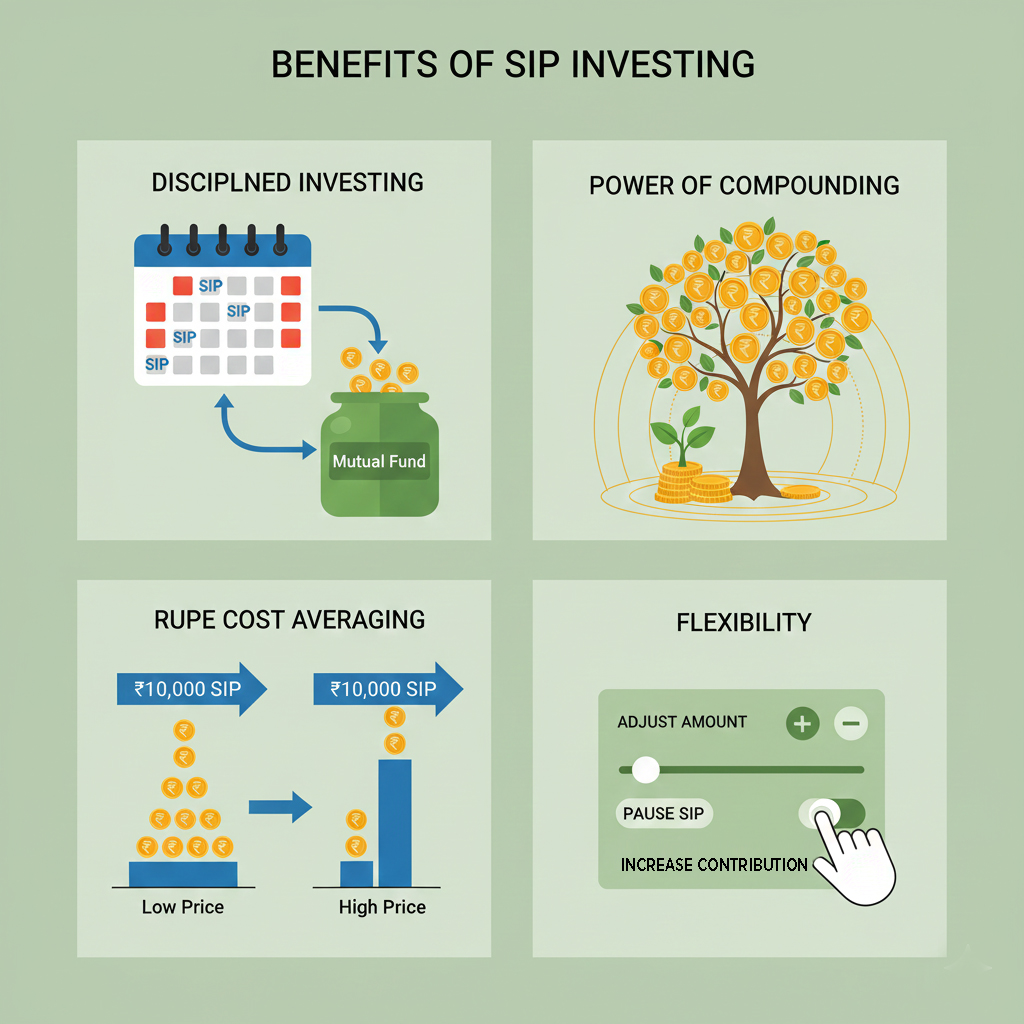
    Benefits of SIP Investing

    Disciplined Investing

    SIPs help build a habit of investing regularly, regardless of market conditions.

    Power of Compounding

    Small, consistent investments grow significantly over time due to compounding.

    Rupee Cost Averaging

    By investing regularly, investors buy more units when prices are low and fewer units when prices are high, reducing the impact of market volatility.

    Flexibility

    SIPs can be started with small amounts and increased gradually as income grows.

    Is SIP Risk-Free?

    No investment is completely risk-free. SIPs invest in mutual funds, which are subject to market risks. However, long-term SIP investing helps reduce timing risk and smoothens market fluctuations.

    Who Should Consider SIPs?

    SIPs are suitable for:

    • First-time investors
    • Salaried professionals
    • Self-employed individuals
    • NRIs investing in Indian mutual funds
    • Anyone planning long-term financial goals

    Conclusion

    SIPs offer a simple, disciplined, and flexible way to begin investing in mutual funds. They remove the pressure of timing the market and encourage long-term thinking—making them ideal for investors at any stage of life.