Learn about mutual funds, SIPs, SWPs, lump sum investing, STP, portfolio management and long-term investing. Simple and practical guidance to help investors understand mutual funds and make informed investment decisions.
നിങ്ങളുടെ വിശ്വാസങ്ങളെ മുറുകെപ്പിടിച്ചുകൊണ്ട് തന്നെ പണം നിക്ഷേപിക്കാനും സമ്പാദ്യം വളർത്താനും ആഗ്രഹമുണ്ടോ? എങ്കിൽ ഇന്ത്യയിലെ ഹലാൽ മ്യൂച്വൽ ഫണ്ടുകളെ (Halal Mutual Funds) കുറിച്ച് നിങ്ങൾ അറിഞ്ഞിരിക്കണം. പലിശരഹിതവും ധാർമ്മികവുമായ രീതിയിൽ ഓഹരി വിപണിയിൽ നിക്ഷേപം നടത്താൻ ഈ ഫണ്ടുകൾ നിങ്ങളെ സഹായിക്കുന്നു.
ഇന്ത്യയിലെ ഹലാൽ മ്യൂച്വൽ ഫണ്ടുകളെക്കുറിച്ചുള്ള എല്ലാ വിവരങ്ങളും ബി.വി.ബി ക്യാപിറ്റലിന്റെ (BVB Capital) ഈ ലളിതമായ ഗൈഡിലൂടെ നമുക്ക് മനസ്സിലാക്കാം.
എന്താണ് ഒരു മ്യൂച്വൽ ഫണ്ടിനെ ‘ഹലാൽ’ ആക്കുന്നത്?
ഒരു മ്യൂച്വൽ ഫണ്ട് ഹലാൽ ആണോ എന്ന് തീരുമാനിക്കുന്നത് അത് ഏതൊക്കെ കമ്പനികളിലാണ് നിക്ഷേപം നടത്തുന്നത് എന്നതിനെ അടിസ്ഥാനമാക്കിയാണ്. ശരീഅത്ത് നിയമങ്ങൾ പാലിക്കുന്ന കമ്പനികളെ മാത്രമേ ഇത്തരം ഫണ്ടുകൾ തിരഞ്ഞെടുക്കൂ.
ഹലാൽ ഫണ്ടുകൾ ഒഴിവാക്കുന്ന മേഖലകൾ:
ബാങ്കിംഗ്, പലിശയുമായി ബന്ധപ്പെട്ട മറ്റ് ധനകാര്യ സ്ഥാപനങ്ങൾ.
മദ്യം, പുകയില ഉൽപ്പന്നങ്ങൾ.
ചൂതാട്ടം, ആയുധങ്ങൾ.
അശ്ലീല വിനോദങ്ങൾ.
പകരം ഐടി (IT), ആരോഗ്യം (Healthcare), നിർമ്മാണ മേഖല (Manufacturing), ഉപഭോക്തൃ ഉൽപ്പന്നങ്ങൾ തുടങ്ങിയ ഹലാലായ മേഖലകളിലാണ് ഈ ഫണ്ടുകൾ പണം നിക്ഷേപിക്കുന്നത്.
ഹലാൽ മ്യൂച്വൽ ഫണ്ടുകൾ നിക്ഷേപം നടത്തുന്നതിന് മുൻപ് രണ്ട് തരത്തിലുള്ള പരിശോധനകൾ (Screening) നടത്തുന്നു:
ബിസിനസ് പരിശോധന: കമ്പനി എന്ത് ബിസിനസ്സാണ് ചെയ്യുന്നത് എന്ന് നോക്കും. മേൽപ്പറഞ്ഞ നിഷിദ്ധ മേഖലകളിൽ അല്ല എന്ന് ഉറപ്പുവരുത്തും.
സാമ്പത്തിക പരിശോധന: കമ്പനിയുടെ കടബാധ്യതകൾ ഒരു നിശ്ചിത പരിധിയിൽ താഴെയാണോ എന്നും അവർ പലിശയിൽ നിന്ന് ലാഭം ഉണ്ടാക്കുന്നില്ല എന്നും പരിശോധിക്കും.
ഇന്ത്യയിലെ പ്രമുഖ ഹലാൽ മ്യൂച്വൽ ഫണ്ടുകൾ
ഇന്ത്യയിൽ ശരീഅത്ത് നിയമങ്ങൾ പാലിച്ച് പ്രവർത്തിക്കുന്ന പ്രധാന ഫണ്ടുകൾ താഴെ പറയുന്നവയാണ്:
ടാറ്റ എത്തിക്കൽ ഫണ്ട് (Tata Ethical Fund)
ടോറസ് എത്തിക്കൽ ഫണ്ട് (Taurus Ethical Fund)
നിപ്പോൺ ഇന്ത്യ ഇ.ടി.എഫ് ശരീഅത്ത് ബീസ് (Nippon India ETF Shariah BeES)
ഈ ഫണ്ടുകളിൽ നിങ്ങൾക്ക് നേരിട്ടോ അല്ലെങ്കിൽ ഒരു ഡിസ്ട്രിബ്യൂട്ടർ വഴിയോ നിക്ഷേപിക്കാം.
ഹലാൽ മ്യൂച്വൽ ഫണ്ടുകളുടെ ഗുണങ്ങൾ
ധാർമ്മിക നിക്ഷേപം: നിങ്ങളുടെ വിശ്വാസങ്ങൾക്കും മൂല്യങ്ങൾക്കും നിരക്കുന്ന രീതിയിലുള്ള നിക്ഷേപം.
വളർച്ചാ സാധ്യത: ഐടി, ഫാർമ തുടങ്ങിയ മികച്ച ലാഭം നൽകുന്ന മേഖലകളിലാണ് നിക്ഷേപം.
വിദഗ്ദ്ധ മാനേജ്മെന്റ്: പരിചയസമ്പന്നരായ ഫണ്ട് മാനേജർമാരാണ് നിക്ഷേപം നിയന്ത്രിക്കുന്നത്.
SIP സൗകര്യം: മാസമാസം ചെറിയ തുകകൾ മാറ്റിവെച്ച് നിക്ഷേപം ആരംഭിക്കാം. SIP ഹലാൽ ആണോ?
ഹലാൽ മ്യൂച്വൽ ഫണ്ടുകൾ സുരക്ഷിതമാണോ?
മറ്റ് മ്യൂച്വൽ ഫണ്ടുകളെപ്പോലെ തന്നെ ഹലാൽ ഫണ്ടുകളും ഓഹരി വിപണിയുമായി ബന്ധപ്പെട്ടതാണ്. അതിനാൽ വിപണിയിലെ കയറ്റിറക്കങ്ങൾ ബാധിക്കാം. എന്നാൽ ദീർഘകാലാടിസ്ഥാനത്തിൽ നോക്കിയാൽ ഇത്തരം ഫണ്ടുകൾ മികച്ച ലാഭം നൽകുന്നതായി കാണാം. കേരളത്തിലെ മികച്ച ഹലാൽ നിക്ഷേപ മാർഗങ്ങൾ
നിക്ഷേപം എങ്ങനെ തുടങ്ങാം?
വളരെ ലളിതമായ നാല് ഘട്ടങ്ങളിലൂടെ നിങ്ങൾക്ക് ഹലാൽ നിക്ഷേപം ആരംഭിക്കാം:
കെ.വൈ.സി (KYC) പൂർത്തിയാക്കുക: നിങ്ങളുടെ രേഖകൾ സമർപ്പിക്കുക.
ശരിയായ ഫണ്ട് തിരഞ്ഞെടുക്കുക: നിങ്ങളുടെ ലക്ഷ്യത്തിന് ചേരുന്ന ഹലാൽ ഫണ്ട് കണ്ടെത്തുക.
നിക്ഷേപ തുക നിശ്ചയിക്കുക: SIP വഴിയോ നേരിട്ടോ നിക്ഷേപിക്കാം.
ബി.വി.ബി ക്യാപിറ്റലിനെ ബന്ധപ്പെടുക: മികച്ച നിർദ്ദേശങ്ങൾക്കായി ഞങ്ങളുടെ ടീം നിങ്ങളെ സഹായിക്കും.
ഇന്നുതന്നെ നിങ്ങളുടെ ഹലാൽ ഇൻവെസ്റ്റ്മെന്റ് യാത്ര തുടങ്ങൂ:
Mutual funds have become one of the most popular investment options in India. However, many investors today are not only concerned about returns but also about whether their investments align with their ethical or religious values.
This has led to growing interest in halal mutual funds.
While both halal and normal mutual funds help investors participate in stock market growth, there are important differences in how they select investments.
Understanding these differences can help you make informed financial decisions.
Basic Definition of Both Fund Types
Normal Mutual Funds
Normal mutual funds invest across all sectors of the economy, including banking, finance, and other industries. Their main objective is financial growth based on market opportunities.
Halal Mutual Funds
Halal mutual funds invest only in companies that comply with Shariah principles. They avoid companies involved in prohibited activities and follow ethical investment guidelines.
Main Differences Between Halal and Normal Mutual Funds
Feature
Halal Mutual Funds
Normal Mutual Funds
Investment approach
Shariah-compliant investing
No religious restrictions
Banking sector investment
Not allowed
Allowed
Alcohol and tobacco companies
Not allowed
Allowed
Ethical screening
Mandatory
Not required
Compliance monitoring
Shariah compliance screening
Standard financial screening
Objective
Ethical and financial growth
Financial growth
This structured approach makes halal mutual funds suitable for investors seeking ethical compliance. Halal mutual funds in India guide
Sector Allocation Difference
Normal mutual funds may invest in all sectors including:
Banking
Financial services
Alcohol companies
Tobacco companies
Halal mutual funds invest only in permissible sectors such as:
Information Technology
Healthcare
Manufacturing
Pharmaceuticals
This sector selection ensures compliance with Islamic financial principles.
Risk and Return Perspective
Both halal and normal mutual funds are equity-based investments in most cases.
This means:
Both are subject to market risks
Both have potential for long-term growth
Both require long-term investment discipline
The difference is not about risk level, but about investment selection criteria.
The main purpose of halal mutual funds is to provide investment options that comply with Islamic principles.
Investors who prefer ethical investing often choose halal mutual funds to ensure their money is invested responsibly.
Normal mutual funds do not consider religious or ethical screening as a primary factor.
Diversification and Portfolio Structure
Normal mutual funds may have broader sector exposure because they can invest in all industries.
Halal mutual funds have selective exposure, focusing only on compliant sectors.
However, halal mutual funds still provide diversification across multiple companies.
Who Should Consider Halal Mutual Funds?
Halal mutual funds are suitable for:
Investors seeking Shariah-compliant investments
Investors who prefer ethical investing
Long-term investors
Individuals planning systematic investment through SIP
They are especially popular among investors who want both financial growth and ethical compliance.
Who May Prefer Normal Mutual Funds?
Normal mutual funds are suitable for investors who:
Do not have specific religious investment requirements
Want exposure to all sectors including banking
Want wider sector diversification
The choice depends on individual preferences and financial planning goals.
Common Misconception About Halal Mutual Funds
Some investors assume halal mutual funds are fundamentally different in structure.
In reality, halal mutual funds function like normal mutual funds in terms of:
Professional management
Market-based returns
Investment process
The main difference lies in the screening process and investment selection.
Long-Term Investment Perspective
Both halal and normal mutual funds are generally suitable for long-term investing.
Key factors for successful investing include:
Investment discipline
Long-term perspective
Proper fund selection
Regular monitoring
Investment success depends more on consistency than short-term market movements.
Investment analysis with Halal focus
Increasing Demand for Halal Mutual Funds in India
Halal investing awareness is increasing across India, especially in regions like Kerala.
Many investors are now exploring Shariah-compliant mutual funds as part of their financial planning.
This reflects growing awareness about ethical investment options.
Conclusion: Choosing the Right Option Depends on Your Preference
Halal and normal mutual funds both offer opportunities for wealth creation.
The key difference lies in the investment screening and ethical compliance.
Halal mutual funds are suitable for investors seeking Shariah-compliant investments, while normal mutual funds offer broader sector exposure.
The right choice depends on your financial goals, personal values, and investment preferences. Start halal investment today
Call to Action
If you would like guidance on halal mutual funds and Shariah-compliant investing, BVB Capital Private Limited can assist you in selecting suitable investment options.
Kerala has always had a strong culture of saving and financial discipline. Many families traditionally invested in gold, land, or savings accounts. However, modern investors are now exploring halal investment options that offer both ethical compliance and growth potential.
With increasing financial awareness, professionals, business owners, and NRIs in Kerala are looking for Shariah-compliant investment options that help build long-term wealth.
The good news is that several halal investment options are now available.
1. Halal Mutual Funds – One of the Most Popular Options
Halal mutual funds are among the most preferred investment options today.
These funds invest only in companies that follow Shariah principles and avoid prohibited industries.
Why halal mutual funds are suitable:
Professionally managed investments
Suitable for long-term wealth creation
Easy to start through SIP
Online investment option available
Many young investors in cities like Kochi, Kozhikode, and Malappuram are now choosing halal mutual funds as part of their financial planning.
3. Direct Equity Investment in Shariah-Compliant Companies
Some investors prefer to invest directly in halal stocks.
These include companies in sectors like:
Information Technology
Healthcare
Pharmaceuticals
Manufacturing
However, stock selection requires proper knowledge and monitoring.
For most investors, mutual funds provide a simpler and safer approach compared to direct stock selection.
4. Gold Investment – Traditional and Trusted Option
Gold has always been a preferred investment in Kerala.
Gold is considered a halal asset and has been used for wealth preservation for generations.
Investors can consider:
Physical gold
Gold savings plans
Gold ETFs
Gold helps diversify your investment portfolio.
However, gold alone may not provide sufficient long-term growth compared to equity investments.
5. Real Estate Investment
Real estate is another popular halal investment option in Kerala.
Many investors prefer buying:
Residential property
Commercial property
Land
Real estate offers long-term appreciation potential.
However, it requires large capital and is less liquid compared to mutual funds.
6. NRI Halal Investment Opportunities
Kerala has a large NRI population, especially in Gulf countries.
Many NRIs are now investing in halal mutual funds in India.
Benefits include:
Easy online investment process
Long-term wealth creation
Investment in Indian growth story
This option allows NRIs to participate in India’s economic growth while maintaining halal compliance.
Common Mistake Many Investors Make
Many investors keep large amounts in savings accounts due to uncertainty about halal investment options.
This may limit wealth growth over time.
Proper investment planning helps improve financial outcomes while maintaining religious compliance.
How to Choose the Right Halal Investment Option
The right option depends on:
Your financial goals
Investment duration
Risk tolerance
Monthly income
For long-term wealth creation, halal mutual funds through SIP are one of the most practical and accessible options.
Why Professional Guidance Is Helpful
Halal investing requires proper fund selection and planning.
Professional guidance can help:
Select suitable Shariah-compliant funds
Avoid common mistakes
Build long-term investment strategy
Simplify the investment process
This ensures your investments align with your goals.
Future of Halal Investing in Kerala
Halal investing awareness is increasing rapidly across Kerala.
More investors are now exploring ethical investment options beyond traditional savings methods.
With increasing awareness and accessibility, halal investing is expected to grow significantly in the coming years.
Conclusion
Kerala investors today have multiple halal investment options including halal mutual funds, SIP, gold, and real estate.
Among these, halal mutual funds and SIP offer a practical and accessible way to build long-term wealth.
With proper planning and disciplined investing, halal investments can help achieve financial security while maintaining ethical and religious compliance. Start halal investment with BVB Capital
Call to Action
If you are looking to start halal investment in Kerala, BVB Capital Private Limited can assist you in selecting suitable Shariah-compliant mutual funds and completing the process easily.
A few months ago, a young professional working in Kochi contacted us with a simple but important question.
He said, “I want to start investing through SIP, but I am not sure whether SIP is halal.”
This question is very common. Many people want to invest for their future but also want to ensure their investments follow Islamic principles.
The answer is simple, but it requires proper understanding.
SIP itself is not halal or haram. It depends on where you invest.
First, Understand What SIP Actually Means
SIP stands for Systematic Investment Plan.
It is not an investment product.
It is only a method of investing.
SIP allows you to invest a fixed amount regularly, such as monthly, into a mutual fund.
For example:
You invest ₹5,000 every month into a mutual fund.
This regular investment method is called SIP.
So SIP is simply a process, not the actual investment.
Why SIP Itself Is Neutral
Think of SIP like a vehicle.
A vehicle can take you to a good place or a bad place.
The vehicle itself is neutral.
Similarly, SIP is just a method used to invest.
Whether it is halal or not depends on the mutual fund you choose.
When SIP Becomes Halal
SIP becomes halal when the mutual fund you invest in is Shariah-compliant.
This means the mutual fund invests only in companies that follow Islamic financial guidelines.
These companies avoid prohibited sectors like:
Interest-based financial institutions
Alcohol companies
Gambling businesses
Tobacco companies
If your SIP is invested in halal mutual funds, then your investment is considered halal. Halal mutual funds in India
When SIP Becomes Non-Halal
If your SIP is invested in mutual funds that include companies involved in interest-based banking or prohibited industries, then it may not be considered halal.
This is why fund selection is extremely important.
If you would like to start halal SIP with proper guidance, BVB Capital Private Limited can assist you in selecting suitable Shariah-compliant mutual funds.
Many investors today are not just looking for returns. They want their money to grow in a way that aligns with their personal and religious beliefs. This is where halal mutual funds play an important role.
Halal mutual funds allow investors to participate in the growth of the stock market while following Islamic financial principles. In India, awareness about halal investing is growing rapidly, especially among young professionals, business owners, and NRIs.
This guide explains everything you need to know in simple terms.
What Makes a Mutual Fund Halal?
A halal mutual fund follows Shariah principles while selecting companies for investment. This means the fund avoids companies involved in prohibited activities and focuses only on ethical businesses.
Halal mutual funds do NOT invest in companies related to:
Conventional banking and interest-based finance
Alcohol production or distribution
Gambling businesses
Tobacco companies
Adult entertainment
Instead, they invest in sectors like technology, healthcare, manufacturing, and ethical consumer products.
A mutual fund distributor like BVB Capital can help guide you through the process.
Common Misconception About Halal Mutual Funds
Some people think halal mutual funds provide lower returns. This is not necessarily true.
Since halal funds invest in strong growth sectors like IT and pharma, they have good long-term growth potential.
The key factor is staying invested for sufficient time.
Future of Halal Investing in India
Halal investing is still in early stages in India. However, awareness is increasing rapidly.
With growing demand, more halal investment options are expected in the future.
This creates a strong opportunity for ethical investors.
Conclusion
Halal mutual funds provide an excellent opportunity for investors who want to grow their wealth while following Islamic principles.
They offer ethical investing, professional management, and long-term growth potential.
With proper guidance and disciplined investing, halal mutual funds can play an important role in financial planning.
Call to Action
If you want to start halal mutual fund investment, BVB Capital Private Limited can assist you with selecting suitable Shariah-compliant funds and completing the process online.
Imagine you want to travel to a new city. You can go alone using Google Maps, or you can take the help of a guide who knows the best routes, risks, and shortcuts. Investing in mutual funds is very similar.
A Mutual Fund Distributor (MFD) is like your trusted guide in the investment journey. At BVB Capital Private Limited, we help individuals invest in a simple, safe, and goal-based manner without confusion or stress.
This article will clearly explain:
How a mutual fund distributor functions
What services BVB Capital provides
Why investing through a distributor is better than direct investing
The truth about money safety and transparency
What Does a Mutual Fund Distributor Actually Do?
A mutual fund distributor does not create mutual funds. Mutual funds are managed by big regulated companies called Asset Management Companies (AMCs) such as SBI Mutual Fund, HDFC Mutual Fund, ICICI Prudential, etc.
Which Is Better for You? (Complete Guide for Indian Investors)
The Real-World Dilemma of Indian Investors
Meet Ramesh, a 32-year-old working in Kochi. Like many Indians today, he wants to grow his savings beyond a bank FD and has heard a lot about SIPs and mutual funds. He downloads a few “zero commission” investment apps, compares star ratings of funds, starts a SIP, and feels proud.
But soon… he is confused.
Should he invest more in equity?
Why did his fund fall last month?
Which ELSS fund should he use for tax saving?
Should he stop SIPs when markets dip?
How should he plan for his child’s education?
Meanwhile his colleague Amrita invests through a mutual fund distributor. She doesn’t worry about research, rebalancing, or risk. Her advisor reviews her portfolio quarterly, suggests SIP top-ups, evaluates goals, explains market dips, and helps with tax planning.
Both invest in the same mutual fund category. But while Ramesh keeps switching funds and stopping SIPs during volatile months, Amrita follows a disciplined strategy created for her goals — and ends up earning higher long-term returns with less stress.
So the big question arises for investors today:
“Is it worth paying for a distributor’s help, or should you go direct?”
This debate of direct vs distributor mutual funds has grown in the last few years due to fintech apps and DIY investing culture.
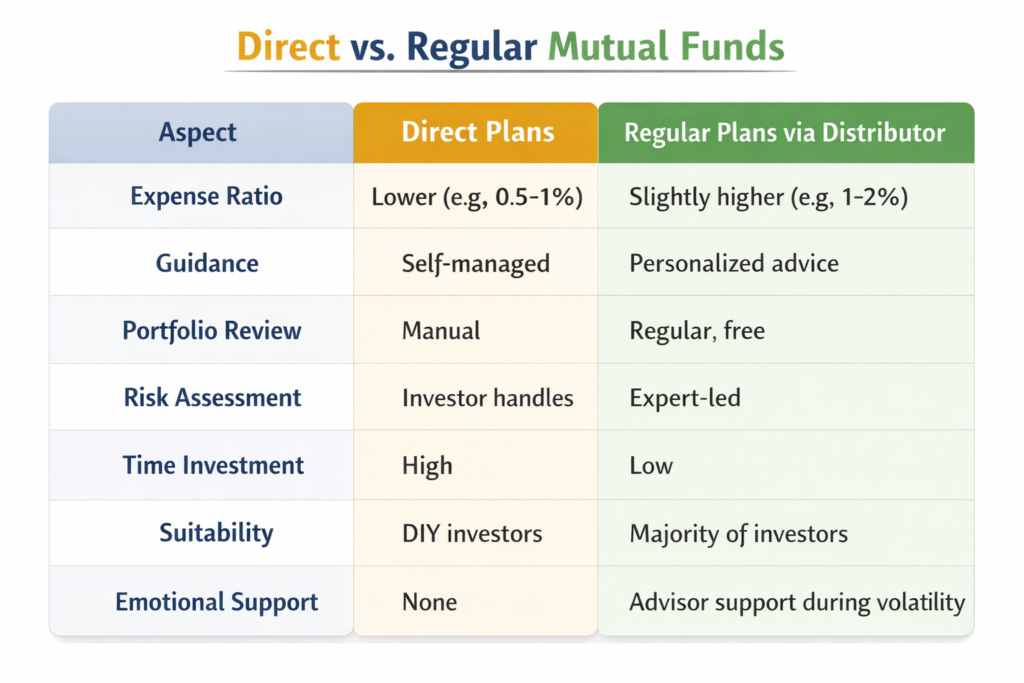
Reality check: While direct mutual funds may look cheaper due to slightly lower expense ratios, the real cost comes from wrong choices, poor asset allocation, and emotional mistakes — especially during crashes.
On the other hand, a skilled mutual fund distributor or mutual fund investment advisor brings structured financial planning, goal-based investing, risk management, and behavioral guidance — which most investors desperately need.
Throughout India — especially in small cities and towns — people rely on distributors because they want handholding, not just a transaction platform.
Based in Kerala, BVB Capital is a AMFI-registered, client-first, technology-enabled mutual fund distributor helping families build wealth without confusion, panic, or guesswork.
🟢 Thesis: For most investors (80–90% of Indians), the benefits of a good distributor easily outweigh the small cost difference of direct plans — and BVB Capital excels because of its experienced management team, advisory-led model, and long-term client focus.
Understanding Mutual Fund Investment Options
Before deciding which route to take, it’s important to understand how mutual funds can be purchased in India.
What are Direct Plans?
Direct plans allow you to invest directly with the AMC (fund house) through:
AMC websites
AMC apps
RTA portals (CAMS, Kfintech)
Some online DIY platforms
Key features of direct plans:
Lower expense ratio (no distributor commission)
Full control — investor chooses funds, tracks performance, manages risk
Suitable mainly for DIY financial experts
But there’s a catch: Investors must handle asset allocation, taxation, fund selection, rebalancing, market behavior, and documentation on their own.
What are Regular Plans via Distributors?
Regular plans are purchased through a mutual fund distributor or advisor who assists with:
Goal setting
Fund selection
Documentation & KYC
Ongoing review
Rebalancing
Market guidance
Regular plans have a slightly higher expense ratio because distributors are paid by AMCs for providing services.
For 90% of Indian investors, a trusted distributor is more beneficial because investing is not just selecting funds — it’s about managing entire financial life cycles.
Top Benefits of Using a Mutual Fund Distributor
Here are the major mutual fund distributor benefits that most investors underestimate:
1. Personalized Investment Advice
Distributors analyze:
Age
Income & cash flow
Risk profile
Time horizon
Life goals (retirement, education, home, tax)
They design goal-based portfolios tailored to investors.
Example:
25-year-old professional → equity-heavy SIPs for long-term growth
60-year-old retiree → debt & hybrid for stability & income
2. Access to 1000+ Funds Across AMCs
Instead of relying on popular brand names, distributors help you choose across:
Equity
Debt
Hybrid
Solution-oriented funds
Index funds
ELSS for tax planning
This ensures proper diversification, not random selection.
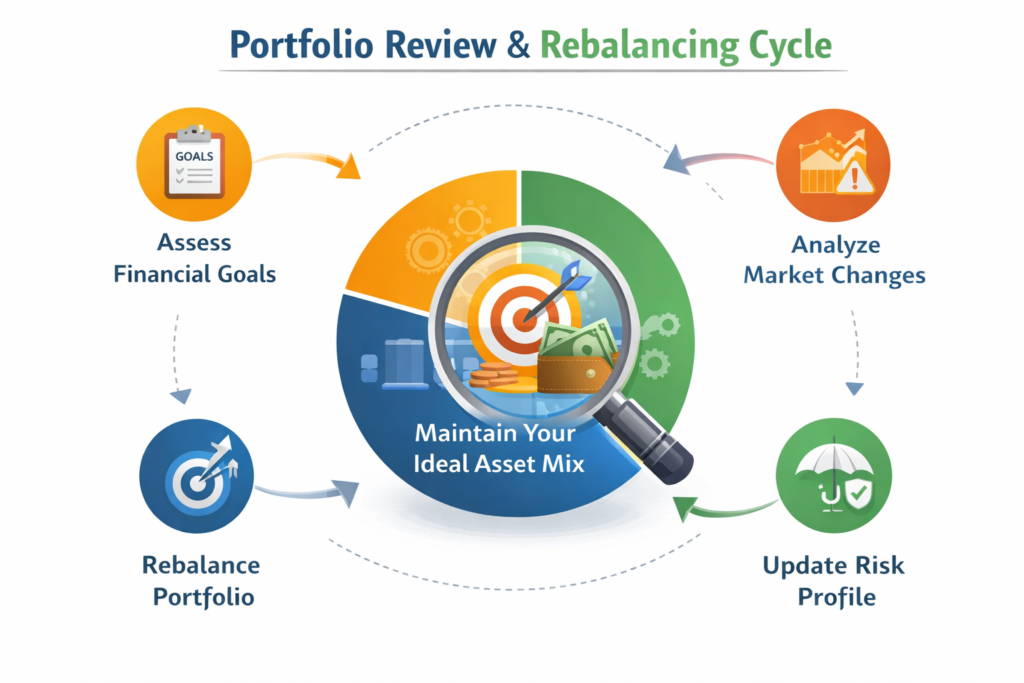
3. Ongoing Portfolio Review & Rebalancing
Markets change, life changes — portfolios must too.
Distributors provide:
Quarterly reviews
Asset rebalancing
SIP top-up recommendations
Category rotation (largecap ↔ midcap, etc.)
This helps maintain the right risk-return balance.
4. Time-Saving Transactions & Support
Investors don’t want paperwork headaches such as:
KYC registration
FATCA
Consolidated statements
SIPS/STPs/SWPs
Nomination updates
Distributors handle all of this smoothly.
5. Behavioral & Emotional Discipline
One of the most underrated advantages:
Investment success is more about behaviour than returns.
During market volatility, DIY investors panic.
Example: During the 2020 COVID crash, many DIY investors sold at bottoms, while distributors advised clients to continue SIPs, leading to significant wealth creation post recovery.
6. Risk Management
Distributors help avoid:
Over-concentration in a single stock/sector
Wrong timing decisions
Misalignment of asset allocation
They also guide on debt vs equity balance, crucial for retirees.
7. Tax Optimization
They assist with:
ELSS fund selection
Capital gains tax calculations
Dividend taxation
Setting SWP for tax efficiency
8. Cost-Effectiveness in Long Term
While direct plans save 0.5–1% TER, mistakes can cost 2–5% returns annually due to:
Wrong fund choices
Lack of rebalancing
Stopping SIPs
Timing markets
Over-diversification or under-diversification
Industry reports suggest that guided investors earn 1–2% higher net returns due to discipline and asset allocation.
Direct vs Distributor: Head-to-Head Comparison
To make things crystal clear, here is a direct comparison:
Pros & Cons Table
Factor
Direct Plans Pros/Cons
Distributor Pros/Cons
Cost
✔ Lower TER ✖ Hidden errors cost more
✔ Saves via expertise ✖ Commission in expense ratio
Expertise
✖ Investor must self-educate
✔ Custom strategies & guidance
Convenience
✔ 24/7 apps ✖ Zero handholding
✔ Full service ✖ Appointment-based
Suitability
Experts only
Beginners, families, HNIs
Behavioral Control
✖ High panic risk
✔ Emotional discipline
Portfolio Returns
Variable due to errors
Optimized (1–3% possible edge)
Verdict
Data from multiple consumer surveys show that:
80%+ of Indian investors prefer distributors
Only 10–15% have the knowledge for direct investing
Errors hurt long-term compounding more than commissions
So, while direct plans look attractive on paper, distributors win in real life — especially for:
Beginners
Busy professionals
Retirees
Business owners
Families planning life goals
Why BVB Capital Private Limited Is the Best Choice for Investors
1. Who We Are
BVB Capital Private Limited is a Kerala-based, AMFI-registered mutual fund distributor dedicated to simplifying investments for Indians.
Our mission:
To make wealth-building simple, transparent, and stress-free for every investor.
We are built for people who want:
Guidance, not confusion
Discipline, not panic
Knowledge, not tips
Long-term wealth, not short-term gambling
2. What Makes Us Different
While many providers just offer “platforms,” BVB Capital offers a complete advisory ecosystem:
This team-based model ensures investors get research-backed advice, not generic recommendations.
5. Our Advisory Philosophy
At BVB Capital, we believe:
Investing is personal
Risk matters as much as return
Markets reward patience
SIPs are powerful wealth builders
Advice must be unbiased & transparent
We educate clients because informed investors stay disciplined.
6. Comparison With Others
Category
Generic Distributor
BVB Capital
Advisory Quality
Transaction-focused
Advisory-driven
Client Interaction
One-time
Continuous relationship
Goal Planning
Minimal
Structured & documented
Review Frequency
Annual/None
Quarterly reviews
Tools & Reporting
Basic
Digital dashboards
Conclusion
Direct mutual funds are good for trained, disciplined DIY investors.
But for most Indians, the value of a skilled mutual fund distributor or mutual fund investment advisor is far greater than the small cost difference.
From personalized planning to behavioral guidance and disciplined compounding — distributors make wealth building simpler, smarter, and stress-free.
And when it comes to choosing one, BVB Capital Private Limited stands out for its expert management team, advisory-first approach, and technology-driven client service, making it among the best mutual fund distributor India for families and professionals.
👉 Ready to invest smart and grow your wealth? Book a free consultation with us at: https://bvbcap.com/
Start your SIP today and build wealth the right way — with guidance, discipline, and confidence.
കൂട്ടുകാരെ, നമുക്കെല്ലാവർക്കും മിഠായി വാങ്ങാനും കളിപ്പാട്ടങ്ങൾ വാങ്ങാനും ഒക്കെ പൈസ വേണം, അല്ലേ? സാധാരണ നമ്മൾ എന്ത് ചെയ്യും? അച്ഛനോ അമ്മയോ തരുന്ന പൈസ ഒരു കുടുക്കയിൽ (Piggy bank) ഇട്ടു വെക്കും. കുറെ നാൾ കഴിയുമ്പോൾ ആ കുടുക്ക നിറയും.
ഇതുപോലെ വലിയവർ പണം സമ്പാദിക്കുന്ന ഒരു സൂപ്പർ വഴിയെക്കുറിച്ചാണ് ഇന്ന് നമ്മൾ പറയാൻ പോകുന്നത്. അതിന്റെ പേരാണ് SIP-യും SWP-യും. കേട്ടിട്ട് പേടി തോന്നുന്നുണ്ടോ? പേടിക്കണ്ട, സംഗതി വളരെ സിമ്പിളാണ്!
1. എന്താണ് ഈ SIP? (മരം നടുന്ന കാലം)
നമ്മൾ ഒരു മാവിൻ തൈ നടുന്നു എന്ന് വിചാരിക്കുക. നമ്മൾ ദിവസവും അതിന് വെള്ളമൊഴിക്കും, ശ്രദ്ധിക്കും. പെട്ടെന്ന് ഒരു ദിവസം കൊണ്ട് അത് വലിയ മരമാകില്ല. വർഷങ്ങൾ എടുക്കും. പക്ഷേ, നമ്മൾ മടുക്കാതെ എന്നും വെള്ളമൊഴിച്ചാൽ അത് പതുക്കെ പതുക്കെ വളർന്ന് വലിയൊരു മരമാകും.
ഇതുപോലെ, എല്ലാ മാസവും നമ്മുടെ കയ്യിലുള്ള ചെറിയൊരു തുക (അത് 500 രൂപയോ 1000 രൂപയോ എത്രയുമാകാം) സമ്പാദിക്കുന്ന രീതിയാണ് SIP (Systematic Investment Plan).
ഗുണം: ചെറിയ തുകയായതുകൊണ്ട് നമുക്ക് ബുദ്ധിമുട്ടുണ്ടാകില്ല.
മാജിക്: വർഷങ്ങൾ കഴിയുമ്പോൾ ഈ ചെറിയ തുക ഒരു വലിയ ‘പണത്തിന്റെ മരമായി’ മാറും. ഇതിനെയാണ് ‘കോമ്പൗണ്ടിംഗ്’ (Compounding) എന്ന് വിളിക്കുന്നത്. അതായത്, പണം വളർന്ന് വളർന്ന് വലുതാകുന്ന മാജിക്!
2. എന്താണ് ഈ SWP? (പഴം പറിക്കുന്ന കാലം)
നമ്മൾ നട്ട മാവ് വലുതായി എന്ന് വിചാരിക്കുക. ഇനി നമുക്ക് എന്ത് ചെയ്യാം? ആ മരം മുറിച്ചു വിൽക്കാം. പക്ഷേ, അങ്ങനെ ചെയ്താൽ പിന്നെ നമുക്ക് മാമ്പഴം കിട്ടില്ലല്ലോ?
അതിന് പകരം, മരത്തിലെ മാമ്പഴം മാത്രം ഓരോന്നായി പറിച്ചെടുത്താലോ? മരം അവിടെത്തന്നെ ഉണ്ടാകും, നമുക്ക് എല്ലാ കാലത്തും മാമ്പഴം കഴിക്കുകയും ചെയ്യാം.
ഇതാണ് SWP (Systematic Withdrawal Plan). നമ്മൾ SIP വഴി ഉണ്ടാക്കിയ വലിയൊരു തുകയിൽ നിന്ന്, എല്ലാ മാസവും കൃത്യമായ ഒരു തുക ശമ്പളം പോലെ തിരിച്ചെടുക്കുന്ന രീതിയാണിത്.
ഗുണം: ജോലിയിൽ നിന്നൊക്കെ വിരമിച്ചു കഴിയുമ്പോൾ (Retirement), കയ്യിൽ പണമില്ലാതെ വിഷമിക്കണ്ട. ഈ മരത്തിൽ നിന്ന് മാമ്പഴം പറിക്കുന്നത് പോലെ എല്ലാ മാസവും പണം കിട്ടിക്കൊണ്ടിരിക്കും. ബാക്കി പണം അവിടെയിരുന്ന് വീണ്ടും വളരുകയും ചെയ്യും!
ചുരുക്കത്തിൽ പറഞ്ഞാൽ:
SIP: ഇത് പണം നിക്ഷേപിക്കുന്ന ഘട്ടമാണ്. ഒരു വലിയ സമ്പാദ്യം ഉണ്ടാക്കിയെടുക്കാൻ ഇത് സഹായിക്കുന്നു.
SWP: ഇത് നിക്ഷേപിച്ച പണം ഉപയോഗിക്കുന്ന ഘട്ടമാണ്. എല്ലാ മാസവും ഒരു വരുമാനം ഉറപ്പാക്കാൻ ഇത് സഹായിക്കുന്നു.
നമ്മൾ എന്ത് ചെയ്യണം?
ഇപ്പോൾ നിങ്ങൾ കുട്ടികളാണെങ്കിലും, ഈ കാര്യം മനസ്സിലാക്കി വെക്കുന്നത് നല്ലതാണ്. വലുതാകുമ്പോൾ ആദ്യത്തെ ശമ്പളം കിട്ടിത്തുടങ്ങുമ്പോൾ തന്നെ ഒരു ചെറിയ SIP തുടങ്ങിയാൽ, ഭാവിയിൽ നിങ്ങൾക്ക് സാമ്പത്തികമായി ഒരു ബുദ്ധിമുട്ടും ഉണ്ടാവില്ല.
ഓർക്കുക: ഇന്ന് നാം നടുന്ന ചെറിയ തൈയാണ് നാളെ നമുക്ക് തണലും പഴങ്ങളും തരുന്നത്!
നിങ്ങളുടെ അച്ഛനോടും അമ്മയോടും ഈ കാര്യത്തെക്കുറിച്ച് ചോദിച്ചു നോക്കൂ. അവർക്കും ഇതൊരു പുതിയ അറിവായേക്കാം!
Have you ever seen a mango tree? When it is small, you water it every day. You take care of it. It does not give fruits immediately. But after a few years, that same tree gives you tasty mangoes every summer!
You put small amounts of money every month into an investment (like mutual funds). Slowly, this money grows over time.
What is SWP?
SWP means Systematic Withdrawal Plan.
It is like taking mangoes from the tree when it grows big.
After many years, when your money has grown, you can take out some money every month to use for your needs. You don’t have to take everything at once.
Let’s Learn Through a Small Story
There was a boy named Rohan who loved to eat mangoes. His father told him:
“If you want mangoes in the future, you must plant a sapling today!”
So Rohan planted a small mango plant in the backyard. Every day he did a few things:
✓ He watered it ✓ He protected it from goats ✓ He gave it sunlight and care
This was his SIP — Small Important Practice every day.
Years passed… the plant became a big mango tree. Now every summer, the tree gave so many mangoes that Rohan and his family enjoyed them without buying from the shop. They even shared with relatives!
This was like SWP — Summer Wonderful Picking!
Because Rohan took small steps earlier, he enjoyed big benefits later.
What Does This Mean for Money?
When we start a SIP today, we are putting money regularly (like watering the plant).
After many years, when we need money for:
✓ Children’s education ✓ Retirement ✓ Monthly expenses ✓ Buying a house
We can use SWP to take money out slowly and safely, without finishing everything at once (just like not cutting the mango tree!).
Why Is This Good?
✔ SIP makes saving easy — small amounts every month ✔ Money grows over time — like a plant becoming a tree ✔ SWP gives regular money — like getting mangoes every season ✔ No pressure — you don’t need to invest a big amount at once ✔ Perfect for long-term goals
In Simple Words
🌱 SIP Today = Plant the tree 🍃 Wait and let it grow 🥭 SWP Tomorrow = Enjoy the fruits
Conclusion
Many people think that money grows only when we earn a lot. But the truth is:
Money grows when we start early, invest regularly, and allow time to work.
Just like Rohan’s tree, if we start a SIP today, we can enjoy a peaceful future with SWP tomorrow.
So the magic formula is:
👉 Start Small + Be Regular + Wait = Big Benefits Later