Author: Baiju V B

  • Direct vs Distributor Mutual Funds: Benefits Explained

    Direct vs Distributor Mutual Funds: Benefits Explained

    Which Is Better for You? (Complete Guide for Indian Investors)

    The Real-World Dilemma of Indian Investors

    Meet Ramesh, a 32-year-old working in Kochi. Like many Indians today, he wants to grow his savings beyond a bank FD and has heard a lot about SIPs and mutual funds. He downloads a few “zero commission” investment apps, compares star ratings of funds, starts a SIP, and feels proud.

    But soon… he is confused.

    • Should he invest more in equity?
    • Why did his fund fall last month?
    • Which ELSS fund should he use for tax saving?
    • Should he stop SIPs when markets dip?
    • How should he plan for his child’s education?

    Meanwhile his colleague Amrita invests through a mutual fund distributor. She doesn’t worry about research, rebalancing, or risk. Her advisor reviews her portfolio quarterly, suggests SIP top-ups, evaluates goals, explains market dips, and helps with tax planning.

    Both invest in the same mutual fund category. But while Ramesh keeps switching funds and stopping SIPs during volatile months, Amrita follows a disciplined strategy created for her goals — and ends up earning higher long-term returns with less stress.

    So the big question arises for investors today:

    “Is it worth paying for a distributor’s help, or should you go direct?”

    This debate of direct vs distributor mutual funds has grown in the last few years due to fintech apps and DIY investing culture.

    Reality check:
    While direct mutual funds may look cheaper due to slightly lower expense ratios, the real cost comes from wrong choices, poor asset allocation, and emotional mistakes — especially during crashes.

    On the other hand, a skilled mutual fund distributor or mutual fund investment advisor brings structured financial planning, goal-based investing, risk management, and behavioral guidance — which most investors desperately need.

    Throughout India — especially in small cities and towns — people rely on distributors because they want handholding, not just a transaction platform.

    And this is where BVB Capital Private Limited stands out.

    Based in Kerala, BVB Capital is a AMFI-registered, client-first, technology-enabled mutual fund distributor helping families build wealth without confusion, panic, or guesswork.

    🟢 Thesis:
    For most investors (80–90% of Indians), the benefits of a good distributor easily outweigh the small cost difference of direct plans — and BVB Capital excels because of its experienced management team, advisory-led model, and long-term client focus.


    Understanding Mutual Fund Investment Options

    Before deciding which route to take, it’s important to understand how mutual funds can be purchased in India.

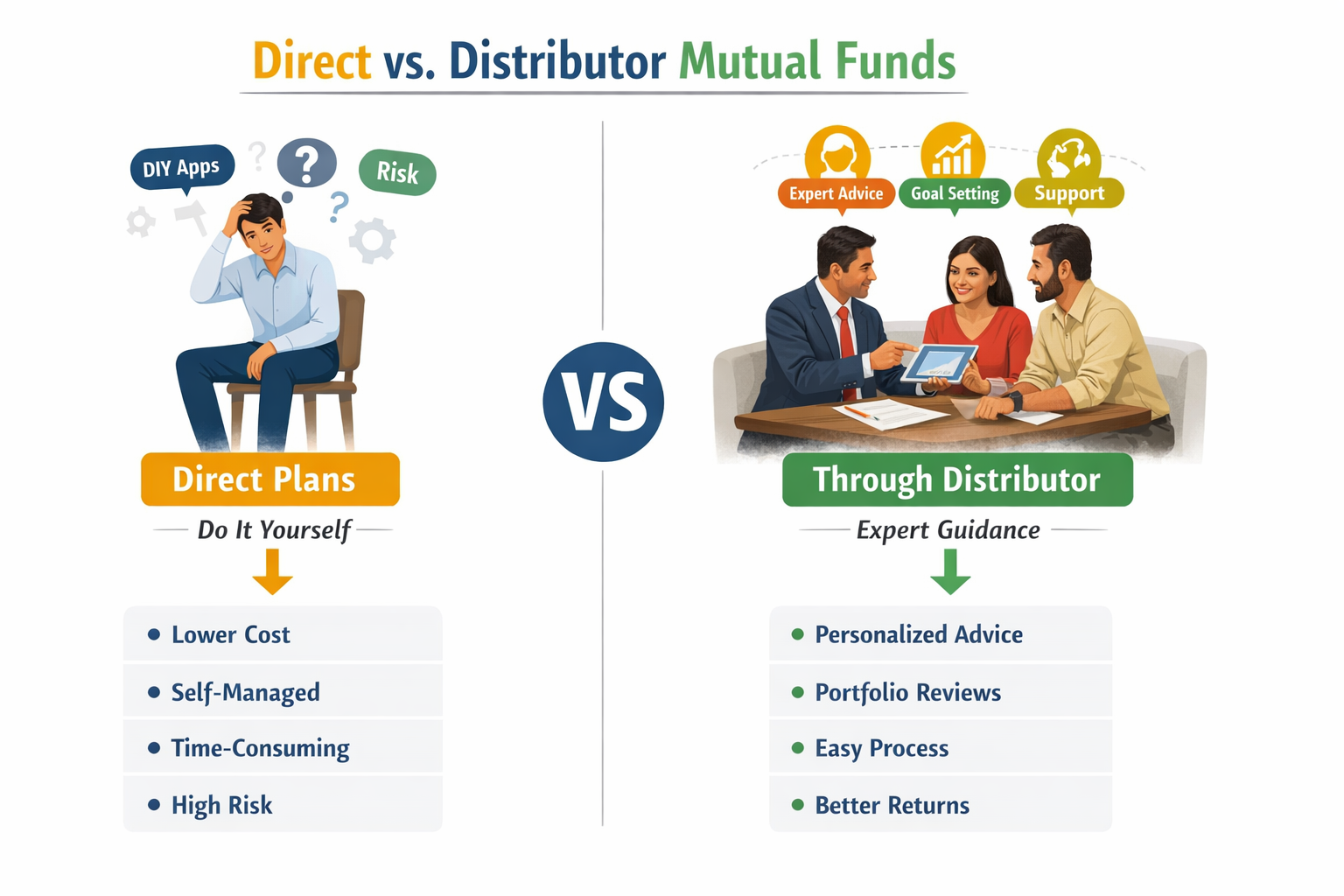
    What are Direct Plans?

    Direct plans allow you to invest directly with the AMC (fund house) through:

    • AMC websites
    • AMC apps
    • RTA portals (CAMS, Kfintech)
    • Some online DIY platforms

    Key features of direct plans:

    • Lower expense ratio (no distributor commission)
    • Full control — investor chooses funds, tracks performance, manages risk
    • Suitable mainly for DIY financial experts

    But there’s a catch: Investors must handle asset allocation, taxation, fund selection, rebalancing, market behavior, and documentation on their own.

    What are Regular Plans via Distributors?

    Regular plans are purchased through a mutual fund distributor or advisor who assists with:

    • Goal setting
    • Fund selection
    • Documentation & KYC
    • Ongoing review
    • Rebalancing
    • Market guidance

    Regular plans have a slightly higher expense ratio because distributors are paid by AMCs for providing services.
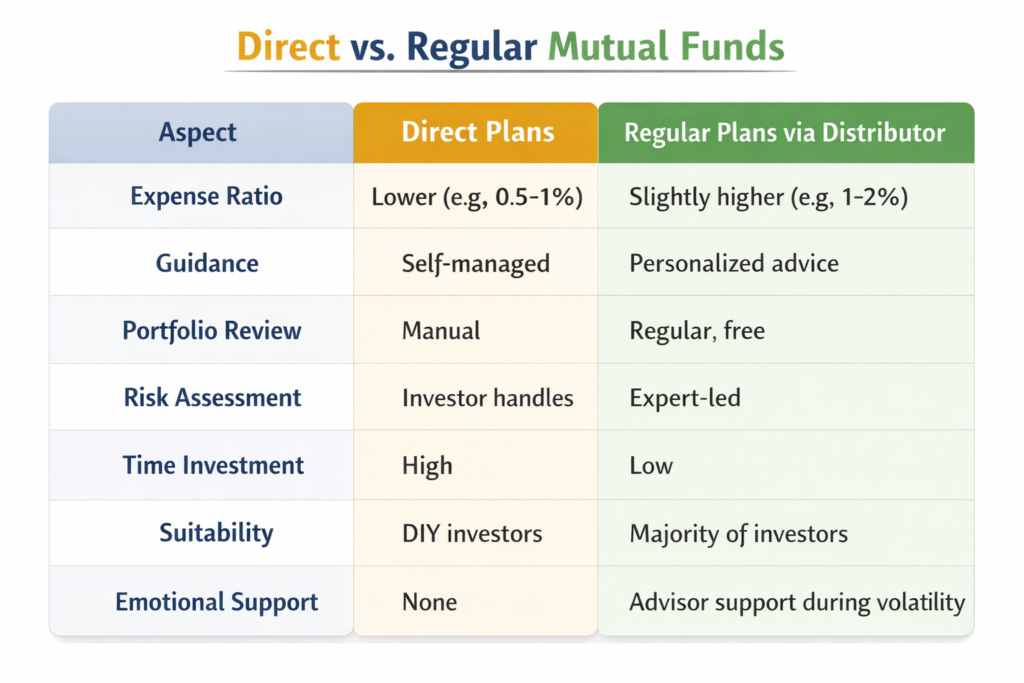
    Direct vs Regular: Quick Comparison

    AspectDirect PlansRegular Plans via Distributor
    Expense RatioLower (e.g., 0.5–1%)Slightly higher (e.g., 1–2%)
    GuidanceSelf-managedPersonalized advice
    Portfolio ReviewManualRegular, structured, free
    Risk AssessmentInvestor handlesExpert-led
    Time InvestmentHighLow
    SuitabilityDIY investorsMajority of investors
    Emotional SupportNoneAdvisor support during volatility

    🔹 Reality Check:
    Direct plans suit financially educated, disciplined, long-term DIY investors.

    For 90% of Indian investors, a trusted distributor is more beneficial because investing is not just selecting funds — it’s about managing entire financial life cycles.


    Top Benefits of Using a Mutual Fund Distributor

    Here are the major mutual fund distributor benefits that most investors underestimate:

    1. Personalized Investment Advice

    Distributors analyze:

    • Age
    • Income & cash flow
    • Risk profile
    • Time horizon
    • Life goals (retirement, education, home, tax)

    They design goal-based portfolios tailored to investors.

    Example:

    • 25-year-old professional → equity-heavy SIPs for long-term growth
    • 60-year-old retiree → debt & hybrid for stability & income

    2. Access to 1000+ Funds Across AMCs

    Instead of relying on popular brand names, distributors help you choose across:

    • Equity
    • Debt
    • Hybrid
    • Solution-oriented funds
    • Index funds
    • ELSS for tax planning

    This ensures proper diversification, not random selection.
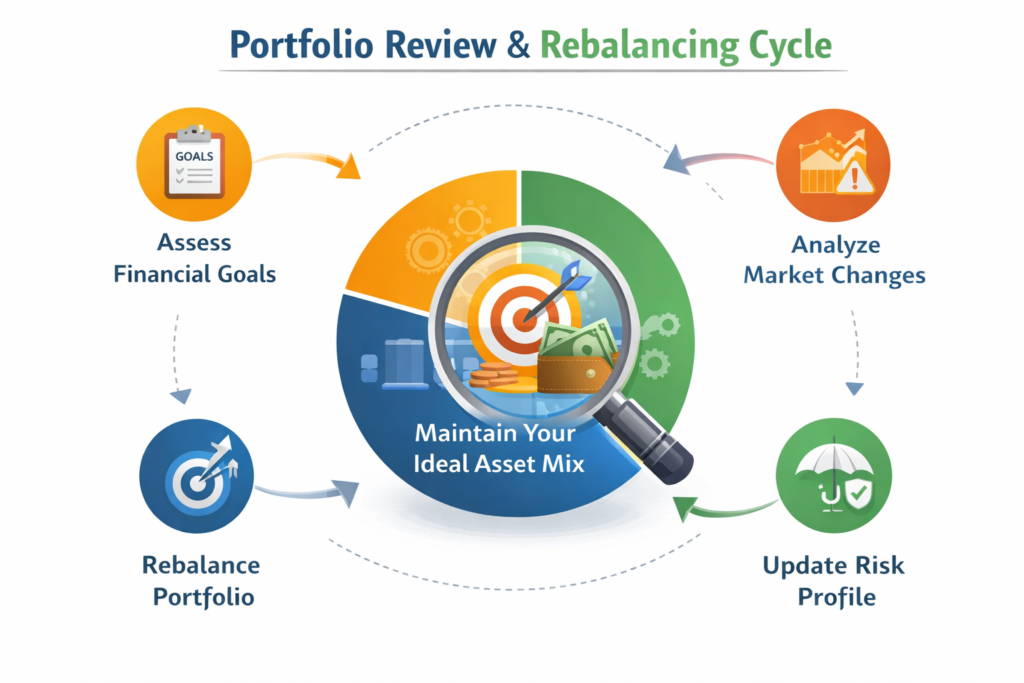
    3. Ongoing Portfolio Review & Rebalancing

    Markets change, life changes — portfolios must too.

    Distributors provide:

    • Quarterly reviews
    • Asset rebalancing
    • SIP top-up recommendations
    • Category rotation (largecap ↔ midcap, etc.)

    This helps maintain the right risk-return balance.

    4. Time-Saving Transactions & Support

    Investors don’t want paperwork headaches such as:

    • KYC registration
    • FATCA
    • Consolidated statements
    • SIPS/STPs/SWPs
    • Nomination updates

    Distributors handle all of this smoothly.

    5. Behavioral & Emotional Discipline

    One of the most underrated advantages:

    Investment success is more about behaviour than returns.

    During market volatility, DIY investors panic.

    Example:
    During the 2020 COVID crash, many DIY investors sold at bottoms, while distributors advised clients to continue SIPs, leading to significant wealth creation post recovery.

    6. Risk Management

    Distributors help avoid:

    • Over-concentration in a single stock/sector
    • Wrong timing decisions
    • Misalignment of asset allocation

    They also guide on debt vs equity balance, crucial for retirees.

    7. Tax Optimization

    They assist with:

    • ELSS fund selection
    • Capital gains tax calculations
    • Dividend taxation
    • Setting SWP for tax efficiency

    8. Cost-Effectiveness in Long Term

    While direct plans save 0.5–1% TER, mistakes can cost 2–5% returns annually due to:

    • Wrong fund choices
    • Lack of rebalancing
    • Stopping SIPs
    • Timing markets
    • Over-diversification or under-diversification

    Industry reports suggest that guided investors earn 1–2% higher net returns due to discipline and asset allocation.


    Direct vs Distributor: Head-to-Head Comparison

    To make things crystal clear, here is a direct comparison:

    Pros & Cons Table

    FactorDirect Plans Pros/ConsDistributor Pros/Cons
    Cost✔ Lower TER
    ✖ Hidden errors cost more
    ✔ Saves via expertise
    ✖ Commission in expense ratio
    Expertise✖ Investor must self-educate✔ Custom strategies & guidance
    Convenience✔ 24/7 apps
    ✖ Zero handholding
    ✔ Full service
    ✖ Appointment-based
    SuitabilityExperts onlyBeginners, families, HNIs
    Behavioral Control✖ High panic risk✔ Emotional discipline
    Portfolio ReturnsVariable due to errorsOptimized (1–3% possible edge)

    Verdict

    Data from multiple consumer surveys show that:

    • 80%+ of Indian investors prefer distributors
    • Only 10–15% have the knowledge for direct investing
    • Errors hurt long-term compounding more than commissions

    So, while direct plans look attractive on paper, distributors win in real life — especially for:

    • Beginners
    • Busy professionals
    • Retirees
    • Business owners
    • Families planning life goals

    Why BVB Capital Private Limited Is the Best Choice for Investors

    1. Who We Are

    BVB Capital Private Limited is a Kerala-based, AMFI-registered mutual fund distributor dedicated to simplifying investments for Indians.

    Our mission:

    To make wealth-building simple, transparent, and stress-free for every investor.

    We are built for people who want:

    • Guidance, not confusion
    • Discipline, not panic
    • Knowledge, not tips
    • Long-term wealth, not short-term gambling

    2. What Makes Us Different

    While many providers just offer “platforms,” BVB Capital offers a complete advisory ecosystem:

    ✔ Goal-based financial planning
    ✔ Risk profiling & suitability analysis
    ✔ Technology-driven onboarding
    ✔ Customized SIP strategies
    ✔ Tax planning support
    ✔ Quarterly portfolio reviews
    ✔ Transparency with zero-pressure approach

    We do not push products. We create tailored portfolios.

    3. Powered by Technology

    We use digital tools for:

    • KYC & onboarding
    • Portfolio dashboards
    • SIP calculators
    • Tax statements
    • Goal tracking

    Tech gives speed — Advisors give wisdom. Investors need both.

    4. Management Team: The Core Strength

    The primary reason BVB Capital stands out among the best mutual fund distributors in India is its strong management team.

    Unlike generic platforms, our leadership brings decades of hands-on experience in:

    • Mutual funds
    • Equity markets
    • Debt strategies
    • Financial planning
    • Banking & compliance

    ➡️ Meet our Management Team:
    https://bvbcap.com/management-team/

    This team-based model ensures investors get research-backed advice, not generic recommendations.

    5. Our Advisory Philosophy

    At BVB Capital, we believe:

    • Investing is personal
    • Risk matters as much as return
    • Markets reward patience
    • SIPs are powerful wealth builders
    • Advice must be unbiased & transparent

    We educate clients because informed investors stay disciplined.

      6. Comparison With Others

      CategoryGeneric DistributorBVB Capital
      Advisory QualityTransaction-focusedAdvisory-driven
      Client InteractionOne-timeContinuous relationship
      Goal PlanningMinimalStructured & documented
      Review FrequencyAnnual/NoneQuarterly reviews
      Tools & ReportingBasicDigital dashboards

      Conclusion

      Direct mutual funds are good for trained, disciplined DIY investors.

      But for most Indians, the value of a skilled mutual fund distributor or mutual fund investment advisor is far greater than the small cost difference.

      From personalized planning to behavioral guidance and disciplined compounding — distributors make wealth building simpler, smarter, and stress-free.

      And when it comes to choosing one, BVB Capital Private Limited stands out for its expert management team, advisory-first approach, and technology-driven client service, making it among the best mutual fund distributor India for families and professionals.

      👉 Ready to invest smart and grow your wealth?
      Book a free consultation with us at:
      https://bvbcap.com/

      Start your SIP today and build wealth the right way — with guidance, discipline, and confidence.

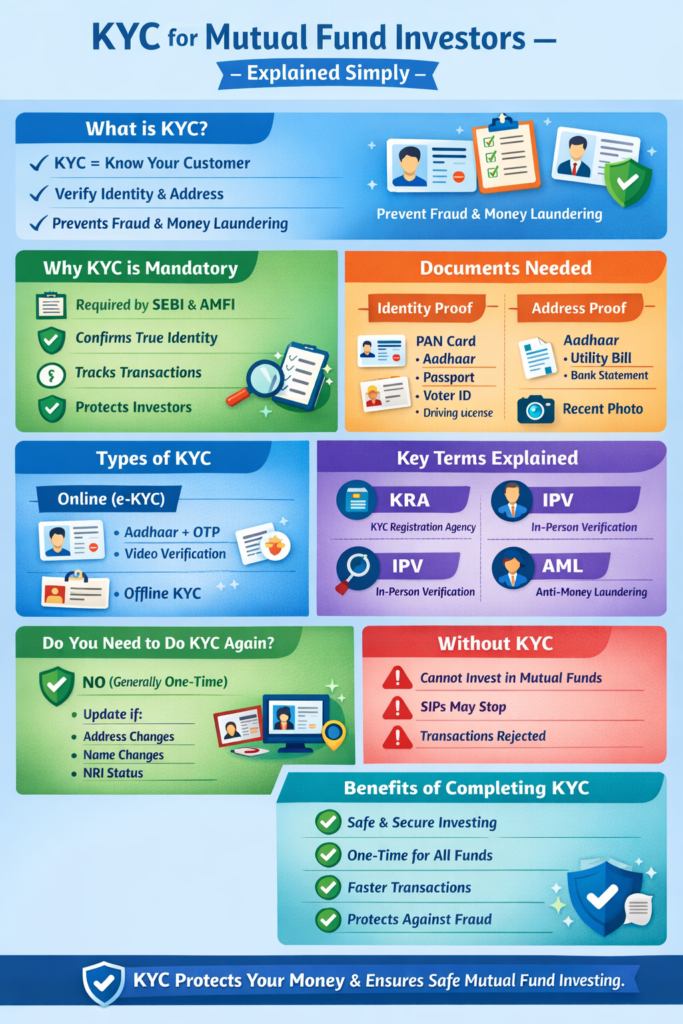
    • Why Is KYC Mandatory for Mutual Fund Investors

      Why Is KYC Mandatory for Mutual Fund Investors

      KYC Explained

      If you have ever tried to invest in a mutual fund, buy insurance, or open a bank account, you may have heard the term KYC. Many people find it confusing at first, so let’s break it down in simple English.


      What is KYC?

      KYC stands for Know Your Customer.

      It is a process used by financial institutions (like banks, mutual fund companies, stockbrokers, etc.) to confirm the identity and address of a customer before allowing financial transactions.

      In simple words:

      KYC is like showing your ID card before entering a secured area. It proves that you are a real and genuine person.


      Why Was KYC Created in the First Place?

      Financial systems like banks and mutual funds deal with huge amounts of money. Without proper checks, criminals may misuse the system for illegal activities.

      KYC helps to prevent:

      Money Laundering (hiding illegal money by making it look legal)
      Terrorist Financing (funding harmful activities)
      Identity Theft (someone pretending to be you)
      Fraud and Financial Scams

      So, KYC protects both the financial institution and the investor.

      KYC DOCUMENTS REQUIRED

      Who Makes KYC Mandatory?

      In India, KYC rules for mutual funds are governed by:

      • SEBI (Securities and Exchange Board of India)
      • AMFI (Association of Mutual Funds in India)

      These authorities ensure that the Indian financial markets remain safe and transparent.


      Why is KYC Mandatory for Mutual Fund Investors?

      Mutual funds allow people to invest money and earn returns. Since money is involved, the system must be safe.

      KYC is mandatory because it helps:

      1. Verify Investor Identity

      Mutual funds must know who is investing. This prevents fraud and protects honest investors.

      2. Track Financial Activities

      If a suspicious transaction happens, authorities can investigate easily.

      3. Protect Investors’ Money

      KYC creates a secure investment environment and reduces chances of misuse.

      4. Follow Government Regulations

      AMCs (Asset Management Companies) must obey SEBI rules. KYC ensures compliance.

      KYC EXPLAINED IN SIMPLE GRAPHICS

      What Documents Are Needed for KYC?

      To complete KYC, you generally need:

      Proof of Identity (POI) – example:

      • PAN Card
      • Aadhaar Card
      • Passport
      • Voter ID
      • Driving License

      Proof of Address (POA) – example:

      • Aadhaar
      • Passport
      • Driving License
      • Electricity bill
      • Bank statement

      Photograph

      • A recent passport-size photo (physical KYC)
      • Live photo (for online KYC)

      PAN Card is Compulsory

      Because PAN helps track financial transactions in India.


      Types of KYC (Modes of Completion)

      There are mainly two types:

      1. Offline KYC

      • Submit physical documents
      • Sign forms
      • In-person verification may be done

      2. Online KYC (e-KYC)

      • Aadhaar-based verification
      • Paperless and quick
      • Can submit through KRA (KYC Registration Agencies)

      For mutual funds, popular KRAs include:

      • CVL KRA (CDSL Ventures)
      • NDML KRA
      • Karvy KRA
      • DOTEX KRA, etc.

      Understanding Some Complicated Terms

      Here are terms that often confuse investors — explained easily:

      ✔ KRA (KYC Registration Agency)

      A KRA stores and verifies KYC records.
      Once you register KYC with one KRA, it works for all mutual fund companies.

      ✔ IPV (In-Person Verification)

      A simple face-to-face verification process to confirm that the person exists in real life.
      In online KYC, this may happen through a video call.

      ✔ e-KYC

      Electronic KYC using Aadhaar number and OTP.
      It is fast, digital, and paperless.

      ✔ AML (Anti-Money Laundering)

      Rules made to stop criminals from using financial systems to hide illegal money.

      ✔ FATCA

      A US law that requires financial institutions to report details of investors who are US taxpayers.
      (Needed only if applicable to you)


      Is KYC a One-Time Process?

      Yes, mostly you do KYC only once.

      After successful registration:

      • You can invest in any mutual fund
      • You don’t need to repeat KYC for every AMC

      Sometimes details may need updating if:

      • You change address
      • Your name changes (marriage, legal reasons)
      • You become a Non-Resident Indian (NRI)

      What Happens If You Don’t Do KYC?

      Without KYC, you cannot invest in mutual funds.

      Even if you have existing SIPs, they may be stopped if your KYC becomes invalid due to mismatches or missing details.


      Benefits of Completing KYC

      ✔ Safer and transparent investment
      ✔ One-time setup for all mutual funds
      ✔ Faster transactions and redemptions
      ✔ Protection from fraud and misuse
      ✔ Mandatory legal compliance

      So doing KYC is not just a rule — it’s for your own financial safety.


      Common Myths About KYC

      MythReality
      KYC is riskyNo, it protects your money
      KYC shares my data publiclyNo, data is protected by law
      KYC takes a long timeOnline KYC is quick & simple
      Only big investors need KYCEvery investor needs KYC

      Conclusion

      KYC may feel like paperwork, but it plays a very important role in keeping mutual fund investments safe, legal, and transparent. It protects both the investor and the financial system from fraud and misuse.

      Whether you are a new investor or experienced, understanding KYC helps you invest with confidence.


      Final Takeaway in One Line:

      KYC exists to protect your money and ensure safe investing — that’s why it is mandatory.

    • എന്താണ് ഈ SIP-യും SWP-യും?

      എന്താണ് ഈ SIP-യും SWP-യും?

      ഇന്ന് വിതയ്ക്കാം, നാളെ കൊയ്യാം

      കൂട്ടുകാരെ, നമുക്കെല്ലാവർക്കും മിഠായി വാങ്ങാനും കളിപ്പാട്ടങ്ങൾ വാങ്ങാനും ഒക്കെ പൈസ വേണം, അല്ലേ? സാധാരണ നമ്മൾ എന്ത് ചെയ്യും? അച്ഛനോ അമ്മയോ തരുന്ന പൈസ ഒരു കുടുക്കയിൽ (Piggy bank) ഇട്ടു വെക്കും. കുറെ നാൾ കഴിയുമ്പോൾ ആ കുടുക്ക നിറയും.

      ഇതുപോലെ വലിയവർ പണം സമ്പാദിക്കുന്ന ഒരു സൂപ്പർ വഴിയെക്കുറിച്ചാണ് ഇന്ന് നമ്മൾ പറയാൻ പോകുന്നത്. അതിന്റെ പേരാണ് SIP-യും SWP-യും. കേട്ടിട്ട് പേടി തോന്നുന്നുണ്ടോ? പേടിക്കണ്ട, സംഗതി വളരെ സിമ്പിളാണ്!

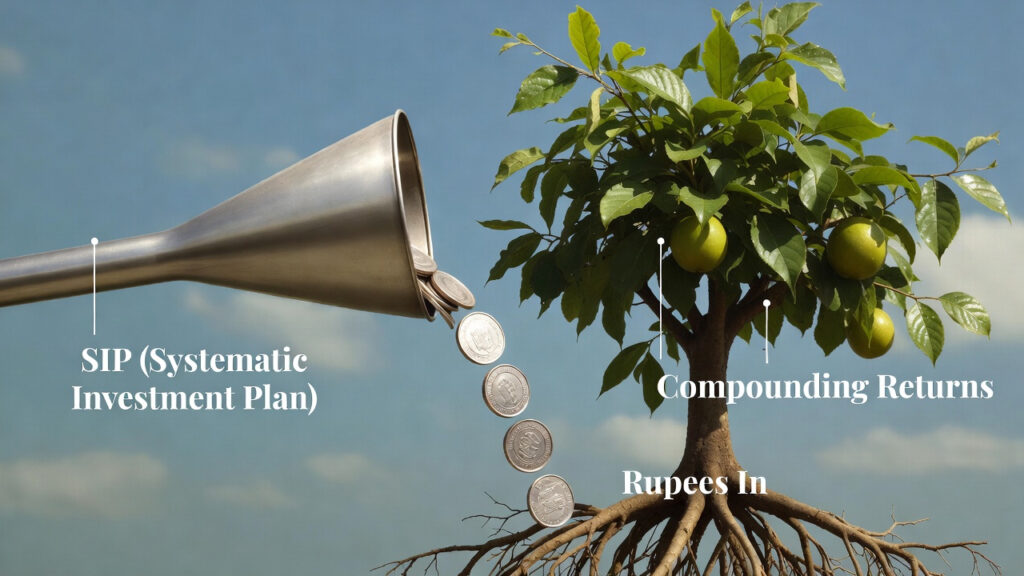
      1. എന്താണ് ഈ SIP? (മരം നടുന്ന കാലം)

      നമ്മൾ ഒരു മാവിൻ തൈ നടുന്നു എന്ന് വിചാരിക്കുക. നമ്മൾ ദിവസവും അതിന് വെള്ളമൊഴിക്കും, ശ്രദ്ധിക്കും. പെട്ടെന്ന് ഒരു ദിവസം കൊണ്ട് അത് വലിയ മരമാകില്ല. വർഷങ്ങൾ എടുക്കും. പക്ഷേ, നമ്മൾ മടുക്കാതെ എന്നും വെള്ളമൊഴിച്ചാൽ അത് പതുക്കെ പതുക്കെ വളർന്ന് വലിയൊരു മരമാകും.

      growing your sip tree

      ഇതുപോലെ, എല്ലാ മാസവും നമ്മുടെ കയ്യിലുള്ള ചെറിയൊരു തുക (അത് 500 രൂപയോ 1000 രൂപയോ എത്രയുമാകാം) സമ്പാദിക്കുന്ന രീതിയാണ് SIP (Systematic Investment Plan).

      • ഗുണം: ചെറിയ തുകയായതുകൊണ്ട് നമുക്ക് ബുദ്ധിമുട്ടുണ്ടാകില്ല.
      • മാജിക്: വർഷങ്ങൾ കഴിയുമ്പോൾ ഈ ചെറിയ തുക ഒരു വലിയ ‘പണത്തിന്റെ മരമായി’ മാറും. ഇതിനെയാണ് ‘കോമ്പൗണ്ടിംഗ്’ (Compounding) എന്ന് വിളിക്കുന്നത്. അതായത്, പണം വളർന്ന് വളർന്ന് വലുതാകുന്ന മാജിക്!

      2. എന്താണ് ഈ SWP? (പഴം പറിക്കുന്ന കാലം)

      നമ്മൾ നട്ട മാവ് വലുതായി എന്ന് വിചാരിക്കുക. ഇനി നമുക്ക് എന്ത് ചെയ്യാം? ആ മരം മുറിച്ചു വിൽക്കാം. പക്ഷേ, അങ്ങനെ ചെയ്താൽ പിന്നെ നമുക്ക് മാമ്പഴം കിട്ടില്ലല്ലോ?

      enjoying the fruit of sip during swp

      അതിന് പകരം, മരത്തിലെ മാമ്പഴം മാത്രം ഓരോന്നായി പറിച്ചെടുത്താലോ? മരം അവിടെത്തന്നെ ഉണ്ടാകും, നമുക്ക് എല്ലാ കാലത്തും മാമ്പഴം കഴിക്കുകയും ചെയ്യാം.

      ഇതാണ് SWP (Systematic Withdrawal Plan). നമ്മൾ SIP വഴി ഉണ്ടാക്കിയ വലിയൊരു തുകയിൽ നിന്ന്, എല്ലാ മാസവും കൃത്യമായ ഒരു തുക ശമ്പളം പോലെ തിരിച്ചെടുക്കുന്ന രീതിയാണിത്.

      • ഗുണം: ജോലിയിൽ നിന്നൊക്കെ വിരമിച്ചു കഴിയുമ്പോൾ (Retirement), കയ്യിൽ പണമില്ലാതെ വിഷമിക്കണ്ട. ഈ മരത്തിൽ നിന്ന് മാമ്പഴം പറിക്കുന്നത് പോലെ എല്ലാ മാസവും പണം കിട്ടിക്കൊണ്ടിരിക്കും. ബാക്കി പണം അവിടെയിരുന്ന് വീണ്ടും വളരുകയും ചെയ്യും!

      ചുരുക്കത്തിൽ പറഞ്ഞാൽ:

      • SIP: ഇത് പണം നിക്ഷേപിക്കുന്ന ഘട്ടമാണ്. ഒരു വലിയ സമ്പാദ്യം ഉണ്ടാക്കിയെടുക്കാൻ ഇത് സഹായിക്കുന്നു.
      • SWP: ഇത് നിക്ഷേപിച്ച പണം ഉപയോഗിക്കുന്ന ഘട്ടമാണ്. എല്ലാ മാസവും ഒരു വരുമാനം ഉറപ്പാക്കാൻ ഇത് സഹായിക്കുന്നു.

      നമ്മൾ എന്ത് ചെയ്യണം?

      ഇപ്പോൾ നിങ്ങൾ കുട്ടികളാണെങ്കിലും, ഈ കാര്യം മനസ്സിലാക്കി വെക്കുന്നത് നല്ലതാണ്. വലുതാകുമ്പോൾ ആദ്യത്തെ ശമ്പളം കിട്ടിത്തുടങ്ങുമ്പോൾ തന്നെ ഒരു ചെറിയ SIP തുടങ്ങിയാൽ, ഭാവിയിൽ നിങ്ങൾക്ക് സാമ്പത്തികമായി ഒരു ബുദ്ധിമുട്ടും ഉണ്ടാവില്ല.

      ഓർക്കുക: ഇന്ന് നാം നടുന്ന ചെറിയ തൈയാണ് നാളെ നമുക്ക് തണലും പഴങ്ങളും തരുന്നത്!


      നിങ്ങളുടെ അച്ഛനോടും അമ്മയോടും ഈ കാര്യത്തെക്കുറിച്ച് ചോദിച്ചു നോക്കൂ. അവർക്കും ഇതൊരു പുതിയ അറിവായേക്കാം!

    • SIP Today SWP Tomorrow

      SIP Today SWP Tomorrow

      Have you ever seen a mango tree? When it is small, you water it every day. You take care of it. It does not give fruits immediately. But after a few years, that same tree gives you tasty mangoes every summer!

      Saving and investing money works the same way.

      What is SIP?

      SIP means Systematic Investment Plan.

      It is like watering the tree.

      You put small amounts of money every month into an investment (like mutual funds). Slowly, this money grows over time.

      What is SWP?

      SWP means Systematic Withdrawal Plan.

      It is like taking mangoes from the tree when it grows big.

      After many years, when your money has grown, you can take out some money every month to use for your needs. You don’t have to take everything at once.


      Let’s Learn Through a Small Story

      There was a boy named Rohan who loved to eat mangoes. His father told him:

      “If you want mangoes in the future, you must plant a sapling today!”

      So Rohan planted a small mango plant in the backyard. Every day he did a few things:

      ✓ He watered it
      ✓ He protected it from goats
      ✓ He gave it sunlight and care

      This was his SIP — Small Important Practice every day.

      Years passed… the plant became a big mango tree. Now every summer, the tree gave so many mangoes that Rohan and his family enjoyed them without buying from the shop. They even shared with relatives!

      This was like SWP — Summer Wonderful Picking!

      Because Rohan took small steps earlier, he enjoyed big benefits later.


      What Does This Mean for Money?

      When we start a SIP today, we are putting money regularly (like watering the plant).

      After many years, when we need money for:

      ✓ Children’s education
      ✓ Retirement
      ✓ Monthly expenses
      ✓ Buying a house

      We can use SWP to take money out slowly and safely, without finishing everything at once (just like not cutting the mango tree!).


      Why Is This Good?

      SIP makes saving easy — small amounts every month
      Money grows over time — like a plant becoming a tree
      SWP gives regular money — like getting mangoes every season
      No pressure — you don’t need to invest a big amount at once
      Perfect for long-term goals


      In Simple Words

      🌱 SIP Today = Plant the tree
      🍃 Wait and let it grow
      🥭 SWP Tomorrow = Enjoy the fruits


      Conclusion

      Many people think that money grows only when we earn a lot. But the truth is:

      Money grows when we start early, invest regularly, and allow time to work.

      Just like Rohan’s tree, if we start a SIP today, we can enjoy a peaceful future with SWP tomorrow.

      So the magic formula is:

      👉 Start Small + Be Regular + Wait = Big Benefits Later

    • എന്താണ് SIP?

      എന്താണ് SIP?

      ഇന്ത്യയിലെ ഒട്ടുമിക്ക ആളുകൾക്കും ‘നിക്ഷേപം’ എന്ന് കേൾക്കുമ്പോൾ തന്നെ ഒരുതരം പേടിയോ ആശയക്കുപ്പമോ ഉണ്ടാകാറുണ്ട്. പ്രത്യേകിച്ച് ഓഹരി വിപണിയെ (Stock Market) കുറിച്ച് ഓർക്കുമ്പോൾ. എന്നാൽ കഴിഞ്ഞ പത്ത് വർഷത്തിനിടയിൽ, ദശലക്ഷക്കണക്കിന് സാധാരണക്കാരെ ആത്മവിശ്വാസത്തോടെ നിക്ഷേപം നടത്താൻ സഹായിച്ച ഒരു ലളിതമായ മാർഗമുണ്ട്—അതാണ് SIP (എസ്.ഐ.പി).

      നിങ്ങൾ ഈ വാക്ക് കേട്ടിട്ടുണ്ടാകാം, പക്ഷേ ഇത് എങ്ങനെ പ്രവർത്തിക്കുന്നുവെന്നോ ഇതിന്റെ ഗുണങ്ങൾ എന്താണെന്നോ അറിയില്ലെങ്കിൽ ഈ ലേഖനം നിങ്ങൾക്ക് വേണ്ടിയുള്ളതാണ്.

      ⭐ എന്താണ് യഥാർത്ഥത്തിൽ SIP?

      SIP എന്നാൽ Systematic Investment Plan എന്നാണ് അർത്ഥം.

      മ്യൂച്വൽ ഫണ്ടുകളിൽ നിക്ഷേപിക്കാൻ സാധിക്കുന്ന ഒരു രീതിയാണിത്. ഒന്നിച്ച് വലിയൊരു തുക നിക്ഷേപിക്കുന്നതിന് പകരം കൃത്യമായ ഇടവേളകളിൽ (മാസത്തിലോ ദിവസത്തിലോ) ഒരു നിശ്ചിത തുക നിക്ഷേപിക്കാൻ ഇത് നിങ്ങളെ സഹായിക്കുന്നു.

      ഉദാഹരണത്തിന്:

      • മാസം ₹1,000
      • മാസം ₹5,000
      • അല്ലെങ്കിൽ ദിവസം ₹100 പോലും നിങ്ങൾക്ക് നിക്ഷേപിക്കാം.

      ബാങ്ക് നിക്ഷേപം പോലെ തന്നെ ഇത് ലളിതമാണ്. എന്നാൽ പണം വെറുതെ അക്കൗണ്ടിൽ കിടക്കുന്നതിന് പകരം, അത് മ്യൂച്വൽ ഫണ്ടുകളിൽ നിക്ഷേപിക്കപ്പെടുന്നു. ഇത് ദീർഘകാലാടിസ്ഥാനത്തിൽ വലിയൊരു സമ്പത്ത് ഉണ്ടാക്കാൻ നിങ്ങളെ സഹായിക്കുന്നു.


      ⭐ SIP എങ്ങനെയാണ് പ്രവർത്തിക്കുന്നത്?

      നിങ്ങൾ ഒരുതവണ സെറ്റ് ചെയ്താൽ മതി, പിന്നീട് ബാക്കി കാര്യങ്ങൾ തനിയെ നടന്നോളും:

      1. ഓരോ മാസവും ഒരു നിശ്ചിത തീയതിയിൽ നിങ്ങളുടെ ബാങ്ക് അക്കൗണ്ടിൽ നിന്ന് തുക തനിയെ ഡെക്ട് (Auto-deduct) ചെയ്യപ്പെടും.
      2. ആ പണം ഉപയോഗിച്ച് അന്ന് മാർക്കറ്റിലുള്ള വിലയ്ക്ക് (NAV) മ്യൂച്വൽ ഫണ്ട് യൂണിറ്റുകൾ വാങ്ങുന്നു.
      3. കാലക്രമേണ, നിങ്ങളുടെ കൈവശമുള്ള യൂണിറ്റുകളുടെ എണ്ണം കൂടുന്നു.
      4. ദീർഘകാലം കഴിയുമ്പോൾ മാർക്കറ്റിലെ വളർച്ചയ്ക്ക് അനുസരിച്ച് നിങ്ങളുടെ നിക്ഷേപവും വളരുന്നു.

      ഇവിടെ നിങ്ങൾ ദിവസവും മാർക്കറ്റ് നോക്കേണ്ട ആവശ്യമില്ല. എപ്പോൾ വാങ്ങണം, എപ്പോൾ വിൽക്കണം എന്ന് ഓർത്ത് വിഷമിക്കുകയും വേണ്ട.

      sip for long term

      ⭐ ദീർഘകാല നിക്ഷേപത്തിന് SIP നല്ലതാണെന്ന് പറയുന്നത് എന്തുകൊണ്ട്?

      1. മാർക്കറ്റിന്റെ കയറ്റിറക്കങ്ങൾ നോക്കേണ്ടതില്ല

      മാർക്കറ്റ് എപ്പോൾ കൂടുമെന്നോ കുറയുമെന്നോ പ്രവചിക്കാൻ ആർക്കും സാധിക്കില്ല. SIP വഴി നിങ്ങൾ എല്ലാ സാഹചര്യങ്ങളിലും (മാർക്കറ്റ് കൂടുമ്പോഴും കുറയുമ്പോഴും) നിക്ഷേപം നടത്തുന്നു. ഇതിനെ Rupee Cost Averaging എന്ന് വിളിക്കുന്നു. ഇത് നിങ്ങളുടെ നിക്ഷേപത്തിന്റെ ശരാശരി ചിലവ് കുറയ്ക്കാൻ സഹായിക്കുന്നു.

      2. നിക്ഷേപം ഒരു ശീലമാകുന്നു

      വാടക കൊടുക്കുന്നതോ ഇ.എം.ഐ (EMI) അടയ്ക്കുന്നതോ പോലെ നിക്ഷേപവും നിങ്ങളുടെ ജീവിതത്തിന്റെ ഭാഗമാകും. ചെറിയ തുകകൾ പോലും വർഷങ്ങൾ കഴിയുമ്പോൾ വലിയൊരു സമ്പാദ്യമായി മാറും.

      3. ജീവിത ലക്ഷ്യങ്ങൾ നേടിയെടുക്കാം

      നമ്മുടെ പ്രധാന ലക്ഷ്യങ്ങളെല്ലാം ദീർഘകാലത്തേക്ക് ഉള്ളവയാണ്:

      • മക്കളുടെ വിദ്യാഭ്യാസം
      • വിവാഹ ചിലവുകൾ
      • സ്വന്തമായി ഒരു വീട്
      • റിട്ടയർമെന്റ് പ്ലാനിംഗ്

      സ്ഥിരതയാർന്ന നിക്ഷേപം ആവശ്യമുള്ള ഇത്തരം ലക്ഷ്യങ്ങൾക്ക് ഏറ്റവും അനുയോജ്യമായ മാർഗമാണ് SIP.

      sip compounding

      4. Compounding ഗുണം

      നിക്ഷേപത്തിൽ നിന്നുള്ള ലാഭത്തിന് വീണ്ടും ലാഭം ലഭിക്കുന്ന രീതിയാണിത്. നിങ്ങൾ എത്ര കൂടുതൽ കാലം നിക്ഷേപം തുടരുന്നുവോ, അത്രയും വലിയ വളർച്ച നിങ്ങളുടെ പണത്തിന് ലഭിക്കും.


      ⭐ “SIP vs ഒറ്റത്തവണ നിക്ഷേപം (Lump Sum)” – ഒരു താരതമ്യം

      പ്രത്യേകതSIPഒറ്റത്തവണ നിക്ഷേപം (Lump Sum)
      നിക്ഷേപ രീതിമാസം തോറും/കൃത്യമായ ഇടവേളകളിൽഒന്നിച്ച് ഒരു വലിയ തുക
      മാർക്കറ്റ് നോക്കണോ?വേണ്ടഅതെ, ശ്രദ്ധിക്കണം
      അനുയോജ്യം ആർക്ക്?ശമ്പളക്കാർക്ക് / അച്ചടക്കമുള്ളവർക്ക്പരിചയസമ്പന്നരായ നിക്ഷേപകർക്ക്
      മാനസിക സമാധാനംകൂടുതൽകുറവ്

      ⭐ ആർക്കൊക്കെ SIP തുടങ്ങാം?

      • ശമ്പളം വാങ്ങുന്നവർ
      • ചെറുകിട കച്ചവടക്കാർ
      • ഫ്രീലാൻസർമാർ
      • വിദ്യാർത്ഥികൾ (ചെറിയ സമ്പാദ്യമുള്ളവർ)
      • പ്രവാസികൾ

      ചുരുക്കത്തിൽ, ദിവസവുമുള്ള ടെൻഷൻ ഇല്ലാതെ പണം വളർത്താൻ ആഗ്രഹിക്കുന്ന ആർക്കും SIP തുടങ്ങാം.

      ⭐ അവസാനമായി

      SIP എന്നത് ഒരു മാന്ത്രിക വിദ്യയോ പെട്ടെന്ന് പണക്കാരനാകാനുള്ള വഴിയോ അല്ല. മറിച്ച്, അച്ചടക്കത്തോടെ നിക്ഷേപം നടത്താനുള്ള ഒരു ശാസ്ത്രീയമായ രീതിയാണ്. ഇത് നിക്ഷേപത്തെ ഒരു ചൂതാട്ടമായി കാണുന്നതിന് പകരം, ഒരു മികച്ച ജീവിതശൈലിയായി മാറ്റുന്നു.

      മാർക്കറ്റിലെ ആശയക്കുഴപ്പങ്ങൾ കാരണം നിങ്ങൾ നിക്ഷേപം മാറ്റിവെക്കുകയാണെങ്കിൽ, തുടങ്ങാൻ ഏറ്റവും നല്ല വഴി SIP തന്നെയാണ്.

      BVB Capital Private Limited-ൽ, ഇത്തരം കാര്യങ്ങൾ ലളിതമായി മനസ്സിലാക്കാനും മികച്ച രീതിയിൽ നിക്ഷേപം നടത്താനും ഞങ്ങൾ നിങ്ങളെ സഹായിക്കുന്നു.

    • What Is SIP and Why It Is Ideal for Long-Term Investing?

      What Is SIP and Why It Is Ideal for Long-Term Investing?

      For many people in India, investing feels complicated, risky, or even intimidating. This is especially true when it comes to the stock market. But over the last decade, one simple idea has helped millions of ordinary people invest with confidence—SIP.

      If you’ve heard the term “SIP” but never really understood how it works, or why everyone keeps recommending it for future goals, this article is for you.


      ⭐ What Exactly Is an SIP?

      SIP stands for Systematic Investment Plan.

      It is a feature of mutual funds that allows you to invest a fixed amount regularly, such as every month or every week.

      Example:

      • ₹1,000 per month
      • ₹5,000 per month
      • ₹100 per day
      • or any amount you are comfortable with

      SIP works just like depositing money, except instead of lying idle, your money is invested in mutual funds, which can help you create wealth over the long term.

      The idea is simple:

      SIP is a disciplined investment habit that doesn’t depend on market timing.


      ⭐ How Does SIP Work?

      Here’s the best part—SIP works quietly in the background. Once you set it up:

      1. A fixed amount is auto-deducted from your bank account
      2. Units of the mutual fund are purchased at the day’s NAV
      3. Over time, you accumulate more units
      4. Over a long period, your investment grows based on market performance

      You don’t need to track markets daily. You don’t need to decide when to buy or sell. SIP takes the emotional burden away.

      Why SIP Is Ideal for Long-Term Investing

      ⭐ Why SIP Is Ideal for Long-Term Investing

      There are a few reasons why SIP is considered one of the best long-term methods for ordinary investors.


      📌 1. You Don’t Need to Time the Market

      Most people do not know when the market is high or low—and that’s normal.

      With SIP, you spread your investments across:

      • Good market phases
      • Bad market phases
      • Sideways market phases

      This automatically averages the cost over time, which is called rupee cost averaging.

      The result?

      You participate in the market without needing to predict it.

      SIP as a Financial Habit

      📌 2. SIP Builds a Financial Habit

      Just like exercising or reading, money also needs discipline. SIP turns investing into a monthly habit, similar to paying rent or an EMI.

      And over the years, habits quietly create results.

      Even small SIPs can become meaningful when combined with time.


      📌 3. SIP Aligns with Real Life Goals

      Most of our important goals are long-term by nature:

      • Children’s education
      • Marriage expenses
      • Buying a home
      • Retirement planning
      • Financial independence
      • Wealth creation

      These goals require time + consistency, not overnight returns.

      Because SIP works quietly over years, it fits perfectly with how real life actually works.

      SIP Benefits from Compounding

      📌 4. SIP Benefits from Compounding

      Compounding is simply earning returns on your returns.

      The longer you stay invested, the more powerful compounding becomes. SIP is ideal for compounding because it keeps adding fresh investment regularly.

      Long term + SIP = Compounding engine


      📌 5. SIP Works for Small and Big Investors Alike

      You don’t need lakhs to start. Even:

      • ₹500/month
      • ₹1,000/month
      • ₹100/day

      …is enough to begin.

      This makes SIP inclusive. People in their 20s, 30s, and 40s can all start at their own pace.


      ⭐ “SIP vs Lump Sum” – A Simple Comparison

      FeatureSIPLump Sum
      Investment styleMonthly/regularOne-time
      Market timing needNoYes
      Suitable forSalaried / disciplinedExperienced investors
      Emotional comfortHighLow to medium

      For most beginners:

      SIP is the simplest and most comfortable way to start investing.


      ⭐ Who Should Consider SIP?

      SIP is suitable for:

      • Salaried individuals
      • Business owners
      • Freelancers
      • Students (with small savings)
      • NRIs investing in India
      • Retirees with planned amounts

      If your goal is long-term growth without daily stress, SIP is the right approach.


      ⭐ Final Thoughts

      SIP is not a trick, not a stock tip, and not a quick money formula. It’s simply a method—a disciplined, time-tested way of participating in markets without anxiety.

      Over years, SIP helps investors:

      • Build habits
      • Stay consistent
      • Ignore noise
      • Capture growth
      • Benefit from compounding

      In short: SIP turns investing into a lifestyle rather than a gamble.

      If you’ve been postponing investing because markets look confusing, SIP gives you a practical starting point.


      At BVB Capital Private Limited, our focus is on helping people understand these concepts clearly and make long-term investing simple and comfortable.

    • എന്താണ് മ്യൂച്വൽ ഫണ്ട്?

      എന്താണ് മ്യൂച്വൽ ഫണ്ട്?

      മ്യൂച്വൽ ഫണ്ടുകളെക്കുറിച്ച് ലളിതമായി മനസ്സിലാക്കാം

      പലർക്കും ‘മ്യൂച്വൽ ഫണ്ട്’ എന്ന വാക്ക് കേൾക്കുമ്പോൾ വലിയ സങ്കീർണ്ണതയോ അല്ലെങ്കിൽ ഒരുതരം ഭയമോ ഒക്കെ തോന്നാറുണ്ട്. ചിലർ ഇതിനെ ഓഹരി വിപണിയുമായി (Stock Market) ബന്ധിപ്പിക്കുമ്പോൾ, മറ്റു ചിലർ സോഷ്യൽ മീഡിയയിൽ കാണുന്ന തട്ടിപ്പുകളാണെന്ന് തെറ്റിദ്ധരിക്കുന്നു. ഇതിന്റെ ഫലമായി, ഭൂരിഭാഗം ആളുകളും തങ്ങളുടെ സമ്പാദ്യം സേവിങ്സ് അക്കൗണ്ടുകളിലോ, ഫിക്സഡ് ഡിപ്പോസിറ്റുകളിലോ (FD), സ്വർണ്ണത്തിലോ, വസ്തുവകകളിലോ മാത്രമായി ഒതുക്കുന്നു.

      എന്നാൽ മ്യൂച്വൽ ഫണ്ട് എന്നത് പെട്ടെന്ന് പണം ഇരട്ടിപ്പിക്കാനുള്ള ഒരു കുറുക്കുവഴിയോ അല്ലെങ്കിൽ നിഗൂഢമായ ഒന്നോ അല്ല. ലളിതമായി പറഞ്ഞാൽ, പ്രൊഫഷണലുകളുടെ സഹായത്തോടെ നിക്ഷേപം നടത്താൻ ആഗ്രഹിക്കുന്നവർക്കായി സർക്കാർ നിയമങ്ങൾക്കും നിയന്ത്രണങ്ങൾക്കും വിധേയമായി പ്രവർത്തിക്കുന്ന ഒരു നിക്ഷേപ രീതിയാണിത്. സ്വന്തമായി നിക്ഷേപം നിയന്ത്രിക്കാൻ സമയമില്ലാത്തവർക്കും അതിനെക്കുറിച്ച് ആഴത്തിലുള്ള അറിവില്ലാത്തവർക്കും ഇത് ഏറെ അനുയോജ്യമാണ്.

      എന്താണ് മ്യൂച്വൽ ഫണ്ട് എന്നും അത് എങ്ങനെയാണ് പ്രവർത്തിക്കുന്നതെന്നും ലളിതമായ ഭാഷയിൽ ഈ ലേഖനത്തിലൂടെ പരിചയപ്പെടാം.

      What is Mutual Fund

      എന്താണ് മ്യൂച്വൽ ഫണ്ട്?

      പല നിക്ഷേപകരിൽ നിന്നായി പണം സ്വരൂപിച്ച് (Pool) അത് ഓഹരികളിലോ (Equity), കടപ്പത്രങ്ങളിലോ (Bonds), അല്ലെങ്കിൽ രണ്ടിന്റെയും മിശ്രിതത്തിലോ നിക്ഷേപിക്കുന്ന രീതിയെയാണ് മ്യൂച്വൽ ഫണ്ട് എന്ന് പറയുന്നത്.

      നേരിട്ട് ഓഹരികളിലോ കടപ്പത്രങ്ങളിലോ പണം നിക്ഷേപിക്കുന്നതിന് പകരം, നിങ്ങൾ ഒരു മ്യൂച്വൽ ഫണ്ട് സ്കീമിലാണ് നിക്ഷേപിക്കുന്നത്. ഈ തുക കൈകാര്യം ചെയ്യുന്നത് വിദഗ്ധരായ ‘ഫണ്ട് മാനേജർമാരാണ്’. ഓരോ നിക്ഷേപകനും ആ ഫണ്ടിന്റെ നിശ്ചിത യൂണിറ്റുകൾ (Units) ലഭിക്കുന്നു. ഈ ഫണ്ട് എവിടെയാണോ നിക്ഷേപിച്ചിരിക്കുന്നത്, ആ നിക്ഷേപങ്ങളുടെ മൂല്യത്തിനനുസരിച്ച് നിങ്ങളുടെ യൂണിറ്റുകളുടെ വിലയിലും മാറ്റങ്ങൾ വരുന്നു.

      മ്യൂച്വൽ ഫണ്ട് എങ്ങനെയാണ് പ്രവർത്തിക്കുന്നത്?

      മ്യൂച്വൽ ഫണ്ടിന്റെ പ്രവർത്തനത്തെ നമുക്ക് ഘട്ടം ഘട്ടമായി താഴെ പറയുന്ന രീതിയിൽ മനസ്സിലാക്കാം:

      1. നിക്ഷേപകർ പണം നൽകുന്നു പല നിക്ഷേപകർ ഒരു സ്കീമിലേക്ക് പണം നൽകുന്നു. ഇത് രണ്ട് രീതിയിൽ ചെയ്യാം:

      • ലംപ്‌സം (Lump sum): വലിയൊരു തുക ഒറ്റത്തവണയായി നിക്ഷേപിക്കുന്ന രീതി.
      • എസ്.ഐ.പി (SIP): ഓരോ മാസവും കൃത്യമായ ഒരു തുക നിക്ഷേപിക്കുന്ന രീതി (Systematic Investment Plan). ഓരോ നിക്ഷേപത്തിനും പകരമായി നിങ്ങൾക്ക് ഫണ്ടിന്റെ യൂണിറ്റുകൾ ലഭിക്കും.

      2. പ്രൊഫഷണലുകളുടെ മേൽനോട്ടം നിക്ഷേപകരിൽ നിന്ന് ശേഖരിച്ച പണം ഒരു ഫണ്ട് മാനേജരും അദ്ദേഹത്തിന്റെ റിസർച്ച് ടീമും ചേർന്നാണ് കൈകാര്യം ചെയ്യുന്നത്. അവരുടെ പ്രധാന ജോലികൾ ഇവയാണ്:

      • വിപണിയെയും കമ്പനികളെയും കുറിച്ച് പഠിക്കുക.
      • എവിടെ നിക്ഷേപിക്കണമെന്ന് തീരുമാനിക്കുക.
      • അപകടസാധ്യതകൾ (Risks) നിരീക്ഷിക്കുക. ഓരോ ദിവസവും മാർക്കറ്റ് വില നോക്കാനോ തീരുമാനങ്ങൾ എടുക്കാനോ നിക്ഷേപകർക്ക് സമയം കളയേണ്ടി വരുന്നില്ല.

      3. നിക്ഷേപങ്ങളിലെ വൈവിധ്യവൽക്കരണം (Diversification) മ്യൂച്വൽ ഫണ്ടിന്റെ ഏറ്റവും വലിയ ഗുണമാണിത്. നിങ്ങളുടെ പണം ഒരൊറ്റ കമ്പനിയിലോ കടപ്പത്രത്തിലോ നിക്ഷേപിക്കുന്നതിന് പകരം, വ്യത്യസ്ത കമ്പനികളിലും മേഖലകളിലുമായി വിഭജിച്ചാണ് നിക്ഷേപിക്കുന്നത്. ഇതുവഴി ഒരു നിക്ഷേപത്തിന് നഷ്ടം സംഭവിച്ചാലും മറ്റുള്ളവ അതിനെ സന്തുലിതമാക്കാൻ സഹായിക്കുന്നു.

      4. ലാഭം മാർക്കറ്റ് നിലവാരത്തിനനുസരിച്ച് ഒരു മ്യൂച്വൽ ഫണ്ട് യൂണിറ്റിന്റെ വിലയെ എൻ.എ.വി (NAV – Net Asset Value) എന്ന് വിളിക്കുന്നു. നിക്ഷേപിച്ച ഓഹരികളുടെയോ ബോണ്ടുകളുടെയോ മൂല്യത്തിനനുസരിച്ച് NAV ദിവസവും മാറിക്കൊണ്ടിരിക്കും.

      • നിക്ഷേപങ്ങൾ മികച്ച ലാഭം നൽകുമ്പോൾ NAV ഉയരുന്നു.
      • മാർക്കറ്റ് താഴേക്ക് പോകുമ്പോൾ NAV കുറയാൻ സാധ്യതയുണ്ട്. അതുകൊണ്ട് തന്നെ മ്യൂച്വൽ ഫണ്ടുകൾ ദീർഘകാല നിക്ഷേപത്തിനാണ് (Long-term investing) ഏറ്റവും അനുയോജ്യം.
      Mutual fund regulation

      ഇന്ത്യയിൽ മ്യൂച്വൽ ഫണ്ടുകളെ നിയന്ത്രിക്കുന്നത് ആരാണ്?

      ഇന്ത്യയിലെ മ്യൂച്വൽ ഫണ്ടുകൾ വളരെ കർശനമായ നിയമങ്ങൾക്ക് കീഴിലാണ് പ്രവർത്തിക്കുന്നത്.

      • SEBI (സെക്യൂരിറ്റീസ് ആൻഡ് എക്സ്ചേഞ്ച് ബോർഡ് ഓഫ് ഇന്ത്യ): നിക്ഷേപകരുടെ താൽപ്പര്യങ്ങൾ സംരക്ഷിക്കുന്നതിനായി സെബിയാണ് മ്യൂച്വൽ ഫണ്ടുകളെ നിയന്ത്രിക്കുന്നത്.
      • AMC (അസറ്റ് മാനേജ്‌മെന്റ് കമ്പനി): ഓരോ മ്യൂച്വൽ ഫണ്ടും ഒരു എ.എം.സിക്ക് കീഴിലാണ് പ്രവർത്തിക്കുക.
      • AMFI: മ്യൂച്വൽ ഫണ്ട് വിതരണക്കാരെല്ലാം ആംഫിയിൽ രജിസ്റ്റർ ചെയ്തവരായിരിക്കണം. ഈ സംവിധാനം സുതാര്യതയും സുരക്ഷിതത്വവും ഉറപ്പാക്കുന്നു.

      പ്രധാനപ്പെട്ട മ്യൂച്വൽ ഫണ്ട് ഇനങ്ങൾ

      തുടക്കക്കാർക്ക് പ്രധാനമായും മൂന്ന് തരം ഫണ്ടുകളെക്കുറിച്ച് അറിഞ്ഞിരിക്കാം:

      • ഇക്വിറ്റി മ്യൂച്വൽ ഫണ്ടുകൾ (Equity Funds): പണം പ്രധാനമായും കമ്പനികളുടെ ഓഹരികളിൽ നിക്ഷേപിക്കുന്നു. ദീർഘകാല ലക്ഷ്യങ്ങൾക്കും കൂടുതൽ ലാഭത്തിനും ഇത് അനുയോജ്യമാണ്.
      • ഡെറ്റ് മ്യൂച്വൽ ഫണ്ടുകൾ (Debt Funds): കടപ്പത്രങ്ങളിലും സ്ഥിരവരുമാന പദ്ധതികളിലും നിക്ഷേപിക്കുന്നു. ഇക്വിറ്റി ഫണ്ടുകളെ അപേക്ഷിച്ച് ഇതിൽ റിസ്ക് കുറവായിരിക്കും.
      • ഹൈബ്രിഡ് മ്യൂച്വൽ ഫണ്ടുകൾ (Hybrid Funds): ഓഹരികളിലും കടപ്പത്രങ്ങളിലും ഒരുപോലെ നിക്ഷേപിക്കുന്നു. വളർച്ചയും സ്ഥിരതയും ആഗ്രഹിക്കുന്നവർക്ക് ഇത് തെരഞ്ഞെടുക്കാം.

      മ്യൂച്വൽ ഫണ്ട് നിക്ഷേപം സുരക്ഷിതമാണോ?

      മ്യൂച്വൽ ഫണ്ടുകളിൽ വിപണിയുമായി ബന്ധപ്പെട്ട റിസ്ക് (Market Risk) ഉണ്ട്, എന്നാൽ ഇത് തികച്ചും സുതാര്യമാണ്. ശ്രദ്ധിക്കേണ്ട കാര്യങ്ങൾ ഇവയാണ്:

      • വിപണിയിലെ മാറ്റങ്ങൾക്കനുസരിച്ച് ലാഭനഷ്ടങ്ങൾ ഉണ്ടായേക്കാം.
      • ദീർഘകാല നിക്ഷേപം ഇത്തരം ഏറ്റക്കുറച്ചിലുകളെ മറികടക്കാൻ സഹായിക്കും.
      • കൃത്യമായ നിയമങ്ങളും പ്രൊഫഷണലുകളുടെ മേൽനോട്ടവും നിക്ഷേപത്തെ സുരക്ഷിതമാക്കുന്നു.

      സമ്പാദ്യവും നിക്ഷേപവും തമ്മിലുള്ള വ്യത്യാസം

      പലരും പണം ലാഭിക്കുന്നുണ്ടെങ്കിലും ഭാവിയിലെ കാര്യങ്ങളെക്കുറിച്ച് ആശങ്കാകുലരാണ്. ഇതിന് കാരണം പണം മാറ്റിവെക്കുന്നതും (Savings) അത് നിക്ഷേപിക്കുന്നതും (Investing) തമ്മിലുള്ള വ്യത്യാസം തിരിച്ചറിയാത്തതാണ്.

      • സമ്പാദ്യം (Savings): അടിയന്തര ആവശ്യങ്ങൾക്കും പണം കയ്യിൽ വെക്കുന്നതിനും മുൻഗണന നൽകുന്നു.
      • നിക്ഷേപം (Investing): ദീർഘകാലാടിസ്ഥാനത്തിൽ സമ്പത്ത് വളർത്താൻ ലക്ഷ്യമിടുന്നു. സമ്പാദ്യത്തിന് പകരമല്ല മ്യൂച്വൽ ഫണ്ട്, മറിച്ച് അതിന് ഒരു അനുബന്ധമാണ്. മക്കളുടെ വിദ്യാഭ്യാസം, വിവാഹം, വിരമിക്കൽ കാലം തുടങ്ങിയ വലിയ ലക്ഷ്യങ്ങൾക്കായി മ്യൂച്വൽ ഫണ്ട് ഉപയോഗിക്കാം.

      ആർക്കൊക്കെ നിക്ഷേപിക്കാം?

      • ആദ്യമായി നിക്ഷേപം നടത്തുന്നവർക്ക്.
      • ശമ്പള വരുമാനക്കാർക്കും ബിസിനസ്സുകാർക്കും.
      • പ്രവാസികൾക്കും (NRIs).
      • ചിട്ടയായ നിക്ഷേപം ആഗ്രഹിക്കുന്ന ആർക്കും.

      നിക്ഷേപം തുടങ്ങാൻ വലിയ തുക ആവശ്യമില്ല. മറിച്ച്, നിക്ഷേപത്തിലെ കൃത്യനിഷ്ഠയും സമയവുമാണ് ഏറ്റവും പ്രധാനം.

      ഉപസംഹാരം

      മ്യൂച്വൽ ഫണ്ട് എന്നത് പേടിക്കേണ്ട ഒന്നല്ല, മറിച്ച് സാമ്പത്തിക ഭദ്രതയ്ക്കായി ഉപയോഗിക്കാവുന്ന മികച്ചൊരു ആയുധമാണ്. വിപണിയെക്കുറിച്ച് ബോധവാന്മാരായി, ക്ഷമയോടെ ദീർഘകാലത്തേക്ക് നിക്ഷേപിക്കുന്നവർക്ക് ഇത് വലിയ നേട്ടങ്ങൾ നൽകും.

      BVB Capital Private Limited-ൽ ഞങ്ങളുടെ ലക്ഷ്യം നിക്ഷേപകരെ ബോധവൽക്കരിക്കുകയും അവർക്ക് ലളിതവും സുതാര്യവുമായ രീതിയിൽ മാർഗ്ഗനിർദ്ദേശങ്ങൾ നൽകുകയുമാണ്. നിക്ഷേപിക്കുന്നതിന് മുൻപ് അതിനെക്കുറിച്ച് വ്യക്തമായി മനസ്സിലാക്കുക എന്നതാണ് വിജയത്തിലേക്കുള്ള ആദ്യപടി.


      നിങ്ങൾക്ക് മ്യൂച്വൽ ഫണ്ട് നിക്ഷേപം തുടങ്ങുന്നതിനെക്കുറിച്ചോ നിലവിലെ നിക്ഷേപങ്ങൾ പരിശോധിക്കുന്നതിനെക്കുറിച്ചോ കൂടുതൽ അറിയാൻ താൽപ്പര്യമുണ്ടോ? Contact Us

    • What Is a Mutual Fund?

      What Is a Mutual Fund?

      For many people, the word mutual fund sounds complicated or risky. Some associate it with the stock market, others with scams they hear about on social media. As a result, many prefer to keep their money only in savings accounts, fixed deposits, gold, or real estate.

      But a mutual fund is not a shortcut to quick profits, nor is it something mysterious. At its core, it is a simple and regulated way to invest money professionally, especially for people who do not have the time, expertise, or interest to manage investments on their own.

      This article explains what a mutual fund is, how it works, and why it is widely used by long-term investors—in simple language.


      What Is a Mutual Fund?

      A mutual fund is an investment vehicle where money from many investors is pooled together and invested in different assets such as shares (equity), bonds (debt), or a mix of both.

      Instead of investing directly in individual stocks or bonds, you invest in a mutual fund scheme, which is managed by professional fund managers.

      Each investor owns units of the mutual fund, and the value of these units changes based on the performance of the underlying investments.

      A mutual fund allows you to invest your money along with others, while professionals manage the investment decisions.


      How Does a Mutual Fund Work?

      To understand how a mutual fund works, let’s break it down step by step.

      1. Investors Put Money into a Mutual Fund

      Many investors contribute money to a mutual fund scheme. This can be done:

      Each contribution buys you units of the fund.


      2. Money Is Managed by Professionals

      The pooled money is managed by a fund manager, who is supported by a research team. Their job is to:

      • Study markets and companies
      • Decide where to invest
      • Monitor risks
      • Align investments with the fund’s objective

      Investors do not need to track daily market movements or make frequent decisions.


      3. Investments Are Diversified

      One of the key benefits of mutual funds is diversification.

      Instead of investing in one company or one bond, a mutual fund typically invests in:

      • Multiple companies
      • Different sectors
      • Various types of instruments

      This reduces the impact of poor performance from any single investment.


      4. Returns Reflect Market Performance Over Time

      The value of a mutual fund unit is called Net Asset Value (NAV). NAV changes daily based on the market value of the investments held by the fund.

      Over time:

      • If investments perform well, NAV increases
      • If markets decline, NAV may fall

      Mutual funds are designed for long-term investing, not short-term speculation.


      Who Regulates Mutual Funds in India?

      Mutual funds in India are strictly regulated.

      • They are regulated by SEBI (Securities and Exchange Board of India)
      • Each mutual fund is managed by an Asset Management Company (AMC)
      • Investor money is held safely with custodians and trustees
      • Distributors are registered with AMFI

      This structure ensures transparency, accountability, and investor protection.


      Types of Mutual Funds (Simple Overview)

      There are many types of mutual funds, but beginners can broadly understand them as:

      Equity Mutual Funds

      • Invest mainly in shares of companies
      • Suitable for long-term goals
      • Returns fluctuate in the short term but may grow over time

      Debt Mutual Funds

      • Invest in bonds and fixed-income instruments
      • Generally more stable than equity funds
      • Used for income and capital preservation

      Hybrid Mutual Funds

      • Invest in both equity and debt
      • Aim to balance growth and stability

      Each fund has a clear objective, and investors choose based on their goals and time horizon.


      Is Mutual Fund Investment Safe?

      common questions about mutual funds

      Mutual funds are not risk-free, but they are regulated and transparent.

      Important points to understand:

      • Market-linked investments can go up and down
      • Risk depends on the type of fund and time horizon
      • Long-term investing helps reduce short-term volatility
      • Diversification reduces concentration risk

      Safety in mutual funds comes from:

      • Regulation
      • Transparency
      • Professional management
      • Long-term discipline

      Mutual Fund vs Traditional Savings

      Many people save money diligently but still worry about the future. This happens because saving and investing serve different purposes.

      • Savings focus on safety and liquidity
      • Investing focuses on long-term wealth creation

      Mutual funds are not meant to replace savings but to complement them, especially for long-term goals like retirement, children’s education, or financial independence.


      Who Should Consider Mutual Funds?

      Mutual funds are suitable for:

      • First-time investors
      • Salaried individuals
      • Self-employed professionals
      • NRIs investing in India
      • Anyone who prefers structured, disciplined investing

      You do not need a large amount to start. What matters more is consistency and time.


      The Importance of Understanding Before Investing

      One of the biggest mistakes investors make is investing without understanding.

      Before investing in mutual funds, it is important to:

      • Know your goals
      • Understand your time horizon
      • Be comfortable with market fluctuations
      • Avoid chasing short-term trends

      Education and clarity are more important than quick decisions.


      Final Thoughts

      A mutual fund is not a shortcut to instant wealth, nor is it something to fear. It is a structured, regulated, and widely used investment tool designed to help investors participate in the financial markets responsibly.

      Understanding how mutual funds work is the first step toward building confidence as an investor. With the right approach, patience, and discipline, mutual funds can play an important role in long-term financial planning.


      At BVB Capital Private Limited, our focus is on simplifying mutual fund investments through education, clarity, and responsible guidance—helping investors understand before they invest.

    • Mutual Funds for Beginners: A Simple Starting Point

      Mutual Funds for Beginners: A Simple Starting Point

      For many beginners, mutual funds are the first step into the world of investing. Yet, misconceptions and lack of understanding often make people hesitant.

      This article explains mutual funds in simple terms and why they are often considered a suitable starting point for new investors.


      What Are Mutual Funds?

      A mutual fund collects money from multiple investors and invests it across a diversified portfolio of assets such as equities or bonds. These investments are managed by professional fund managers.

      This structure allows individual investors to benefit from diversification and professional management.


      Why Mutual Funds Suit Beginners

      Mutual funds are often suitable for beginners because:

      • They reduce risk through diversification
      • They are professionally managed
      • They are regulated by SEBI
      • They offer flexibility through SIPs and lump-sum options

      Beginners do not need to track markets daily to invest through mutual funds.


      Understanding SIPs

      Systematic Investment Plans allow investors to invest a fixed amount at regular intervals. SIPs encourage discipline and help manage market volatility over time.

      This approach is especially useful for those starting with limited capital.


      Managing Expectations

      Mutual funds do not offer guaranteed returns. Like all investments, they are subject to market risks. However, long-term investing with realistic expectations helps reduce anxiety and improves outcomes.


      Conclusion

      Mutual funds offer a structured and accessible entry point for beginners. With basic understanding and a long-term approach, they can help individuals begin their investment journey with confidence and clarity.

    • Why Many People Delay Investing—and How to Overcome That Fear

      Why Many People Delay Investing—and How to Overcome That Fear

      Many people know that investing is important, yet they delay starting for years. Fear, confusion, and lack of clarity often stand in the way. This hesitation is common and understandable—but it can also cost valuable time.

      This article explores why people delay investing and how simple steps can help overcome these concerns.


      Fear of Losing Money

      One of the most common reasons people avoid investing is the fear of loss. Stories of market volatility and short-term declines can create anxiety, especially for first-time investors.

      However, investing is not about avoiding risk entirely—it is about managing risk through diversification, discipline, and long-term thinking.


      Confusion Between Trading and Investing

      Many people associate investing with frequent buying and selling or speculative trading. In reality, long-term investing—especially through mutual funds—is very different.

      Investing focuses on:

      • Time in the market
      • Gradual growth
      • Consistency

      Understanding this difference helps reduce unnecessary fear.


      Waiting for the “Right Time”

      Trying to find the perfect time to invest often leads to inaction. Markets move continuously, and predicting short-term movements is difficult even for professionals.

      Regular investing methods such as SIPs help remove the pressure of timing and encourage discipline.


      Lack of Financial Awareness

      Without proper knowledge, investing can feel intimidating. Simple education about how investments work often brings confidence and clarity.

      Learning gradually and asking questions is far more effective than staying on the sidelines.


      Conclusion

      Delaying investing is often driven by fear and uncertainty. With education, patience, and a long-term mindset, these concerns can be addressed. Starting early—even with small amounts—can make a meaningful difference over time.