Category: SIP & Long-Term Investing

This category focuses on Systematic Investment Plans (SIPs) and the importance of long-term investing discipline. Articles here explain how regular investing, patience, and consistency can help investors navigate market fluctuations and work toward long-term financial goals. The emphasis is on mindset, discipline, and staying invested rather than short-term market movements.

  • SIP Calculator – How Much Should You Invest Monthly to Reach Your Goal?

    SIP Calculator – How Much Should You Invest Monthly to Reach Your Goal?

    Most people start a SIP without knowing if ₹2,000 per month will actually get them where they want to go. They pick an amount that feels comfortable, choose a fund someone recommended, and hope for the best. Years later, they discover the number was never going to be enough.

    SIP CALCULATOR

    This guide — and the SIP calculator below — will tell you the exact monthly SIP amount for any goal, whether it is ₹25 lakh for your child’s college education, ₹1 crore for retirement, or a dream home down payment. You will also learn why the number changes dramatically based on when you start.

    At BVB Capital, we are an AMFI-registered mutual fund distributor (ARN 348338) based in Kerala. We help families across Kerala calculate and start SIPs every day. Everything in this article reflects real numbers and practical guidance we give our clients.

    SIP Goal Calculator

    years
    %
    Gains
    Total Investment
    Total Invested
    ₹0
    Target Amount
    ₹50L
    Gains
    ₹0
    Monthly SIP Needed
    ₹0
    Wealth Multiplier: 0x
    *Mutual fund investments are subject to market risks. Past performance does not guarantee future returns. Returns shown are for illustration only.

    What Is a SIP and How Does the SIP Calculator Work?

    A Systematic Investment Plan (SIP) is a method of investing a fixed amount in a mutual fund at regular intervals — usually monthly. Instead of investing a large sum all at once, you invest smaller amounts over time. This approach is called rupee cost averaging: you buy more units when markets are low and fewer when markets are high, which reduces your average cost per unit over the long run.

    The SIP calculator uses the future value formula: FV = P × [((1+r)ⁿ – 1) / r] × (1+r), where P is your monthly SIP amount, r is the monthly return rate, and n is the total number of months. You do not need to understand the formula — the calculator handles all of this automatically.

    HOW TO ACHIVE SIP GOAL

    What you do need to understand is the assumption behind the number. The calculator uses an assumed annual return rate, typically 12% for equity mutual funds. Actual returns will vary depending on the fund you choose and market conditions. We always recommend using 11–12% for long-term equity SIP planning — conservative enough to be realistic, optimistic enough to reflect historical equity performance in India.

    Already know what SIP is? Jump straight to the goal calculator above. New to SIP? Read our complete guide: What Is SIP?

    How Much SIP Per Month for Your Goal? Real Calculations

    SIP CALCULATIONS

    The most common question we hear at BVB Capital is: ‘How much do I need to invest every month?’ The answer depends entirely on your goal, your time horizon, and when you start. Here are the real numbers for the most common financial goals among Kerala investors.

    SIP to Reach ₹50 Lakh

    Assuming a 12% annual return on a diversified equity mutual fund:

    • ₹50 lakh in 10 years → Monthly SIP needed: ~₹21,000
    • ₹50 lakh in 15 years → Monthly SIP needed: ~₹10,800
    • ₹50 lakh in 20 years → Monthly SIP needed: ~₹5,800

    Notice how waiting just 5 extra years cuts your required monthly SIP almost in half. This is the power of compounding — and it is the single most important reason to start today, not next month.

    SIP to Reach ₹1 Crore

    ₹1 crore is the most searched SIP goal in India. Here is what you actually need:

    • ₹1 crore in 10 years → Monthly SIP needed: ~₹43,000
    • ₹1 crore in 15 years → Monthly SIP needed: ~₹21,500
    • ₹1 crore in 20 years → Monthly SIP needed: ~₹11,600
    • ₹1 crore in 25 years → Monthly SIP needed: ~₹6,300

    If ₹43,000/month seems out of reach, starting earlier and giving yourself 20–25 years makes ₹1 crore very achievable — even on a modest income.

    SIP for Child’s Education (₹25 Lakh in 15 Years)

    If your child is under 3 years old today, you have roughly 15 years before college. ₹25 lakh covers a decent engineering or medical degree in Kerala today — though with education inflation, you may want to target ₹35–40 lakh.

    • ₹25 lakh in 15 years at 12% → Monthly SIP: ~₹5,400
    • ₹35 lakh in 15 years at 12% → Monthly SIP: ~₹7,500

    SIP for Retirement (₹2 Crore Corpus)

    If you are 35 years old and plan to retire at 60, you have 25 years. A ₹2 crore corpus — combined with SWP (Systematic Withdrawal Plan) — can give you roughly ₹80,000–90,000 per month in retirement income.

    • ₹2 crore in 25 years at 12% → Monthly SIP: ~₹14,000
    • ₹2 crore in 20 years at 12% → Monthly SIP: ~₹23,200

    Quick Reference: SIP amounts for common goals (at 12% annual return)

    GoalTarget AmountYearsReturnMonthly SIP
    Child’s education₹25 lakh15 years12%~₹5,400/month
    Car purchase₹15 lakh7 years12%~₹11,500/month
    Home down payment₹30 lakh10 years12%~₹13,400/month
    Retirement corpus₹2 crore25 years12%~₹14,000/month
    ₹50 lakh goal₹50 lakh20 years12%~₹5,800/month
    ₹1 crore goal₹1 crore20 years12%~₹11,600/month
    Know your number? Let’s find the right fund. WhatsApp ‘SIP Start’ to BVB Capital for a free consultation. We will match your goal, timeline, and risk appetite to the right mutual fund — at no cost to you.
    BVB Capital | ARN 348338 | SEBI Investor Awareness Certified | Kerala

    3 Factors That Change Your SIP Amount Dramatically

    Factor 1: When You Start (The Cost of Waiting)

    This is the biggest factor of all — and the one most people underestimate. Here is what it costs in monthly SIP amount to reach ₹1 crore by age 60, depending on when you begin:

    When You StartYears to 60ReturnMonthly SIP for ₹1 CrVerdict
    Start at 2535 years12%~₹3,500/monthMost affordable
    Start at 3030 years12%~₹6,000/monthManageable
    Start at 3525 years12%~₹10,500/monthGetting expensive
    Start at 4020 years12%~₹19,000/monthVery costly delay
    Start at 4515 years12%~₹35,000/monthExtremely difficult

    Starting at 25 instead of 35 saves you ₹7,000 per month — every single month — for 25 years. That is a ₹21 lakh difference in total investment, just because of a 10-year head start. Share this table with anyone who is ‘waiting for the right time’ to start investing.

    Factor 2: Expected Rate of Return

    The return rate you assume in the calculator dramatically changes the output. Here is how ₹5,000/month grows over 20 years at different return rates:

    • At 8% annual return: ₹29.4 lakh (debt funds, conservative)
    • At 10% annual return: ₹38.3 lakh (hybrid/balanced funds)
    • At 12% annual return: ₹49.9 lakh (diversified equity funds — most realistic for long-term SIPs)
    • At 14% annual return: ₹66.9 lakh (aggressive small/mid cap — higher risk)

    BVB Capital recommends using 11–12% for planning purposes. It reflects the long-term historical performance of well-managed Indian equity mutual funds without being overoptimistic. Always plan conservatively — if the actual returns are higher, you will simply reach your goal faster.

    Factor 3: Step-Up SIP

    A step-up SIP (also called a top-up SIP) automatically increases your monthly SIP by a fixed percentage each year — usually 10%. Since most people get annual salary hikes, this is a natural way to invest more without feeling the pinch. The impact on your final corpus is enormous:

    • Flat ₹5,000/month for 20 years at 12% → ₹49.9 lakh
    • ₹5,000/month with 10% annual step-up for 20 years at 12% → ₹1.18 crore

    The same starting amount — but a step-up SIP creates more than double the corpus. We cover this in detail in our guide on Step-Up SIP (link: /step-up-sip/).

    5 Common Mistakes People Make When Calculating Their SIP Goal

    Mistake 1: Not Accounting for Inflation

    ₹1 crore sounds like a lot today. But at 6% annual inflation, its purchasing power in 20 years is equivalent to roughly ₹31 lakh today. If you are planning retirement or education 15–20 years away, always set an inflation-adjusted target — not today’s price.

    Rule of thumb Multiply your today’s cost target by 1.8 for a 10-year horizon, 2.4 for 15 years, and 3.2 for 20 years (at 6% inflation). So a ₹20 lakh engineering degree today may cost ₹64 lakh in 20 years.

    Mistake 2: Using Too Optimistic a Return Rate

    Many online SIP calculators default to 15% or even 18%. This is misleading. While some funds have delivered these returns in specific periods, using 15%+ for planning leads to a shortfall. Stick to 11–12% for equity funds over a long horizon. Be pleasantly surprised, not shocked.

    Mistake 3: Not Increasing Your SIP When Your Income Increases

    Investors who set up a ₹3,000 SIP at age 25 and never review it are leaving enormous wealth on the table. Every time your income increases, your SIP should increase too. A 10% annual step-up does this automatically.

    Mistake 4: Stopping SIP During Market Falls

    This is the most costly mistake of all. When markets fall, many investors panic and stop their SIP. But a falling market is exactly when your SIP is buying more units at lower prices — that is rupee cost averaging working in your favour. Missing just the 10 best market days in a 10-year period can reduce your returns by more than 50%.

    Mistake 5: Fund Overlap

    Investing in five different SIPs sounds like diversification, but if all five funds hold the same large-cap stocks, you have no real diversification — only five sets of expense ratios. A proper portfolio review ensures your SIPs work together, not against each other. This is one of the key services BVB Capital provides.

    Frequently Asked Questions About the SIP Calculator

    Q: What is a good return rate to use in a SIP calculator?

    For long-term equity SIP planning (10 years or more), use 11–12% per annum. This is based on the historical CAGR of well-diversified equity mutual funds in India over the past 15–20 years. For debt funds or conservative hybrid funds, use 7–8%.

    Q: Is a SIP calculator 100% accurate?

    No. The SIP calculator assumes a constant return rate every year, but actual mutual fund returns fluctuate. Think of the output as a planning estimate — a target to aim for — not a guaranteed outcome. Actual corpus may be higher or lower depending on market conditions.

    Q: What is the minimum SIP amount I can start with?

    Some mutual funds allow SIPs as low as ₹100 per month. Most financial advisors, including BVB Capital, recommend starting with at least ₹500–₹1,000 to make meaningful progress toward a goal. The key is consistency, not the amount.

    Q: Can I do a SIP for just 1 year?

    Yes, technically you can. But equity SIPs are designed for a minimum 3-year horizon to benefit from market cycles and compounding. A 1-year equity SIP carries significant short-term market risk. For goals under 2 years, liquid funds or short-term debt funds are more appropriate.

    Q: What happens if I miss a SIP instalment?

    Missing one instalment is not a disaster. Most fund houses will simply skip that month and resume the next. However, consistently missing instalments defeats the purpose of disciplined investing and significantly impacts your final corpus.

    Q: How do I start a SIP in Kerala?

    The easiest way is to contact BVB Capital. We are based in Kerala and handle everything — KYC completion, fund selection, SIP setup, and annual portfolio review. Just WhatsApp ‘SIP Start’ to get started. There is no cost to you for our guidance.

    Start Your SIP Today — Your Goal Is Closer Than You Think

    Now you have the numbers. You know how much you need to invest, why starting early makes such an enormous difference, and what mistakes to avoid. The only thing left is to begin.

    Every month you wait is compounding you are not getting. If you are 30 and delay starting by just 2 years, you will need to invest ₹3,000 more per month for the rest of your investment horizon to reach the same corpus. That is the real cost of waiting.

    Start your SIP with BVB Capital — free consultation WhatsApp ‘SIP Start’ to begin. We will help you choose the right fund, set up your KYC, and build a SIP plan matched to your specific goal. BVB Capital | AMFI Registered Distributor | ARN 348338 | Kerala | SEBI Investor Awareness Certified

    Explore More Guides from BVB Capital

    Disclaimer

    Mutual fund investments are subject to market risks. Please read all scheme-related documents carefully before investing. Past performance is not indicative of future results. The calculations and return rates in this article are for illustration purposes only and do not constitute investment advice. BVB Capital is an AMFI Registered Mutual Fund Distributor (ARN 348338) and is not a SEBI Registered Investment Advisor. Please consult a qualified financial advisor before making investment decisions.


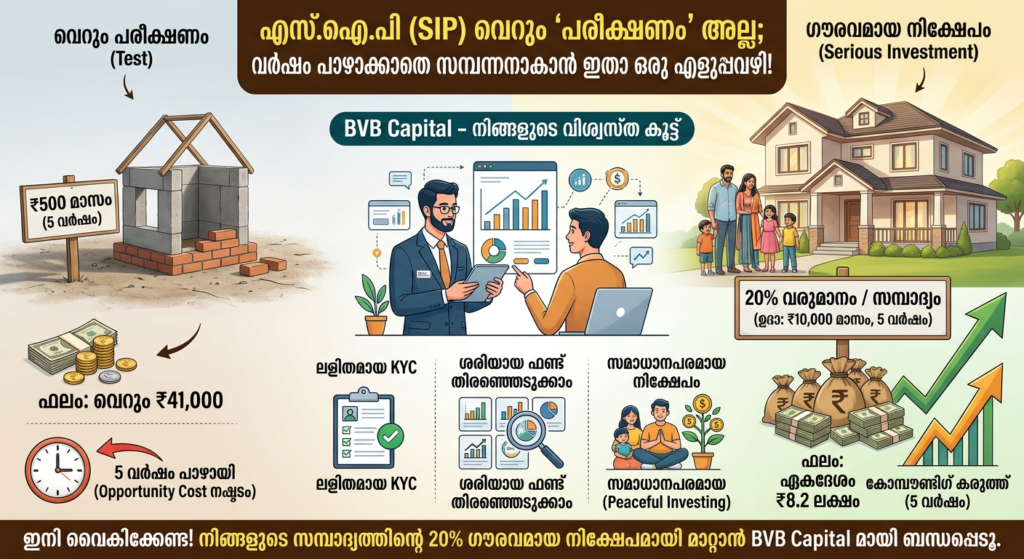
  • എസ്‌.ഐ.പി (SIP) വെറും ‘പരീക്ഷണം’ അല്ല; അഞ്ചു വർഷം പാഴാക്കാതെ സമ്പന്നനാകാൻ ഇതാ ഒരു എളുപ്പവഴി!

    എസ്‌.ഐ.പി (SIP) വെറും ‘പരീക്ഷണം’ അല്ല; അഞ്ചു വർഷം പാഴാക്കാതെ സമ്പന്നനാകാൻ ഇതാ ഒരു എളുപ്പവഴി!

    എന്റെ പ്രിയപ്പെട്ടവരേ, ഒരു കാര്യം ചോദിച്ചോട്ടെ? നമ്മൾ ഒരു പുതിയ വീട് വെക്കാൻ തീരുമാനിച്ചാൽ ആദ്യം അതിന്റെ പ്ലാൻ വരയ്ക്കുകയും തറക്കല്ലിടുകയും ചെയ്യും. അല്ലാതെ, “നമുക്ക് ഈ മാസം ഒരു രണ്ട് കല്ല് വെച്ച് നോക്കാം, എങ്ങനെയുണ്ടാകുമെന്ന് കണ്ടിട്ട് ബാക്കി പണിയാം” എന്ന് ആരെങ്കിലും പറയുമോ? ഇല്ലല്ലോ. കാരണം അങ്ങനെ ചെയ്താൽ ആ വീട് ഒരിക്കലും പണി തീരില്ല എന്ന് നമുക്കറിയാം.

    എന്നാൽ നിക്ഷേപത്തിന്റെ കാര്യത്തിൽ മലയാളി പലപ്പോഴും ചെയ്യുന്നത് ഈ ‘രണ്ട് കല്ല് വെച്ച് നോക്കുന്ന’ പണിയാണ്. പലരും പറയും, “ചേട്ടാ, നമുക്ക് ഒരു 500 രൂപയുടെ എസ്‌.ഐ.പി (SIP) തുടങ്ങാം, ഒരു അഞ്ചു വർഷം ഒന്ന് ടെസ്റ്റ് ചെയ്ത് നോക്കട്ടെ. ലാഭമുണ്ടെങ്കിൽ തുക കൂട്ടാം.” സത്യം പറയട്ടെ, വലിയ തുക നിക്ഷേപിക്കാൻ ശേഷിയുണ്ടായിട്ടും വെറും 500 രൂപയിൽ ഈ അഞ്ചു വർഷം ഒതുങ്ങിനിൽക്കുന്നത് നിങ്ങളുടെ ജീവിതത്തിലെ ഏറ്റവും വിലപ്പെട്ട അഞ്ചു വർഷങ്ങൾ പാഴാക്കുന്നതിന് തുല്യമാണ്.

    ഇന്ന് നമ്മൾ സംസാരിക്കുന്നത് എങ്ങനെ ആത്മവിശ്വാസത്തോടെ നിക്ഷേപം തുടങ്ങാം എന്നും, ഈ യാത്രയിൽ BVB Capital എങ്ങനെ നിങ്ങളുടെ വിശ്വസ്ത പങ്കാളിയാകുന്നു എന്നതിനെ കുറിച്ചുമാണ്.

    500 രൂപയുടെ പരീക്ഷണം: നിങ്ങൾ അറിയാതെ പോകുന്ന നഷ്ടം

    മ്യൂച്വൽ ഫണ്ട് എങ്ങനെയാണ് പ്രവർത്തിക്കുന്നത് എന്ന് മനസ്സിലാക്കാൻ 500 രൂപയുടെ നിക്ഷേപം നല്ലതാണ്. പക്ഷേ, ഒരു കാർ വാങ്ങാനോ, മക്കളുടെ ഉന്നത പഠനത്തിനോ, സമാധാനപരമായ ഒരു റിട്ടയർമെന്റ് കാലത്തിനോ ആണ് നിങ്ങൾ ലക്ഷ്യമിടുന്നതെങ്കിൽ ഈ 500 രൂപയുടെ പരീക്ഷണം നിങ്ങളെ സഹായിക്കില്ല.

    നിക്ഷേപത്തിൽ ഏറ്റവും പ്രധാനം ‘സമയം’ ആണ്. ഒരിക്കൽ പോയാൽ തിരിച്ചു കിട്ടാത്ത ഒന്നാണത്. 500 രൂപ വെച്ച് 5 വർഷം പരീക്ഷണം നടത്തിക്കഴിയുമ്പോൾ നിങ്ങൾക്ക് കാര്യം മനസ്സിലാകും, പക്ഷേ അപ്പോഴേക്കും നിങ്ങളുടെ പ്രായം അഞ്ചു വർഷം കൂടിയിട്ടുണ്ടാകും. ആ അഞ്ചു വർഷം നിങ്ങൾ വലിയൊരു തുക നിക്ഷേപിച്ചിരുന്നെങ്കിൽ ഇന്ന് കിട്ടുന്ന ലാഭത്തിന്റെ പത്തിരട്ടി നിങ്ങൾക്ക് കിട്ടുമായിരുന്നു. ഇതിനെയാണ് സാമ്പത്തിക വിദഗ്ധർ ‘ഓപ്പർച്യുണിറ്റി കോസ്റ്റ്’ എന്ന് വിളിക്കുന്നത്.

    ഒരു കഥ കേൾക്കൂ: സുരേഷും രമേശും

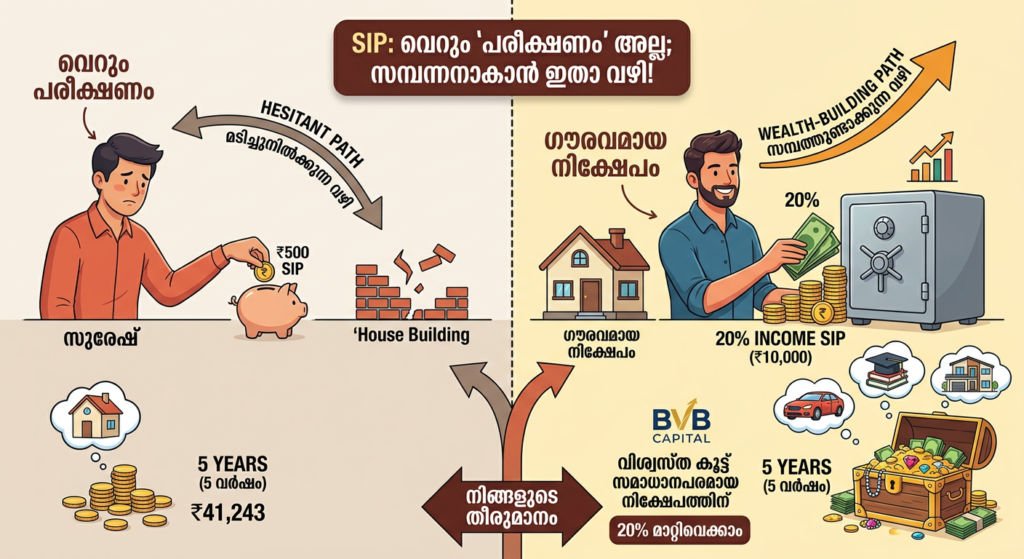
    നമുക്ക് എറണാകുളത്ത് ജോലി ചെയ്യുന്ന സുരേഷിന്റെ കാര്യമെടുക്കാം. സുരേഷിന് മാസം 50,000 രൂപ ശമ്പളമുണ്ട്. വീട്ടുചിലവുകൾ കഴിഞ്ഞ് 15,000 രൂപയോളം സുരേഷിന് ലാഭിക്കാം. പക്ഷേ, സുരേഷ് കരുതിയത് “നമുക്ക് പതുക്കെ തുടങ്ങാം, ആദ്യം ഒരു 500 രൂപയിട്ട് 5 വർഷം നോക്കാം” എന്നാണ്.

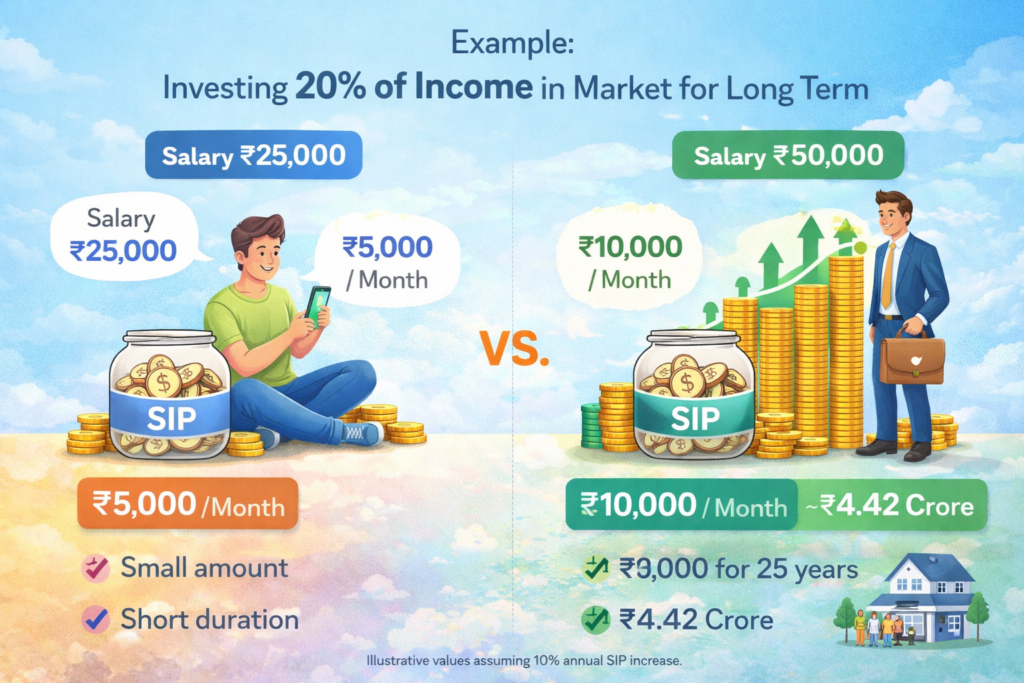
    അഞ്ചു വർഷം കഴിഞ്ഞു. സുരേഷിന്റെ കയ്യിൽ ലാഭം ഉൾപ്പെടെ ഏകദേശം 41,000 രൂപയുണ്ട്. എന്നാൽ സുരേഷിന്റെ സുഹൃത്ത് രമേശ് ചെയ്തത് മറ്റൊന്നാണ്. രമേശും അതേ ശമ്പളക്കാരനാണ്. പക്ഷേ അദ്ദേഹം തന്റെ വരുമാനത്തിന്റെ 20% (അതായത് 10,000 രൂപ) ഗൗരവമായ ഒരു നിക്ഷേപമായി മാറ്റി.

    അഞ്ചു വർഷം കഴിഞ്ഞപ്പോൾ രമേശിന്റെ കയ്യിലുള്ളത് ഏകദേശം 8.2 ലക്ഷം രൂപയാണ്! സുരേഷ് ഇപ്പോഴും ‘പരീക്ഷിച്ചു’ കൊണ്ടിരിക്കുന്നു, എന്നാൽ രമേശ് തന്റെ അടുത്ത ലക്ഷ്യത്തിലേക്ക് (ഒരു പുതിയ വീട്) എത്തിക്കഴിഞ്ഞു. സുരേഷിന് നഷ്ടപ്പെട്ടത് ആ 5 വർഷത്തെ ‘കോമ്പൗണ്ടിംഗ്’ കരുത്താണ്.


    20% of your income should be in SIP

    എന്തുകൊണ്ട് നിങ്ങളുടെ വരുമാനത്തിന്റെ 20% നിക്ഷേപിക്കണം?

    നിങ്ങൾ ഗൗരവമായി പണം സമ്പാദിക്കാൻ ആഗ്രഹിക്കുന്നുണ്ടെങ്കിൽ, നിങ്ങളുടെ ആകെ വരുമാനത്തിന്റെ അല്ലെങ്കിൽ സമ്പാദ്യത്തിന്റെ കുറഞ്ഞത് 20 ശതമാനമെങ്കിലും നിക്ഷേപത്തിലേക്ക് മാറ്റിവെക്കണം.

    നമുക്കൊന്ന് താരതമ്യം ചെയ്തു നോക്കാം (12% വാർഷിക വളർച്ച കണക്കാക്കിയാൽ):

    നിക്ഷേപ രീതിമാസ നിക്ഷേപം5 വർഷം കഴിഞ്ഞുള്ള തുക10 വർഷം കഴിഞ്ഞുള്ള തുക
    വെറും പരീക്ഷണം (Test)₹500₹41,243₹1,16,169
    ഗൗരവമായ നിക്ഷേപം (20%)₹5,000₹4,12,432₹11,61,695
    വലിയ നിക്ഷേപം₹10,000₹8,24,864₹23,23,391

    നോക്കൂ, 500 രൂപയുടെ പരീക്ഷണം കൊണ്ട് നിങ്ങൾക്ക് 10 വർഷം കഴിഞ്ഞാലും വലിയൊരു തുകയിലെത്താൻ കഴിയില്ല. എന്നാൽ 20% സമ്പാദ്യമെങ്കിലും നിക്ഷേപിക്കാൻ നിങ്ങൾ കാണിക്കുന്ന ധൈര്യം നിങ്ങളെ ഒരു കോടീശ്വരനാക്കി മാറ്റാൻ കെൽപ്പുള്ളതാണ്.

    DO NOT TEST SIP AND WASTE TIME

    എവിടെ തുടങ്ങണം? എങ്ങനെയുള്ള ആശയക്കുഴപ്പങ്ങൾ മാറ്റാം?

    പലരും നിക്ഷേപം തുടങ്ങാൻ മടിക്കുന്നത് പണം ഇല്ലാത്തതുകൊണ്ടല്ല, മറിച്ച് ഇതിന്റെ പുറകിലുള്ള നൂലാമാലകൾ പേടിച്ചാണ്.

    • “ഏത് ഫണ്ട് തിരഞ്ഞെടുക്കണം?”
    • കെ.വൈ.സി (KYC) എങ്ങനെ ചെയ്യും?”
    • “വിപണി താഴേക്ക് പോയാൽ എന്ത് ചെയ്യും?” ഈ സംശയങ്ങൾ കാരണം പലരും നിക്ഷേപം മാറ്റിവെക്കുന്നു. ഇവിടെയാണ് BVB Capital നിങ്ങളുടെ സഹായത്തിനെത്തുന്നത്.

    BVB Capital: സമാധാനപരമായ നിക്ഷേപത്തിന് ഒരു വിശ്വസ്ത കൂട്ട്

    നിക്ഷേപം എന്നത് വെറും കണക്കുകൂട്ടലുകൾ മാത്രമല്ല, അതൊരു ദീർഘകാല ബന്ധമാണ്. BVB Capital ലൂടെ നിക്ഷേപം ആരംഭിക്കുമ്പോൾ നിങ്ങൾക്ക് ലഭിക്കുന്ന ഗുണങ്ങൾ ഇവയാണ്:

    1. സങ്കീർണ്ണമായ KYC നടപടികൾ ഞങ്ങൾ ഏറ്റെടുക്കുന്നു: പേപ്പർ വർക്കുകളെക്കുറിച്ചോ ഓൺലൈൻ അപ്‌ഡേഷനുകളെക്കുറിച്ചോ നിങ്ങൾ ആകുലപ്പെടേണ്ടതില്ല. നിങ്ങളുടെ കെ.വൈ.സി നടപടികൾ ലളിതമായി പൂർത്തിയാക്കാൻ ബി.വി.ബി ക്യാപിറ്റൽ നിങ്ങളെ സഹായിക്കുന്നു.
    2. ശരിയായ ഫണ്ട് തിരഞ്ഞെടുക്കാം: ആയിരക്കണക്കിന് മ്യൂച്വൽ ഫണ്ട് സ്കീമുകളിൽ നിന്ന് നിങ്ങളുടെ സാമ്പത്തിക ലക്ഷ്യങ്ങൾക്കും വരുമാനത്തിനും അനുയോജ്യമായവ തിരഞ്ഞെടുക്കാൻ ഞങ്ങളുടെ വിദഗ്ധ സംഘം നിങ്ങളെ സഹായിക്കുന്നു.
    3. ദീർഘകാല ബന്ധം: നിക്ഷേപം തുടങ്ങുന്നതിലല്ല, അത് കൃത്യമായി കൊണ്ടുപോകുന്നതിലാണ് കാര്യം. വിപണിയിലെ കയറ്റിറക്കങ്ങളിൽ പേടിക്കാതെ, സമാധാനത്തോടെ നിക്ഷേപം തുടരാൻ ഒരു കൈത്താങ്ങായി ബി.വി.ബി ക്യാപിറ്റൽ എപ്പോഴും കൂടെയുണ്ടാകും.
    4. സമാധാനപരമായ നിക്ഷേപം (Peaceful Investing): വിപണിയെക്കുറിച്ചോ ഇൻഡക്സിനെക്കുറിച്ചോ ഓരോ നിമിഷവും വ്യാകുലപ്പെടേണ്ടതില്ല. പ്രൊഫഷണലായ ഗൈഡൻസ് ഉള്ളപ്പോൾ നിങ്ങൾക്ക് നിങ്ങളുടെ ജോലിയിലും കുടുംബത്തിലും ശ്രദ്ധ കേന്ദ്രീകരിക്കാം, നിങ്ങളുടെ പണം ഞങ്ങൾക്കായി പണിയെടുക്കും.

    മ്യൂച്വൽ ഫണ്ട് നിക്ഷേപകർ ശ്രദ്ധിക്കേണ്ട കാര്യങ്ങൾ (AMFI Guidelines)

    നിക്ഷേപം തുടങ്ങുന്നതിന് മുൻപ് ഈ കാര്യങ്ങൾ മറക്കരുത്:

    1. വിപണി അപകടസാധ്യതകൾ: മ്യൂച്വൽ ഫണ്ട് നിക്ഷേപങ്ങൾ വിപണി അപകടസാധ്യതകൾക്ക് വിധേയമാണ്. വിപണിയിലെ മാറ്റങ്ങൾ നിങ്ങളുടെ നിക്ഷേപത്തെ ബാധിച്ചേക്കാം. സ്കീം സംബന്ധിച്ച എല്ലാ രേഖകളും ശ്രദ്ധാപൂർവം വായിക്കുക.
    2. ഗ്യാരണ്ടി ഇല്ല: മ്യൂച്വൽ ഫണ്ട് ഒരു ബാങ്ക് ഡെപ്പോസിറ്റ് അല്ല. മുൻകാല പ്രകടനം ഭാവിയിൽ ആവർത്തിക്കണമെന്നുമില്ല.
    3. വിദഗ്ധ ഉപദേശം: എപ്പോഴും ഒരു സെബി (SEBI) രജിസ്റ്റേർഡ് ഫിനാൻഷ്യൽ അഡ്വൈസറുടെ സഹായത്തോടെ മാത്രം നിക്ഷേപം നടത്തുക.

    ഇനി വൈകിക്കേണ്ട, ആ 20% മാറ്റിവെക്കാം

    നിങ്ങളുടെ സമ്പാദ്യത്തിന്റെ 20% ഗൗരവമായ ഒരു നിക്ഷേപമായി മാറ്റാൻ ഇതാണ് ഏറ്റവും നല്ല സമയം. 500 രൂപയുടെ ‘ടെസ്റ്റ് ഡ്രൈവ്’ നടത്തിക്കൊണ്ടിരുന്നാൽ നിങ്ങൾ ലക്ഷ്യസ്ഥാനത്ത് എത്തില്ല.

    BVB Capital മായി കൈകോർത്ത്, എല്ലാ സാങ്കേതിക ബുദ്ധിമുട്ടുകളും ഞങ്ങൾക്ക് വിട്ടുനൽകി, ആത്മവിശ്വാസത്തോടെ നിങ്ങളുടെ സാമ്പത്തിക ഭദ്രതയിലേക്കുള്ള യാത്ര തുടങ്ങൂ. സമാധാനപരമായ ഒരു നിക്ഷേപത്തിലൂടെ നിങ്ങളുടെ സ്വപ്നങ്ങൾ സാക്ഷാത്കരിക്കാൻ ഞങ്ങൾ കൂടെയുണ്ട്.

    സന്തോഷകരമായ നിക്ഷേപയാത്ര നേരുന്നു!


    Disclaimer: Mutual Fund നിക്ഷേപങ്ങൾ വിപണി അപകടസാധ്യതകൾക്ക് വിധേയമാണ്. സ്കീം സംബന്ധിച്ച എല്ലാ രേഖകളും ശ്രദ്ധാപൂർവം വായിക്കുക. മുകളിൽ നൽകിയിരിക്കുന്ന കണക്കുകൾ ഒരു ധാരണയ്ക്ക് വേണ്ടിയുള്ള ഉദാഹരണങ്ങൾ മാത്രമാണ്.

    നിങ്ങളുടെ സമ്പാദ്യത്തിന്റെ 20% എങ്ങനെ കൃത്യമായി നിക്ഷേപിക്കണം എന്ന് അറിയാൻ ബി.വി.ബി ക്യാപിറ്റലുമായി (BVB Capital) ബന്ധപ്പെടാൻ ആഗ്രഹിക്കുന്നുണ്ടോ? Contact us

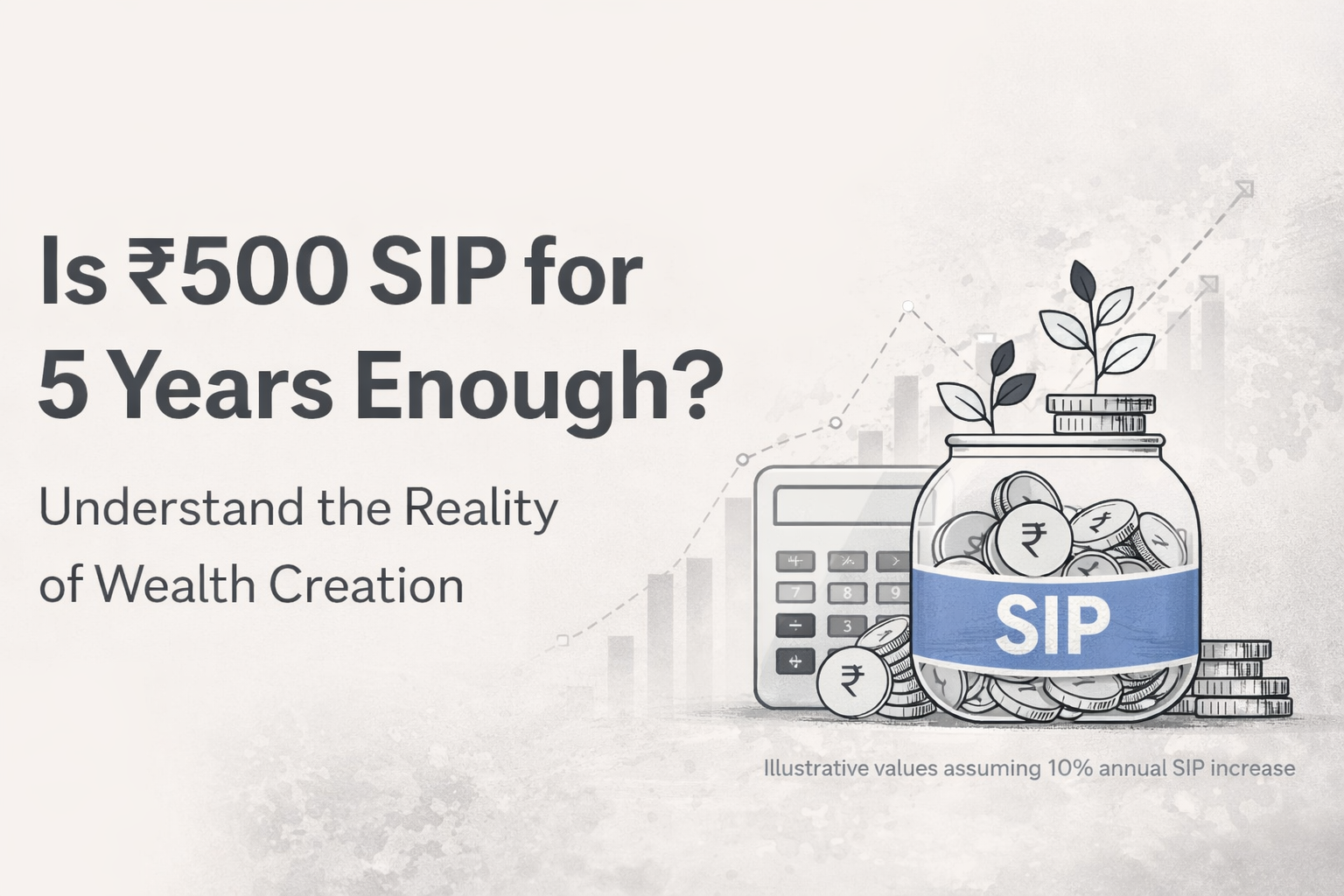
  • Is ₹500 SIP for 5 Years Enough? Let’s Understand the Reality

    Is ₹500 SIP for 5 Years Enough? Let’s Understand the Reality

    Many new investors ask:

    👉 “If I invest ₹500 per month in SIP, what will I get after 5 years?”

    Let’s understand this with a simple example.
    If you are new to SIP, first understand how it works in detail.


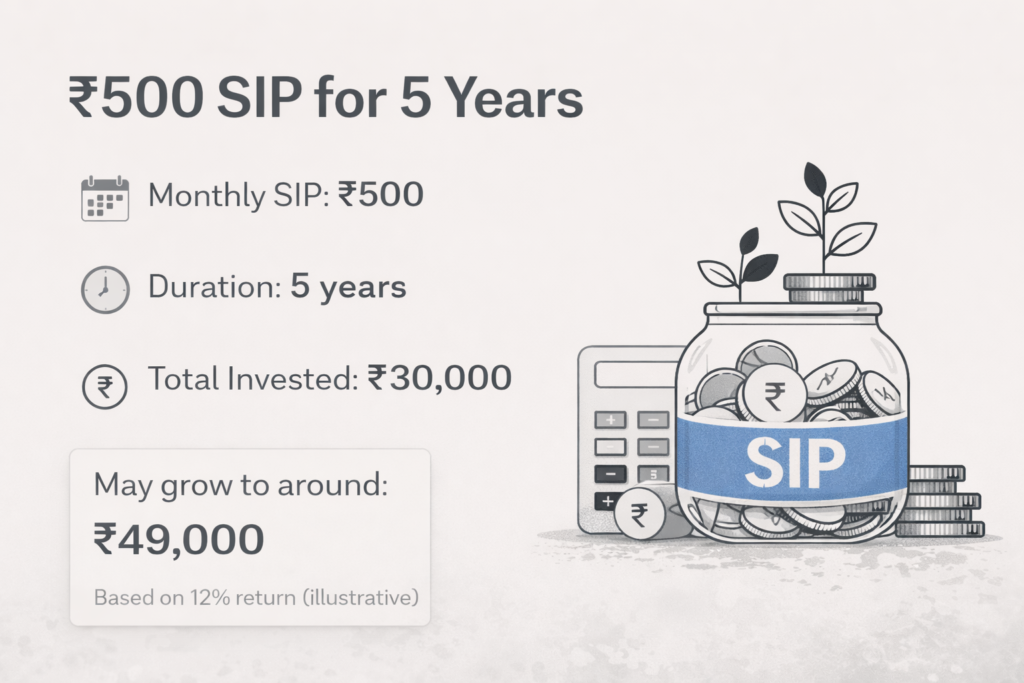
    📊 Example: ₹500 SIP for 5 Years

    • Monthly SIP: ₹500
    • Duration: 5 years
    • Total invested: ₹30,000

    👉 Based on an assumed return of 12% per annum,
    the value may grow to around ₹49,000

    👉 Gain: ~₹19,000


    ⚠️ Important Note

    This is only an illustration, not a guarantee.

    • Mutual fund returns are market-linked
    • Actual returns may be higher or lower
    • This example is used only to help understand how SIP works

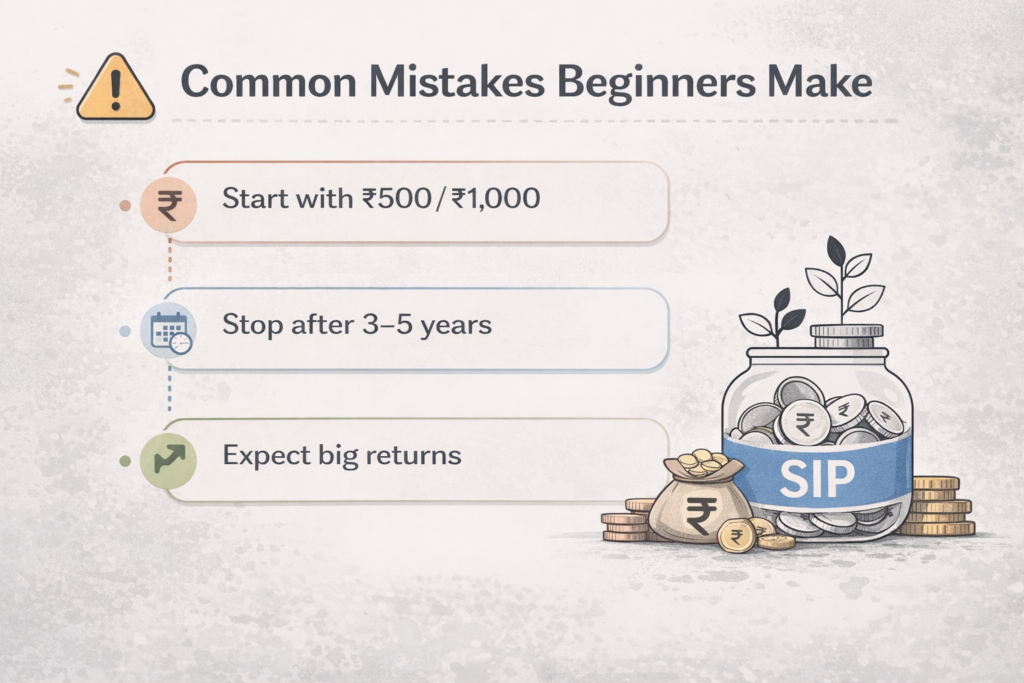
    Common SIP investment mistakes for beginners

    🤔 What Does This Mean?

    A ₹500 SIP helps you:
    ✔ Start investing
    ✔ Build financial discipline

    But:

    👉 For meaningful wealth creation, both amount and time matter


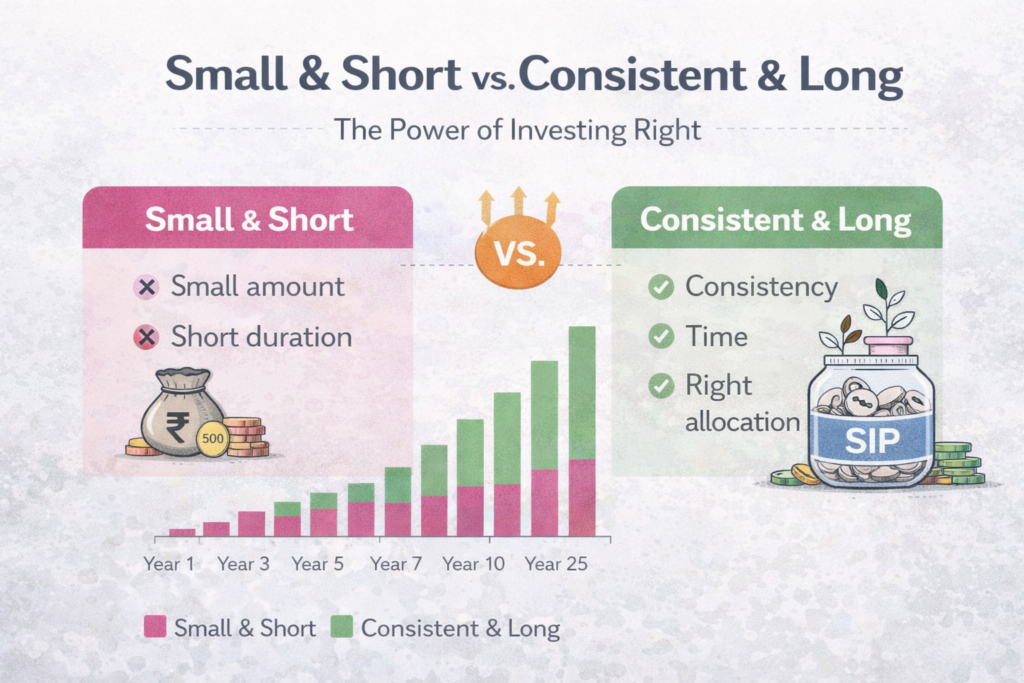
    📈 The Role of Time in Investing

    Let’s see what happens when you stay invested longer:

    SIPDurationValue (Illustrative @12%)
    ₹5005 years~₹49,000
    ₹50020 years~₹9.9 Lakhs
    ₹50030 years~₹44 Lakhs

    👉 Same SIP… but longer duration shows the impact of compounding.


    Investing strategies: short-term vs long-term

    🚀 Increasing SIP Over Time (Step-Up SIP)

    In real life, income increases over time.
    So investors can consider increasing SIP annually.

    👉 In the projections shown here,
    we have assumed a 10% annual increase (top-up) in SIP amount

    This approach is called:

    👉 Step-Up SIP

    It can significantly improve long-term outcomes.


    📊 Example: ₹5,000 SIP with 10% Yearly Increase

    • ₹5,000 for 15 years → ~₹43 Lakhs
    • ₹5,000 for 25 years → ~₹2.14 Crore
    • ₹5,000 for 30 years → ~₹4.42 Crore

    (All values are illustrative, assuming 12% annual return and 10% SIP increase per year)


    💡 Key Takeaways

    ✔ Starting small is good
    ✔ Staying invested is more important
    ✔ Increasing SIP over time can improve results
    ✔ Long-term investing helps benefit from compounding


    Stock market investment illustration for growth

    🎯 How Much Should You Invest?

    A common thumb rule:

    👉 Try to invest a portion of your income regularly
    (For many investors, this may range around 10–20%, depending on their situation)

    Always invest based on:

    • Income
    • Expenses
    • Financial goals
    • Risk capacity

    ⚠️ Avoid These Common Mistakes

    ❌ Investing only based on small trial amounts
    ❌ Stopping SIPs during market fluctuations
    ❌ Selecting funds based only on past returns


    🧠 Why Proper Guidance Matters

    Mutual fund investing is not just about starting an SIP.

    It involves:

    • Understanding your risk profile
    • Selecting suitable asset allocation
    • Choosing appropriate schemes
    • Staying consistent during market ups and downs

    🤝 How BVB Capital Can Help

    At BVB Capital, we focus on:

    ✔ Risk profiling before investment
    ✔ Goal-based portfolio construction
    ✔ Suitable scheme selection (not random picking)
    ✔ Long-term investment discipline

    👉 The aim is to help investors make informed and structured decisions


    🔚 Final Thought

    SIP is a powerful tool when used correctly.

    👉 Start early
    👉 Stay consistent
    👉 Increase gradually
    👉 Think long term


    📞 Get Started

    If you want to plan your SIP based on your goals and risk profile:

    👉 Connect with BVB Capital for a structured approach to investing


    ⚖️ Mandatory Disclaimer (AMFI-Compliant)

    Mutual Fund investments are subject to market risks.
    Read all scheme related documents carefully before investing.

    The returns shown above are illustrative and are based on assumed rates of return.
    They are not guaranteed and do not indicate future performance.

  • എന്താണ് SIP?

    എന്താണ് SIP?

    ഇന്ത്യയിലെ ഒട്ടുമിക്ക ആളുകൾക്കും ‘നിക്ഷേപം’ എന്ന് കേൾക്കുമ്പോൾ തന്നെ ഒരുതരം പേടിയോ ആശയക്കുപ്പമോ ഉണ്ടാകാറുണ്ട്. പ്രത്യേകിച്ച് ഓഹരി വിപണിയെ (Stock Market) കുറിച്ച് ഓർക്കുമ്പോൾ. എന്നാൽ കഴിഞ്ഞ പത്ത് വർഷത്തിനിടയിൽ, ദശലക്ഷക്കണക്കിന് സാധാരണക്കാരെ ആത്മവിശ്വാസത്തോടെ നിക്ഷേപം നടത്താൻ സഹായിച്ച ഒരു ലളിതമായ മാർഗമുണ്ട്—അതാണ് SIP (എസ്.ഐ.പി).

    നിങ്ങൾ ഈ വാക്ക് കേട്ടിട്ടുണ്ടാകാം, പക്ഷേ ഇത് എങ്ങനെ പ്രവർത്തിക്കുന്നുവെന്നോ ഇതിന്റെ ഗുണങ്ങൾ എന്താണെന്നോ അറിയില്ലെങ്കിൽ ഈ ലേഖനം നിങ്ങൾക്ക് വേണ്ടിയുള്ളതാണ്.

    ⭐ എന്താണ് യഥാർത്ഥത്തിൽ SIP?

    SIP എന്നാൽ Systematic Investment Plan എന്നാണ് അർത്ഥം.

    മ്യൂച്വൽ ഫണ്ടുകളിൽ നിക്ഷേപിക്കാൻ സാധിക്കുന്ന ഒരു രീതിയാണിത്. ഒന്നിച്ച് വലിയൊരു തുക നിക്ഷേപിക്കുന്നതിന് പകരം കൃത്യമായ ഇടവേളകളിൽ (മാസത്തിലോ ദിവസത്തിലോ) ഒരു നിശ്ചിത തുക നിക്ഷേപിക്കാൻ ഇത് നിങ്ങളെ സഹായിക്കുന്നു.

    ഉദാഹരണത്തിന്:

    • മാസം ₹1,000
    • മാസം ₹5,000
    • അല്ലെങ്കിൽ ദിവസം ₹100 പോലും നിങ്ങൾക്ക് നിക്ഷേപിക്കാം.

    ബാങ്ക് നിക്ഷേപം പോലെ തന്നെ ഇത് ലളിതമാണ്. എന്നാൽ പണം വെറുതെ അക്കൗണ്ടിൽ കിടക്കുന്നതിന് പകരം, അത് മ്യൂച്വൽ ഫണ്ടുകളിൽ നിക്ഷേപിക്കപ്പെടുന്നു. ഇത് ദീർഘകാലാടിസ്ഥാനത്തിൽ വലിയൊരു സമ്പത്ത് ഉണ്ടാക്കാൻ നിങ്ങളെ സഹായിക്കുന്നു.


    ⭐ SIP എങ്ങനെയാണ് പ്രവർത്തിക്കുന്നത്?

    നിങ്ങൾ ഒരുതവണ സെറ്റ് ചെയ്താൽ മതി, പിന്നീട് ബാക്കി കാര്യങ്ങൾ തനിയെ നടന്നോളും:

    1. ഓരോ മാസവും ഒരു നിശ്ചിത തീയതിയിൽ നിങ്ങളുടെ ബാങ്ക് അക്കൗണ്ടിൽ നിന്ന് തുക തനിയെ ഡെക്ട് (Auto-deduct) ചെയ്യപ്പെടും.
    2. ആ പണം ഉപയോഗിച്ച് അന്ന് മാർക്കറ്റിലുള്ള വിലയ്ക്ക് (NAV) മ്യൂച്വൽ ഫണ്ട് യൂണിറ്റുകൾ വാങ്ങുന്നു.
    3. കാലക്രമേണ, നിങ്ങളുടെ കൈവശമുള്ള യൂണിറ്റുകളുടെ എണ്ണം കൂടുന്നു.
    4. ദീർഘകാലം കഴിയുമ്പോൾ മാർക്കറ്റിലെ വളർച്ചയ്ക്ക് അനുസരിച്ച് നിങ്ങളുടെ നിക്ഷേപവും വളരുന്നു.

    ഇവിടെ നിങ്ങൾ ദിവസവും മാർക്കറ്റ് നോക്കേണ്ട ആവശ്യമില്ല. എപ്പോൾ വാങ്ങണം, എപ്പോൾ വിൽക്കണം എന്ന് ഓർത്ത് വിഷമിക്കുകയും വേണ്ട.

    sip for long term

    ⭐ ദീർഘകാല നിക്ഷേപത്തിന് SIP നല്ലതാണെന്ന് പറയുന്നത് എന്തുകൊണ്ട്?

    1. മാർക്കറ്റിന്റെ കയറ്റിറക്കങ്ങൾ നോക്കേണ്ടതില്ല

    മാർക്കറ്റ് എപ്പോൾ കൂടുമെന്നോ കുറയുമെന്നോ പ്രവചിക്കാൻ ആർക്കും സാധിക്കില്ല. SIP വഴി നിങ്ങൾ എല്ലാ സാഹചര്യങ്ങളിലും (മാർക്കറ്റ് കൂടുമ്പോഴും കുറയുമ്പോഴും) നിക്ഷേപം നടത്തുന്നു. ഇതിനെ Rupee Cost Averaging എന്ന് വിളിക്കുന്നു. ഇത് നിങ്ങളുടെ നിക്ഷേപത്തിന്റെ ശരാശരി ചിലവ് കുറയ്ക്കാൻ സഹായിക്കുന്നു.

    2. നിക്ഷേപം ഒരു ശീലമാകുന്നു

    വാടക കൊടുക്കുന്നതോ ഇ.എം.ഐ (EMI) അടയ്ക്കുന്നതോ പോലെ നിക്ഷേപവും നിങ്ങളുടെ ജീവിതത്തിന്റെ ഭാഗമാകും. ചെറിയ തുകകൾ പോലും വർഷങ്ങൾ കഴിയുമ്പോൾ വലിയൊരു സമ്പാദ്യമായി മാറും.

    3. ജീവിത ലക്ഷ്യങ്ങൾ നേടിയെടുക്കാം

    നമ്മുടെ പ്രധാന ലക്ഷ്യങ്ങളെല്ലാം ദീർഘകാലത്തേക്ക് ഉള്ളവയാണ്:

    • മക്കളുടെ വിദ്യാഭ്യാസം
    • വിവാഹ ചിലവുകൾ
    • സ്വന്തമായി ഒരു വീട്
    • റിട്ടയർമെന്റ് പ്ലാനിംഗ്

    സ്ഥിരതയാർന്ന നിക്ഷേപം ആവശ്യമുള്ള ഇത്തരം ലക്ഷ്യങ്ങൾക്ക് ഏറ്റവും അനുയോജ്യമായ മാർഗമാണ് SIP.

    sip compounding

    4. Compounding ഗുണം

    നിക്ഷേപത്തിൽ നിന്നുള്ള ലാഭത്തിന് വീണ്ടും ലാഭം ലഭിക്കുന്ന രീതിയാണിത്. നിങ്ങൾ എത്ര കൂടുതൽ കാലം നിക്ഷേപം തുടരുന്നുവോ, അത്രയും വലിയ വളർച്ച നിങ്ങളുടെ പണത്തിന് ലഭിക്കും.


    ⭐ “SIP vs ഒറ്റത്തവണ നിക്ഷേപം (Lump Sum)” – ഒരു താരതമ്യം

    പ്രത്യേകതSIPഒറ്റത്തവണ നിക്ഷേപം (Lump Sum)
    നിക്ഷേപ രീതിമാസം തോറും/കൃത്യമായ ഇടവേളകളിൽഒന്നിച്ച് ഒരു വലിയ തുക
    മാർക്കറ്റ് നോക്കണോ?വേണ്ടഅതെ, ശ്രദ്ധിക്കണം
    അനുയോജ്യം ആർക്ക്?ശമ്പളക്കാർക്ക് / അച്ചടക്കമുള്ളവർക്ക്പരിചയസമ്പന്നരായ നിക്ഷേപകർക്ക്
    മാനസിക സമാധാനംകൂടുതൽകുറവ്

    ⭐ ആർക്കൊക്കെ SIP തുടങ്ങാം?

    • ശമ്പളം വാങ്ങുന്നവർ
    • ചെറുകിട കച്ചവടക്കാർ
    • ഫ്രീലാൻസർമാർ
    • വിദ്യാർത്ഥികൾ (ചെറിയ സമ്പാദ്യമുള്ളവർ)
    • പ്രവാസികൾ

    ചുരുക്കത്തിൽ, ദിവസവുമുള്ള ടെൻഷൻ ഇല്ലാതെ പണം വളർത്താൻ ആഗ്രഹിക്കുന്ന ആർക്കും SIP തുടങ്ങാം.

    ⭐ അവസാനമായി

    SIP എന്നത് ഒരു മാന്ത്രിക വിദ്യയോ പെട്ടെന്ന് പണക്കാരനാകാനുള്ള വഴിയോ അല്ല. മറിച്ച്, അച്ചടക്കത്തോടെ നിക്ഷേപം നടത്താനുള്ള ഒരു ശാസ്ത്രീയമായ രീതിയാണ്. ഇത് നിക്ഷേപത്തെ ഒരു ചൂതാട്ടമായി കാണുന്നതിന് പകരം, ഒരു മികച്ച ജീവിതശൈലിയായി മാറ്റുന്നു.

    മാർക്കറ്റിലെ ആശയക്കുഴപ്പങ്ങൾ കാരണം നിങ്ങൾ നിക്ഷേപം മാറ്റിവെക്കുകയാണെങ്കിൽ, തുടങ്ങാൻ ഏറ്റവും നല്ല വഴി SIP തന്നെയാണ്.

    BVB Capital Private Limited-ൽ, ഇത്തരം കാര്യങ്ങൾ ലളിതമായി മനസ്സിലാക്കാനും മികച്ച രീതിയിൽ നിക്ഷേപം നടത്താനും ഞങ്ങൾ നിങ്ങളെ സഹായിക്കുന്നു.

  • What Is SIP and Why It Is Ideal for Long-Term Investing?

    What Is SIP and Why It Is Ideal for Long-Term Investing?

    For many people in India, investing feels complicated, risky, or even intimidating. This is especially true when it comes to the stock market. But over the last decade, one simple idea has helped millions of ordinary people invest with confidence—SIP.

    If you’ve heard the term “SIP” but never really understood how it works, or why everyone keeps recommending it for future goals, this article is for you.


    ⭐ What Exactly Is an SIP?

    SIP stands for Systematic Investment Plan.

    It is a feature of mutual funds that allows you to invest a fixed amount regularly, such as every month or every week.

    Example:

    • ₹1,000 per month
    • ₹5,000 per month
    • ₹100 per day
    • or any amount you are comfortable with

    SIP works just like depositing money, except instead of lying idle, your money is invested in mutual funds, which can help you create wealth over the long term.

    The idea is simple:

    SIP is a disciplined investment habit that doesn’t depend on market timing.


    ⭐ How Does SIP Work?

    Here’s the best part—SIP works quietly in the background. Once you set it up:

    1. A fixed amount is auto-deducted from your bank account
    2. Units of the mutual fund are purchased at the day’s NAV
    3. Over time, you accumulate more units
    4. Over a long period, your investment grows based on market performance

    You don’t need to track markets daily. You don’t need to decide when to buy or sell. SIP takes the emotional burden away.

    Why SIP Is Ideal for Long-Term Investing

    ⭐ Why SIP Is Ideal for Long-Term Investing

    There are a few reasons why SIP is considered one of the best long-term methods for ordinary investors.


    📌 1. You Don’t Need to Time the Market

    Most people do not know when the market is high or low—and that’s normal.

    With SIP, you spread your investments across:

    • Good market phases
    • Bad market phases
    • Sideways market phases

    This automatically averages the cost over time, which is called rupee cost averaging.

    The result?

    You participate in the market without needing to predict it.

    SIP as a Financial Habit

    📌 2. SIP Builds a Financial Habit

    Just like exercising or reading, money also needs discipline. SIP turns investing into a monthly habit, similar to paying rent or an EMI.

    And over the years, habits quietly create results.

    Even small SIPs can become meaningful when combined with time.


    📌 3. SIP Aligns with Real Life Goals

    Most of our important goals are long-term by nature:

    • Children’s education
    • Marriage expenses
    • Buying a home
    • Retirement planning
    • Financial independence
    • Wealth creation

    These goals require time + consistency, not overnight returns.

    Because SIP works quietly over years, it fits perfectly with how real life actually works.

    SIP Benefits from Compounding

    📌 4. SIP Benefits from Compounding

    Compounding is simply earning returns on your returns.

    The longer you stay invested, the more powerful compounding becomes. SIP is ideal for compounding because it keeps adding fresh investment regularly.

    Long term + SIP = Compounding engine


    📌 5. SIP Works for Small and Big Investors Alike

    You don’t need lakhs to start. Even:

    • ₹500/month
    • ₹1,000/month
    • ₹100/day

    …is enough to begin.

    This makes SIP inclusive. People in their 20s, 30s, and 40s can all start at their own pace.


    ⭐ “SIP vs Lump Sum” – A Simple Comparison

    FeatureSIPLump Sum
    Investment styleMonthly/regularOne-time
    Market timing needNoYes
    Suitable forSalaried / disciplinedExperienced investors
    Emotional comfortHighLow to medium

    For most beginners:

    SIP is the simplest and most comfortable way to start investing.


    ⭐ Who Should Consider SIP?

    SIP is suitable for:

    • Salaried individuals
    • Business owners
    • Freelancers
    • Students (with small savings)
    • NRIs investing in India
    • Retirees with planned amounts

    If your goal is long-term growth without daily stress, SIP is the right approach.


    ⭐ Final Thoughts

    SIP is not a trick, not a stock tip, and not a quick money formula. It’s simply a method—a disciplined, time-tested way of participating in markets without anxiety.

    Over years, SIP helps investors:

    • Build habits
    • Stay consistent
    • Ignore noise
    • Capture growth
    • Benefit from compounding

    In short: SIP turns investing into a lifestyle rather than a gamble.

    If you’ve been postponing investing because markets look confusing, SIP gives you a practical starting point.


    At BVB Capital Private Limited, our focus is on helping people understand these concepts clearly and make long-term investing simple and comfortable.

  • Why SIP Is One of the Simplest Ways to Start Investing in Mutual Funds

    Why SIP Is One of the Simplest Ways to Start Investing in Mutual Funds

    Many people delay investing because they believe it requires large sums of money or perfect timing. Systematic Investment Plans (SIPs) challenge this belief by allowing investors to start small and invest consistently.

    This article explains how SIPs work and why they are widely considered a beginner-friendly approach to mutual fund investing.

    What Is a SIP?

    Why SIP is Simple and Smart?

    A SIP allows investors to invest a fixed amount at regular intervals—monthly, quarterly, or otherwise—into a mutual fund scheme. This approach encourages disciplined investing without the need to monitor market movements constantly.

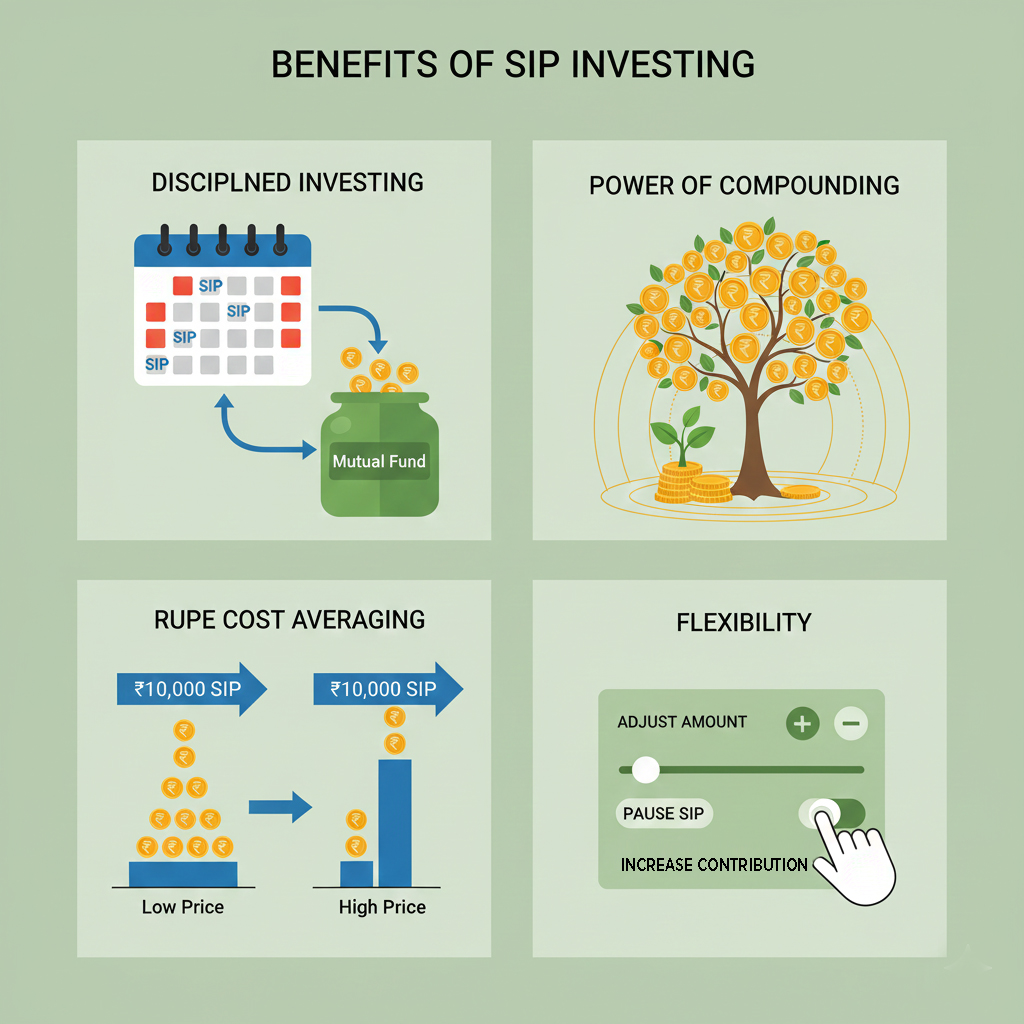
    Benefits of SIP Investing

    Disciplined Investing

    SIPs help build a habit of investing regularly, regardless of market conditions.

    Power of Compounding

    Small, consistent investments grow significantly over time due to compounding.

    Rupee Cost Averaging

    By investing regularly, investors buy more units when prices are low and fewer units when prices are high, reducing the impact of market volatility.

    Flexibility

    SIPs can be started with small amounts and increased gradually as income grows.

    Is SIP Risk-Free?

    No investment is completely risk-free. SIPs invest in mutual funds, which are subject to market risks. However, long-term SIP investing helps reduce timing risk and smoothens market fluctuations.

    Who Should Consider SIPs?

    SIPs are suitable for:

    • First-time investors
    • Salaried professionals
    • Self-employed individuals
    • NRIs investing in Indian mutual funds
    • Anyone planning long-term financial goals

    Conclusion

    SIPs offer a simple, disciplined, and flexible way to begin investing in mutual funds. They remove the pressure of timing the market and encourage long-term thinking—making them ideal for investors at any stage of life.