
Category: Savings vs Investing

This section explores the difference between saving money and investing for long-term growth. It addresses common questions around fixed deposits, recurring deposits, inflation, and wealth creation. The articles aim to help readers understand when saving is appropriate and when investing becomes essential for meeting long-term financial goals.

  • Savings vs Wealth Creation: Why Saving Alone Is Not Enough

    Savings vs Wealth Creation: Why Saving Alone Is Not Enough

    Introduction

    For generations, saving money has been considered a responsible financial habit. Fixed deposits, recurring deposits, gold, and cash savings have played an important role in financial security. However, as lifestyles change and costs rise, many people are beginning to realise that saving alone may not be enough to meet long-term goals.

    This article explains the difference between saving and wealth creation, and why understanding this distinction is important for today’s investors.


    What Is Saving?

    Saving refers to setting aside money in relatively low-risk instruments such as savings accounts, fixed deposits, or cash. The primary purpose of saving is safety and liquidity.

    Savings help in:

    • Emergency situations
    • Short-term needs
    • Capital protection

    While savings provide stability, they often generate limited growth over time.


    What Is Wealth Creation?

    Wealth creation focuses on growing money over the long term by investing in assets that have the potential to generate higher returns. Mutual funds, equities, and other market-linked instruments are commonly used for this purpose.

    The goal of wealth creation is to:

    • Beat inflation
    • Build long-term financial security
    • Support future goals such as retirement or education

    The Impact of Inflation

    One of the biggest challenges with relying only on savings is inflation. Over time, inflation reduces the purchasing power of money. While savings may grow slowly, the cost of living continues to rise.

    Wealth creation strategies aim to address this gap by allowing money to grow at a pace that can keep up with or exceed inflation over the long term.


    Finding the Right Balance

    Saving and investing are not opposites—they serve different purposes. A balanced financial plan usually includes:

    • Savings for emergencies and short-term needs
    • Investments for long-term goals and growth

    Understanding when to save and when to invest helps build both security and confidence.


    Conclusion

    Saving is essential, but wealth creation is necessary for long-term financial well-being. By combining disciplined savings with thoughtful investing, individuals can work toward financial goals more effectively.

  • Mutual Funds vs Fixed Deposits: Understanding the Difference Before You Invest

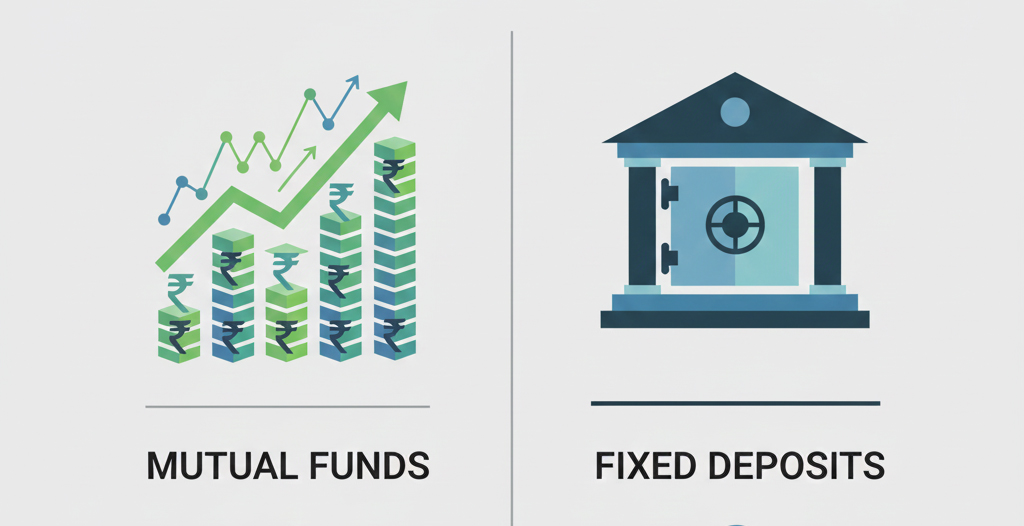
    Mutual Funds vs Fixed Deposits: Understanding the Difference Before You Invest

    For decades, fixed deposits (FDs) have been one of the most popular saving options in India. They are familiar, predictable, and often considered safe. However, as financial goals evolve and inflation impacts purchasing power, many investors are now comparing fixed deposits with mutual funds to understand which option suits long-term goals better.

    This article explains the key differences between mutual funds and fixed deposits in a simple and practical way, helping investors make informed decisions.

    Mutual Funds vs Fixed Deposits

    What Are Fixed Deposits?

    Fixed deposits are savings instruments offered by banks and financial institutions where money is deposited for a fixed period at a predetermined interest rate. At the end of the tenure, the investor receives the principal amount along with interest.

    FDs are commonly used for short- to medium-term goals and for capital protection.

    What Are Mutual Funds?

    Mutual funds pool money from multiple investors and invest it across a diversified portfolio of assets such as equities, bonds, or a combination of both. These investments are managed by professional fund managers and are regulated by SEBI.

    Mutual funds are often used for long-term goals such as retirement planning, children’s education, and wealth creation.

    Key Differences Between Mutual Funds and Fixed Deposits

    Returns

    Fixed deposit returns are fixed and predictable but may struggle to beat inflation over long periods. Mutual funds do not offer fixed returns, but historically, they have delivered better long-term growth when invested with discipline.

    Risk

    FDs carry low risk, especially when placed with reputed banks. Mutual funds involve market-related risks, but diversification and long-term investing help manage volatility.

    Liquidity

    Both options offer liquidity, but premature withdrawal of FDs may attract penalties. Mutual fund units can usually be redeemed easily, subject to exit loads where applicable.

    Tax Efficiency

    Interest earned on FDs is fully taxable. Mutual funds, depending on the category and holding period, may offer better tax efficiency.

    Which One Should You Choose?

    There is no single right answer. Fixed deposits may be suitable for short-term needs or emergency funds, while mutual funds are better suited for long-term financial goals.

    A balanced approach often works best—using fixed deposits for stability and mutual funds for growth.

    Conclusion

    Understanding the difference between mutual funds and fixed deposits helps investors choose wisely based on goals, time horizon, and comfort with risk. Rather than choosing one over the other, thoughtful planning can help combine both effectively.